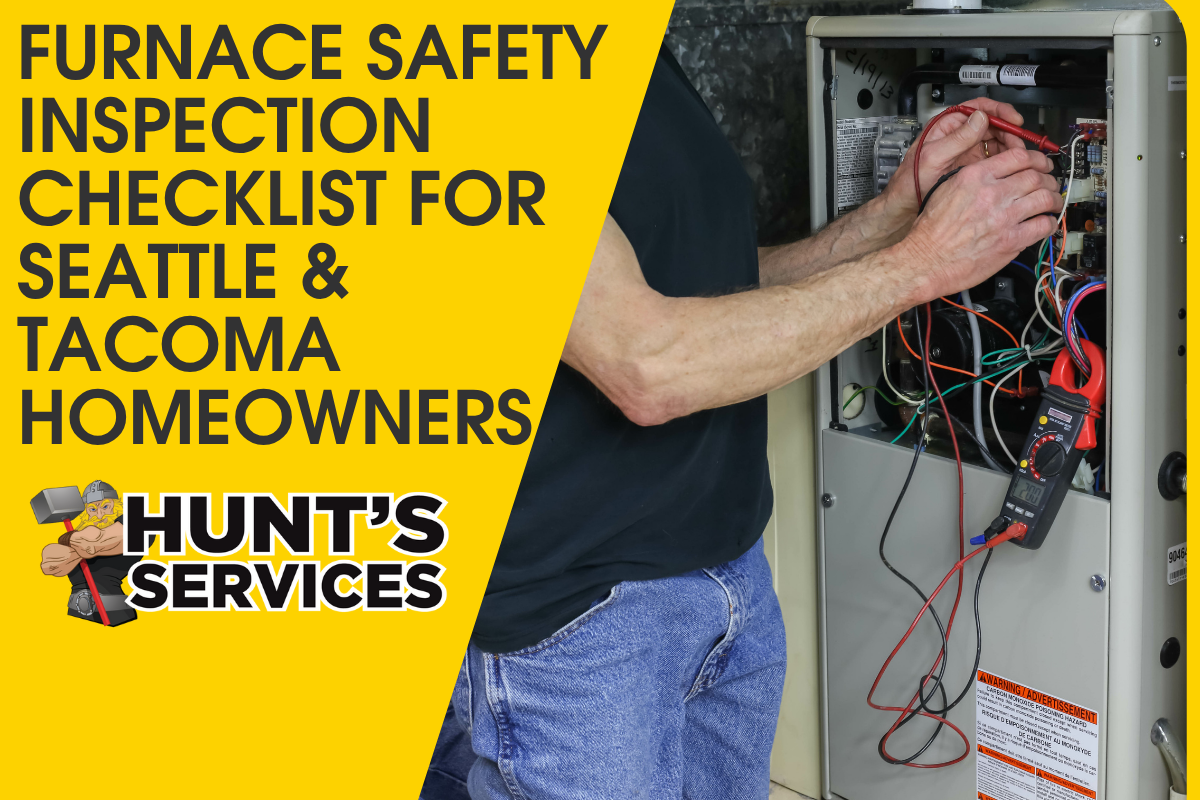
Winter in the Pacific Northwest means chilly nights, cozy gatherings—and the need for a reliable heating system. But before you turn up the thermostat, ensuring your furnace is running safely and efficiently is critical. At Hunt’s Services, we’ve created this expert furnace safety inspection checklist to help you avoid costly breakdowns, hazardous conditions, and wintertime discomfort.
Why Furnace Safety Is Non-Negotiable
A faulty furnace isn’t just an inconvenience—it can be dangerous. Carbon monoxide (CO) poisoning is a silent killer, often from cracked heat exchangers or poor ventilation. Each year, over 400 Americans die from accidental CO poisoning, and nearly 50,000 end up in emergency rooms, often due to malfunctioning furnaces.
Other risks include:
- Fire hazards from dirty burners or flammable buildup
- Sudden breakdowns during cold snaps
- Escalating utility bills from inefficient operation
This checklist ensures your home remains safe, warm, and energy-efficient all winter.
Why Furnace Inspections Matter
Routine furnace maintenance is essential—not optional.
- Approximately 85% of HVAC repair calls are attributed to a lack of regular maintenance.
- An unmaintained furnace may use up to 25% more energy.
- Regular inspections can reduce the risk of emergency repairs by up to 95%.
- Neglecting your HVAC system can shorten its lifespan by up to 50%.
Proactive inspections protect your budget, extend the life of your furnace, and—most importantly—safeguard your family.

Complete Furnace Safety Inspection Checklist
Before you crank up the heat, make sure these steps are checked off:
Thermostat Functionality
Ensure your thermostat communicates correctly with the furnace and cycles on and off at the proper settings.
Heat Exchanger Inspection
A cracked heat exchanger can leak carbon monoxide. A licensed HVAC technician should always perform this inspection.
Carbon Monoxide Testing
Install CO detectors and test for potential leaks around your furnace and ventilation.
Air Filter Replacement
Dirty filters reduce airflow, strain your system, and spread dust throughout your home. Replace filters every 1–3 months.
Blower & Motor Evaluation
The blower distributes heat throughout your home. Clean, lubricate, and check for wear to prevent breakdowns.
Burner Inspection & Cleaning
Dust and debris buildup can affect ignition and flame quality. Cleaning ensures efficient combustion.
Gas Line & Ignition Check
Verify that your gas lines and ignition system are not leaking or malfunctioning. This is a significant safety item.
Exhaust & Ventilation Assessment
Ensure flue pipes and vents are free from blockages to prevent backdrafts or CO buildup.
Warning Signs to Watch For
Don’t ignore these red flags. If you notice any of the following, call Hunt’s Services immediately:
- Unusual noises like banging or rattling
- Soot or discoloration around the furnace
- Short cycling (frequent on-off)
- Burning smells or metallic odors
These symptoms may indicate a safety issue or an impending breakdown.
DIY vs. Professional Inspection: Know Your Limits
While you can replace filters or check your thermostat, leave critical inspections to the professionals. DIY attempts on gas lines, burners, or electrical systems can put your home—and life—at risk.
Licensed technicians at Hunt’s Services offer:
- Certified CO testing
- Detailed burner and motor diagnostics
- Full-system safety checks
- Transparent recommendations (never commission-based)
You can trust our team to be thorough, honest, and fast.
How Often Should You Schedule a Furnace Inspection?
At a minimum, schedule an annual inspection each fall, before the onset of the heavy heating season. This ensures your system is ready to handle the colder months ahead.
For best results, join a maintenance program like the Hunt’s Care Club. You’ll get:
- Priority scheduling
- Biannual checkups
- Discounts on repairs
- Peace of mind all year long
Peace of Mind with Hunt’s Services
Serving Seattle, Tacoma, and surrounding communities, Hunt’s Services is a trusted local name for HVAC safety and comfort. We’re a family-owned, community-focused business, and we’re available for emergencies.
Why homeowners choose us:
- Transparent, flat-rate pricing
- Fully licensed and background-checked technicians
- Hundreds of 5-star customer reviews
Looking for more than just a tune-up? We also offer:
Limited-Time Offer: $50 Off Your Furnace Inspection!
Please mention this blog post when booking to receive your discount.
Conclusion: Don’t Wait Until It’s Too Late
Your furnace plays a vital role in keeping your home warm, safe, and energy-efficient. An annual inspection isn’t just smart—it’s essential.
Protect your family. Prevent emergencies. Lower your bills.
Call Hunt’s Services today or book your furnace inspection online in under a minute.
FAQs: Furnace Inspection and Maintenance
How long does a furnace inspection take?
A typical inspection takes about 60 to 90 minutes. If repairs are needed, our technician will provide an estimate before proceeding.
What’s the difference between a tune-up and an inspection?
An inspection checks for safety and function, while a tune-up includes performance enhancements, such as cleaning burners and optimizing airflow. Hunt’s Services consists of both in our Care Club visits.
Can I use space heaters as an alternative to my furnace?
You can—but it’s risky. Space heaters are the leading cause of winter house fires and shouldn’t be used as a primary heat source.