“Will high-pressure water ruin my pipes?”
It’s one of the most common questions Tacoma homeowners ask when they hear about hydro jetting. And honestly, it’s a fair concern.
The term high-pressuresounds aggressive. Online horror stories don’t help. And if your home has older plumbing—as many Tacoma homes do—you might wonder whether hydro jetting damage pipes is a real risk.
At Hunt’s Services, we believe homeowners deserve clear answers before making decisions about their plumbing. Our job isn’t just to fix drains. It’s to educate you so you feel confident about the solution recommended for your home.
Before you rule hydro jetting out—or agree to it without understanding it—here’s what you should know.
Learn more about our approach to plumbing care atHunt’s Services.
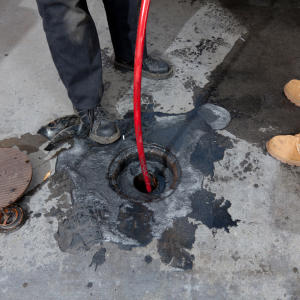
What Is Hydro Jetting And Why Homeowners Are Concerned
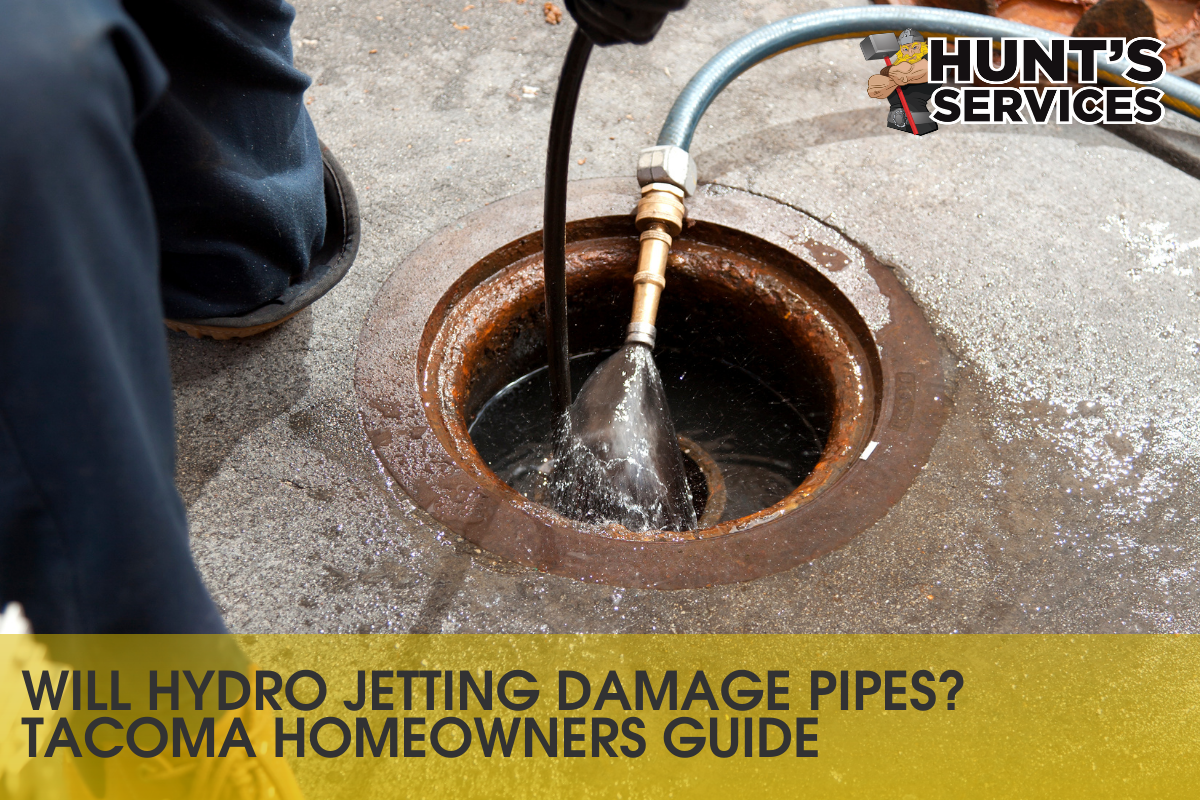
Hydro jetting is a professional drain cleaning method that uses highly pressurized water to remove buildup inside pipes.
Unlike a traditional drain snake—which punches a hole through a clog—hydro jetting:
- Scours the entire pipe wall
- Breaks apart grease, sludge, and scale
- Clears tree roots
- Flushes debris completely out of the system
It’s far more thorough than chemical cleaners, which often only create a temporary opening.
So why are homeowners worried?
Because “high-pressure water” sounds like it could:
- Crack aging pipes
- Damage joints
- Worsen weak areas
- Create leaks
And in the wrong hands—or used on the wrong pipe—it absolutely could.
That’s why professional evaluation matters.
At Hunt’s Services, we never recommend hydro jetting blindly. Every recommendation begins with assessing your plumbing system’s condition first.
Learn more about our hydro jetting process here: Hydro Jetting
Can Hydro Jetting Actually Damage Pipes? The Short Answer
Here’s the clear answer:
Not when done correctly and on the right pipes.
Hydro jetting damage pipes becomes a concern only when:
- The pipes are already structurally compromised
- The material is fragile or deteriorated
- The technician fails to inspect before jetting
- Pressure is not properly adjusted
Hydro jetting does not create damage in healthy pipes. It exposes existing weaknesses.
Think of it this way: if a pipe collapses during hydro jetting, it was likely already failing.
Reputable companies like Hunt’s Services always inspect before applying high-pressure cleaning. If we see a risk, we recommend alternative solutions instead.
When Hydro Jetting Is Safe And Highly Effective
Modern And Well-Maintained Plumbing Systems
Hydro jetting is typically safe and highly effective for:
- PVC pipes
- ABS piping
- Copper drain lines
- Properly lined cast iron
These materials are designed to handle normal system pressures, and professional hydro jetting stays within safe operating limits.
Hydro jetting is particularly ideal for:
- Heavy grease buildup
- Sludge accumulation
- Recurring kitchen clogs
- Tree root intrusion
- Scale in older metal pipes
Unlike snaking, which may only clear part of a blockage, hydro jetting restores full pipe diameter. That means fewer repeat service calls and longer-lasting results.
Homes With Frequent Or Severe Drain Issues
If your Tacoma home experiences:
- Recurring backups
- Slow drains throughout the house
- Sewer odors
- Repeated snaking without long-term results
Hydro jetting can act as a system reset.
In our region, mature trees and aging sewer infrastructure often contribute to root intrusion and buildup. Hydro jetting can clear these issues thoroughly while supporting responsible water system maintenance, as emphasized by EPA WaterSenseguidelines.
For many homeowners, hydro jetting eliminates chronic problems that temporary fixes never solve.
When Hydro Jetting May Not Be Recommended
Older, Fragile, Or Damaged Pipes
There are situations where hydro jetting is not appropriate.
For example:
- Collapsed clay pipes
- Orangeburg piping
- Severely corroded cast iron
- Pipes with major joint separation
- Structurally compromised sewer lines
In these cases, high-pressure cleaning may worsen the damage.
This is exactly why inspection comes first.
Why A Camera Inspection Comes First
Before recommending hydro jetting, Hunt’s Services performs a sewer camera inspection.
This process involves inserting a small waterproof camera into your drain line to:
- Identify cracks
- Detect root intrusion
- Assess pipe material
- Locate collapses or offsets
- Evaluate overall structural condition
A camera inspection protects you from unnecessary risk.
Sometimes it confirms hydro jetting is the best solution. Other times it reveals that repair or replacement is more appropriate.
That’s part of our commitment to responsible service.
Learn more about our standards and approach: About Us
Hydro Jetting Vs. Traditional Drain Cleaning Methods
Let’s compare your options:
Snaking
- Breaks through clogs
- May leave buildup on pipe walls
- Often requires repeat service
Chemical Cleaners
- Temporary relief
- Potential pipe damage
- Environmental concerns
Hydro Jetting
- Fully cleans pipe interior
- Removes grease, scale, and roots
- Long-lasting results
According to the National Association of Home Builders, proactive maintenance extends system lifespan and protects home value.
Hydro jetting isn’t about using the most powerful tool. It’s about using the right tool for the situation.
At Hunt’s Services, we recommend the solution that solves the problem—not the most expensive one.
Why Professional Experience Matters More Than Pressure
The word “pressure” often causes concern, but the reality is:
Hydro jetting pressure is adjustable.
Professional-grade equipment allows technicians to calibrate PSI based on:
- Pipe material
- Pipe diameter
- Age
- Condition
- Severity of buildup
Experience matters far more than the pressure itself.
Our technicians are trained to:
- Assess before cleaning
- Adjust pressure appropriately
- Monitor pipe response
- Stop immediately if a concern arises
Tacoma’s infrastructure presents unique challenges—aging sewer lines, heavy root systems, and mixed pipe materials. Local experience ensures hydro jetting is performed safely and effectively.
Signs You Might Benefit From Hydro Jetting
You may be a good candidate if you notice:
- Repeated clogs in the same drain
- Gurgling drains
- Persistent sewer smells
- Slow drainage throughout the home
- Multiple fixtures backing up simultaneously
These signs often indicate widespread buildup rather than a simple blockage.
Addressing the issue proactively can prevent costly emergencies.
What Tacoma Homeowners Should Expect During A Hydro Jetting Service
Here’s what the process typically looks like:
- Initial inspection– Camera evaluation of pipe condition
- Setup– Equipment safely positioned
- Controlled cleaning– High-pressure water removes buildup
- Final inspection– Camera confirms results
Common concerns we address:
- Mess?Minimal and controlled.
- Noise?Temporary and localized.
- Time?Most jobs completed within a few hours.
- Safety?Managed by trained professionals.
Transparency is key. We explain findings before, during, and after service.
Is Hydro Jetting Worth The Cost? Long-Term Value Explained
Hydro jetting may cost more upfront than snaking—but often less over time.
Repeated snaking adds up. Emergency sewer backups are far more expensive. Water damage restoration can cost thousands.
The U.S. Department of Energyemphasizes the importance of maintaining home systems to protect efficiency and long-term value.
Hydro jetting often:
- Reduces future service calls
- Prevents water damage
- Extends pipe life
- Improves system efficiency
For many Tacoma homeowners, it’s not an expense—it’s an investment in home protection.
Why Tacoma Homeowners Trust Hunt’s Services For Hydro Jetting
Hydro jetting isn’t just about equipment.
It’s about:
- Licensed, experienced professionals
- Inspection-first recommendations
- Honest assessments
- Tacoma-specific expertise
- Clear communication
We understand local neighborhoods, aging systems, and root-heavy areas. We don’t push services—we explain options.
Our goal is simple: help you make the right decision for your home.
Schedule A Professional Evaluation Before You Decide
If you’re wondering whether hydro jetting damage pipes is a real risk in your home, the best next step isn’t guessing.
It’s getting a professional evaluation.
Let us inspect your pipes and provide honest guidance based on their actual condition.
Schedule your free estimate with Hunt’s Services.
Call Hunt’s Services to inspect your pipes before problems escalate.
Get expert hydro jetting from your trusted Tacoma plumbing professionals.