
12 Questions to Ask to Choose the Right Size Gas Furnace

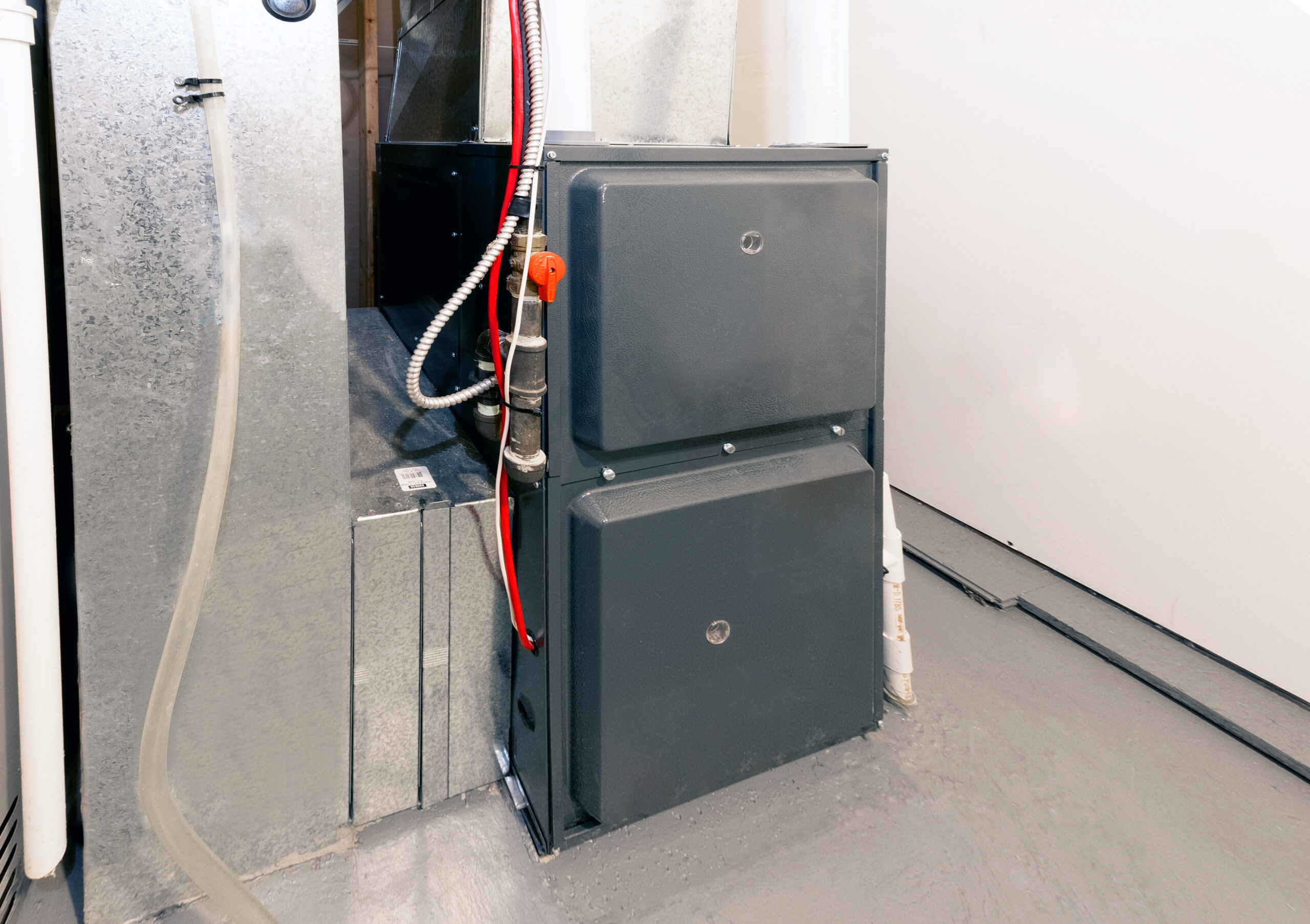
Gas furnace installation in a residential setting, highlighting energy-efficient heating solutions for winter comfort.

Choosing the right size gas furnace for your home matters for several reasons. It not only affects the unit’s ability to heat your home but also your heating bills. The harder it is for the system to heat your home, the higher your energy costs. Fortunately, the easiest way to avoid this problem is to buy the right gas furnace. Let’s explore 12 questions to ask yourself (or a professional) to ensure you choose the right size.

1. How Well Is My Home Insulated?

Your home’s level of insulation greatly matters when selecting the right size gas furnace. Homes with good insulation retain heat more effectively, minimizing stress on the heating system. This is particularly true in homes with well-insulated floors, ceilings and walls. Basing your decision, in part, on your home’s insulation helps ensure you don’t choose a unit that’s too big or too small. Homes with poor insulation will, of course, need a higher-capacity furnace.

2. How Does the Local Climate Affect My Home’s Heating?

Choosing the right size gas furnace for a Washington house requires careful consideration of local climatic trends. This is because temperature is a major factor in heating needs, particularly in colder areas. Furnaces with higher heating capacities work best in regions with extremely cold winters, like Washington. Only homes in the milder coastal parts of the state benefit from furnaces with lower heating capacities.

3. How Many Windows and Doors Does the Home Have?

Choosing the correct size gas furnace also requires careful consideration of the number of windows and doors in the house. One way heat can enter or leave a house is via its doors and windows. The possibility of heat exchange increases as the number of doors and windows in a house increases. To find out how much heat the furnace needs to compensate for any heat losses, it’s important to accurately measure these openings. To maximize energy efficiency and guarantee constant comfort levels, you’ll need to match the furnace with the home’s thermal characteristics.

4. What AFUE Rating Is Best for My Home?

Look at the annual fuel utilization efficiency (AFUE) rating of a gas furnace to choose the appropriate size. An efficient furnace will have a high AFUE because of how well it turns fuel into heat. The higher the rating, the greater the efficiency. Average AFUEs typically vary from 80% to 95% in Washington, a state that places a premium on energy efficiency. Furnaces with higher AFUE ratings improve energy efficiency, save money on utility bills and accommodate the state’s energy-conscious climate.

5. What Is the Local Energy Cost?

Before you buy a gas furnace, it’s important to calculate the cost of energy in your area. Homeowners in areas where energy prices are higher save money on utility bills by upgrading to furnaces that use less energy. Where energy prices are lower, finding the sweet spot between initial investment and return on investment may become more important. In Washington, the average homeowner spends about $80 on natural gas each month.

6. Does the Gas System Need to Provide Cooling?

You can get warmth and cooling from certain gas heating systems, such as gas furnaces with air conditioners. Optimal indoor temperature management is a year-round benefit of these systems. Any homeowner looking to purchase a gas furnace should take their heating and cooling demands into account when making their selection. This heating and cooling system is multipurpose and all-inclusive. However, it’s important to have the right size to get the best performance, energy economy and comfort. A larger gas furnace is not always required to provide cooling; in fact, it is fairly uncommon for smaller gas furnaces to work in tandem with larger HVAC systems. The heating and cooling demands are what ultimately dictate the size of the HVAC system the most.

7. Do I Have Any Remodeling Plans?

Before buying a gas furnace, it’s important to think about any renovations that may be in the works. A home’s heating needs will alter because of changes to the floor plan, square footage or insulation. By planning ahead for these adjustments, you can select a furnace that keeps up with your home’s changing heating demands. This foresight avoids problems like a furnace that isn’t big enough to handle the extra heating needs after renovations. As a result, homeowners save money on furnace replacements and upgrades.

8. How Many Floors Does the Home Have?

Smaller furnaces, usually ranging from 40,000 to 80,000 BTUs, are more suitable for houses with one story. Houses with two stories may need a somewhat bigger furnace—anything from 60,000 to 100,000 BTUs. Furnaces with a capacity of 80,000 to 120,000 BTUs are commonly necessary for three-story residences to distribute heat efficiently throughout all three stories. Properly sizing the furnace to the home’s vertical structure ensures that every level remains consistently heated, leading to maximum performance.

9. How Many People Live in the Home?

Heating a house according to its unique requirements is possible by adjusting the furnace size to the number of residents. Having more people living in the house might mean you need a larger gas furnace to ensure everyone’s comfort.

10. What Condition Is the Ductwork In?

Ducts that are well-kept and airtight increase the heating system’s effectiveness. This guarantees that the furnace efficiently distributes heat. Inefficient or leaking ductwork allows heat to escape, which in turn reduces the efficiency of the furnace. As a result, homes with leaky ductwork need higher-capacity gas furnaces to keep up with heating demands. This is why it’s helpful to invest in ductwork repairs. You can improve your home’s heating efficiency, eliminating the need for a higher-capacity furnace.

11. What Is the Ceiling Height Throughout the Home?

Heating a larger volume of air in a home with higher ceilings uses more energy. This is because greater heat dispersion affects the total heating demand in taller rooms. To get the most out of your gas furnace, it’s crucial to think about this while determining its size. If you have tall ceilings, you may need a higher capacity furnace.

12. What Is the Home’s Square Footage?

Choosing the right size gas furnace requires careful consideration of the home’s square footage. A home’s heating requirements are proportional to its square footage. Inefficiency and discomfort will result from a furnace that is too small for the home’s heating needs. Alternatively, if the home is too small for the furnace, it will waste energy by cycling on and off too often. This causes extreme wear and tear and frequent breakdowns, along with higher energy costs.

Homes with around 1,000 square feet need a gas furnace with a capacity of approximately 40,000 to 60,000 BTUs (British Thermal Units). 2,000-square-foot homes require a capacity of around 60,000 to 80,000 BTUs. Larger homes with 3,500 square feet need even higher capacities, ranging from 80,000 to 100,000 BTUs or more.

Hunt’s Services is here to help you select the right size furnace for your home. We also offer a variety of other services to improve indoor comfort. Some of our most popular services include water filtration installation, bathroom plumbing, sewer and drain cleaning, excavation, electrical panel installations and so many more. Contact us now to learn more about choosing the best gas furnace for your Tacoma, WA, home.

New Incentives Make Heat Pumps More Affordable For Washington Residents

Updated: August 10, 2023

When the Inflation Reduction Act (IRA) was signed into law on August 16, 2022, it included the most ambitious climate action policies in American history.

The IRA aims to cut domestic greenhouse gas emissions in half by 2030 compared to 2005 levels, but significant changes to the way we live will become necessary.

Americans can help the country reach its goals by switching to electric energy whenever possible. Fossil fuels are responsible for about 73% of greenhouse gas emissions in the country, so limiting their use will be critical.

Using a heat pump to heat and cool your home is one way to do your part. These HVAC units use electricity and refrigerant to remove heat from the air and pump it inside or outside, depending on the season, limiting your need for a natural gas furnace.

The time to invest in a heat pump is now better than ever to reduce your carbon footprint, while at the same time lowering your energy costs. As this article points out, there are some significant discounts and rebates that are available making these energy-saving units more affordable than ever.

Here’s a look at some of these subsidies and incentives available to Washington state residents.

The Inflation Reduction Act

Reading through the Inflation Reduction Act, you’ll see that $369 billion is reserved for climate and energy programs. These programs aim to incentivize consumers to purchase electric vehicles, solar panels, energy-efficient windows and doors, high-efficiency air conditioners, and other appliances that don’t use fossil fuels.

With Washington state becoming more prone to extreme heat, installing a heat pump to keep your home cool in the summer is becoming ever more important for the comfort and health of you and your family. You can also use your heat pump for heating in the fall, spring, and winter. So it makes sense to take a look at what the IRA offers home owners to purchase and install a heat pump for both heating and cooling of your home.

First, the IRA offers rebates of up to $8,000 for Washington state families making 80% or less of the state’s median income that purchase a heat pump. Households making 80-150% of the median state income are eligible for a $4,000 rebate. These rebates reduce the upfront cost of purchasing a heat pump and are issued at the state level using IRA funds.

The Inflation Reduction Act also offers a nonbusiness energy property credit, a tax credit for 30% of a new heat pump’s value up to a cap of $2,000. As a result, you can receive up to $2,000 in tax credits just for installing a heat pump in your home.

These incentives cover any heat pump installation you complete after January 1, 2023, and you’ll have until the end of 2033 to complete the job.

With these rebates and tax credits, installing a heat pump makes more sense than ever especially since you’ll save on your monthly energy bills.

Working with Hunt’s Services to purchase and install your heat pump is a no brainer because we specialize in HVAC so we can offer you years of experience and certified technicians to complete your job. In fact to serve you better, we offer a free consult with one of Comfort Specialists to discuss and analyze what options are best for you before you decide.

Energy Smart Eastside

The federal rebate and tax incentives aren’t the only ways you can save on a Washington heat pump installation, as a local program offers residents of select King County cities an additional discount.

The Energy Smart Eastside program allows homeowners in Bellevue, Issaquah, Kirkland, Mercer Island, and Redmond to purchase a new heat pump at a discounted price through their group buy program.

To be eligible for this discount, you’ll have to attend a free educational workshop explaining heat pump technology, the money it can save you long-term, and the incentives you can receive. This workshop is only an hour long and virtual, so you don’t have to leave your home.

From there, you’ll sign up for a free site assessment from a certified HVAC installer like Hunt’s Services, select the heat pump option that’s best for your home, and sign a contract. Hunt’s Services can then install your heat pump, and you’ll get $500 off its purchase price.

Puget Sound Energy Rebates

Finally, Puget Sound Energy has a program where customers using a less efficient electric heating source can receive an $800 rebate if they switch to a ductless heat pump system. So, if you use an electric furnace, wall, or baseboard heaters and live in a single-family home, an incentive is available to you.

This incentive is part of PSE’s Efficiency Boost program, which aims to reduce consumption in the Puget Sound area. Other incentives are available when switching to a tankless water heater, upgrading to an Energy Star furnace, or installing a smart thermostat in your home.

Heat Pump Rebates in Washington

The cost of installing an energy efficient heat pump as your heating and cooling system has never been so affordable than now. These rebates and discounts aim to reduce the financial burden on families, making upgrades possible for more households.

Hunt’s Services offers heat pump installations for all of Pierce, King and Thurston Counties. Booking an appointment with our licensed, certified team puts you on the track to energy savings. Call Hunt’s Services at 253-533-7500 to learn more about these rebates and discounts and your eligibility.

HVAC Heating and Cooling Spring Cleaning Tips and Tricks

Spring is here and that means spring cleaning for many people. You open the windows, air out the stale winter air, and do some vacuuming and dusting. But don’t forget about the maintenance of your HVAC system, either! When you’re spring cleaning the rest of your house, make sure you clean out your heating and cooling system, which has been working hard all winter long to keep you warm.

Your home’s HVAC system is essential to the comfort AND SAFETY of your family, and it can only do that if it is clean. Check out these tips to help you enjoy a safe and comfortable home this spring (and the rest of the year).

Maintenance of Your HVAC System

Before you do any cleaning, make sure the power to your HVAC system is turned off. That is most important for your safety. The last thing you want is to injure yourself. Even if you think you’ll be careful, it’s better to be safe; turn off your power as the first step any time you plan to work in or near your HVAC system. The reason is you don’t want your furnace or HVAC unit to come on while you are working on it.

There are a couple of ways you can turn off your furnace before you do any spring cleaning. Sometimes there is an on-off switch either on the furnace or close to it. Otherwise, you can go to your electrical panel and find the circuit that goes to the furnace and flip it to the off position. Also if you have a gas furnace or HVAC unit, such as a heat pump, you should turn the gas off to the unit. Find the gas line running into your HVAC unit and turn the gas valve coming into the furnace to the off position.

Clean Heating and Cooling Filters

Remove the filter in your HVAC system and replace it. Air is forced through the filter but that gets harder and harder for your HVAC system to do if the filter is clogged with dirt, dust, and debris. Replace your filter at least once every 3 months, depending on use and whether you have pets, allergies, and level of dust in your home. Only use filters that have been approved by the manufacturer so you don’t risk losing your warranty.

The filter to the furnace is typically where the cold air from the outside comes into the furnace. This can be on the furnace itself or in your house in the intake vent that leads to your furnace. For replaceable filters, there is usually a size of the filter marked somewhere on the filter. Find the filter at your local hardware store and replace it with the same size filter.

Some heating units have washable filters in which case take the filter to your sink or hose outside and run water over the filter until all dirt and debris have been washed off. A good tip is to write the date on the filter when you replace it, so you know when to replace it next. It is important to make sure the arrow on the filter is pointing in the direction of the airflow into your furnace. Central heat pumps and air conditioners will also use filters in the same way where they intake air into the unit.

Air Conditioning

If you have an external air conditioning unit, go outside and look at it. Make sure that the unit is free from debris that often accumulates around it during the fall and winter. Often, leaves and clippings will start to build inside the unit and at the vents.

While you’re looking at you’re air conditioning unit, clean the fan blades and the coils which can also pick up debris.

Clean Your Vents

Walk around the inside of your home and inspect your vents—the ones that blow warm/cool air FROM your HVAC system and the ones that pull air into your HVAC system. Make sure both types of vents are not blocked so that air can freely get in. This will not only ensure that you get clean fresh air throughout your house, it also helps you save money by keeping your HVAC system from doing too much work to draw in air.

Duct Cleaning

Think about the last time you had your ducts cleaned. If it isn’t in the last year then contact a company to come out and clean your ducts. All that dust and debris that accumulated over the winter can be removed so it’s not recirculating.

Proper duct cleaning is really a two part process to be effective. First remove debris and particulate matter that clings to your ducts and then suction to remove that debris. This is usually a job you cannot do without the proper equipment. Hunt’s Services HVAC technicians use Nikro negative air duct cleaning machines with compressed air whips that we run through each duct. The whips loosen all the dust and debris that collects in the duct system and then the negative air machine suck all the debris out of the system.

Reverse Your Ceiling Fans

Ceiling fans are a great way to reduce your energy bills by circulating the air in your home or business to either keep you warm or cool depending on the season. Make note of the direction of ceiling fan and make sure it is going in the correct direction. The general rule of thumb is the blades of the fan should turn clockwise in the winter, and the reverse in the summer. Run your ceiling fan at low speed in the winter to circulate your warm air and pull the warm air up and then push it downwards without creating a cooling effect from the fan.

Summary

Springtime is here and that means spring cleaning and enjoying the freshness of a new season. When you clean your home this spring, don’t forget about the HVAC system that has been working so hard all winter long, and reward it with a good cleaning… your HVAC system will run more efficiently and your family will be safer and more comfortable this spring!

Top 5 Reasons To Have Your Ducts Cleaned

Top 5 Reasons To Have Your Ducts Cleaned Regularly

As we move into the coldest months of the year, your furnace will be running more often and, therefore, you’ll want to make note of the air in your home. Have you considered having a professional duct cleaning?

Does your home have a strange smell? Are you noticing dust and other allergens in every room in your house? Do you feel like you’re spending too much money on your energy bills?

All of these problems are symptoms of ducts that are overdue for a thorough cleaning.

Your ducts are responsible for delivering air to every room in your home after it has gone through your furnace or air conditioner. As a result, all of the air that you breathe in your home interacts with these ducts throughout most of the year, so if they are full of dust, mold, and other debris, you’ll end up with these particles in your lungs.

The good news is that our Tacoma duct cleaning this winter can ensure that the air you breathe is completely clean, reducing health problems and saving you money in the process. While you are getting your ducts cleans, let us also take a look at your dryer vents and ducts to make sure they are clean because clogged dryer vents are the number one cause of home fires.

1) Save Money on Bills

The cleaner your ducts, the lower your monthly heating and cooling bills will be. The reason is simple, as the buildup in your ducts means your system has to work hard to push air through your vents. When your ducts are clean, however, the air moves more efficiently and uses less energy in the process. Getting your ducts cleaned even once per year makes a difference in this regard and will ensure that you don’t end up with too much dust or other debris blocking your airflow. You can save even more money if you have an energy efficient heat pump or furnace installed

2) Reduce Issues with Allergies and Asthma

If you’ve noticed a fair amount of dust in the air at your home, you should have your ducts cleaned right away. This statement is particularly true if anyone in your household has asthma or allergies because having dust pushed out through your vents can trigger attacks and make life pretty miserable. The last thing you want is for something entirely preventable to cause problems with your family’s breathing this winter but luckily, a duct cleaning can greatly improve your indoor air quality.

3) Give Your Home a Fresh Start

When you move into a new home, having the ducts cleaned is essential because you never know how the previous tenants treated the property. Did they smoke inside the house? Did they have pets? Was there water damage? All of these things lead to debris in the vents, and if you don’t have them cleaned, you’ll be stuck breathing the particles in. It’s also a good idea to brush your ducts in Bellevue or Puyallup whenever you conduct renovations because drywall dust, paint, or, in some cases, asbestos, can fall into the vents when they aren’t properly sealed. From there, these harmful pollutants are blown all over the house. It’s better to be safe than sorry, especially if you don’t know how previous homeowners treated the place or if the ducts have ever received a cleaning before.

4) Breathe Cleaner Air

Even if you don’t have allergies or asthma, breathing cleaner air is always a good thing. You could keep your house spotless, but dust will still make its way into the vents and, therefore, into the air every time the furnace or air conditioner runs. The good news is that through a duct cleaning, you can have much of this dust removed from your home before it has the chance to be blown into the air, helping ensure that the air you breathe is as clean as possible. You’ll notice a distinct difference once the job is done because the air in your home will smell cleaner and fresher. And since you can’t open this windows as much in the winter here in Seattle, having clean air coming through your vents is essential.

5) Improve the Lifespan of Your HVAC System

Maintaining an HVAC system gets expensive as the unit ages because there are so many problems that you can run into. By cleaning your vents, however, you help the unit to work at a more manageable pace and prevent debris from getting into your system. Keeping your ducts clean also means you won’t have to replace your furnace filter as often, and even though these filters are a minor expense, every little bit matters. Keeping debris out of your ducts can improve the overall lifespan of your system by preventing it from overworking when moving air throughout your home.

Keeping up with your furnace maintenance will also save you money in the long run and improve the lifespan of your heating and cooling unit. When you schedule a furnace inspection or maintenance call to your home or business, ask one of HVAC technicians to take a look at your filters and ducts. Furnace maintenance is a good tie to also have your ducts cleaned.

Who to Trust?

When searching for a duct cleaning company, you’ll have a few different options. Flyers often come in the mail advertising duct cleaning for a rate of well under $100, but the truth is that these companies might not use the best equipment and, often, won’t provide adequate bang for your buck. Its a good idea to avoid duct cleaning scams that sound too good to be true.

Reputable companies, such as Hunt’s Services, use a hybrid system where we not only have a negative pressure vacuum to suck out dirt and debris but also a brush to physically scrub the inside of your vents. This method ensures that no debris is left behind.

Remember, when it comes to your ducts, the quality of the job done is of the utmost importance.