
12 Questions to Ask to Choose the Right Size Gas Furnace

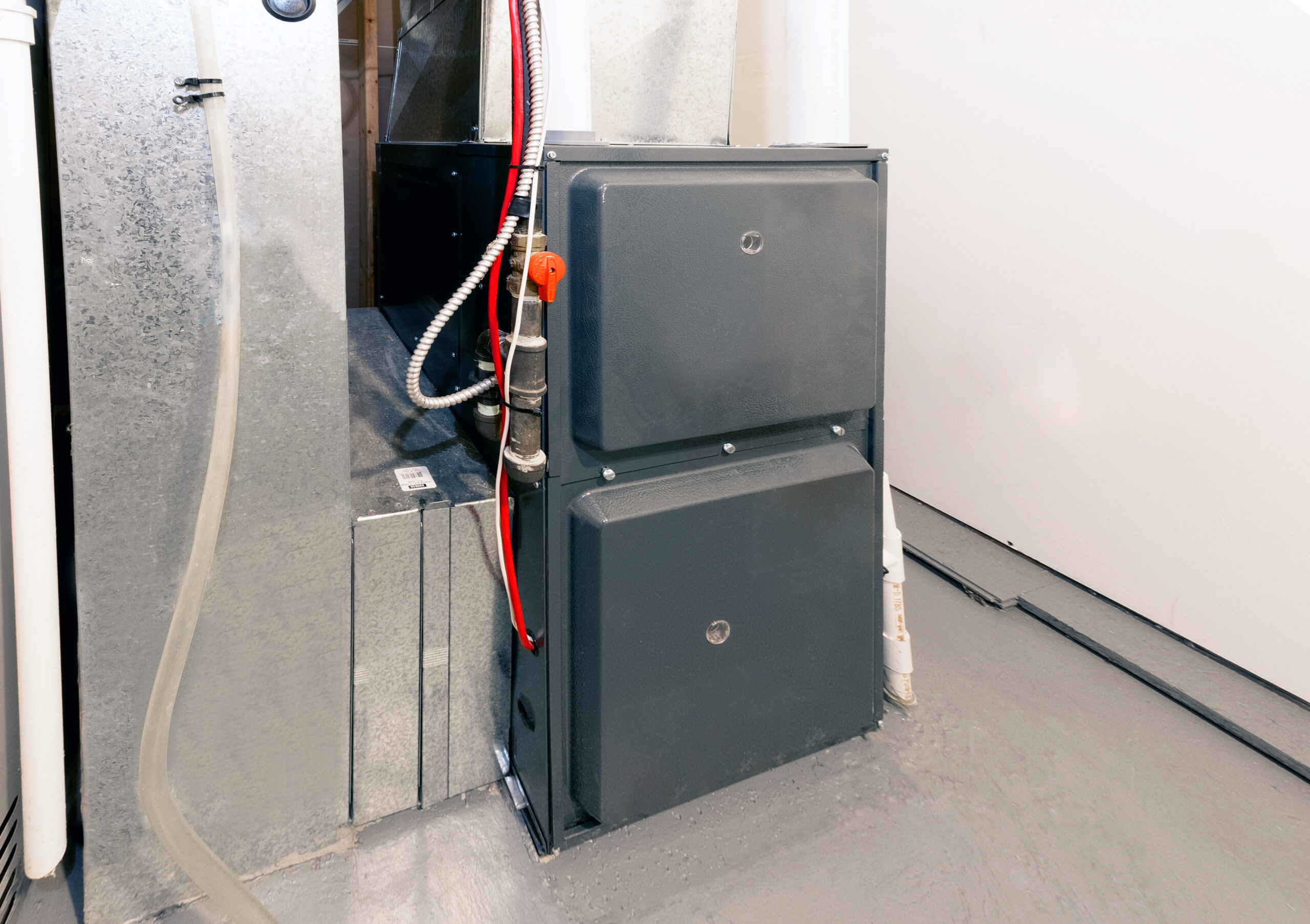
Gas furnace installation in a residential setting, highlighting energy-efficient heating solutions for winter comfort.

Choosing the right size gas furnace for your home matters for several reasons. It not only affects the unit’s ability to heat your home but also your heating bills. The harder it is for the system to heat your home, the higher your energy costs. Fortunately, the easiest way to avoid this problem is to buy the right gas furnace. Let’s explore 12 questions to ask yourself (or a professional) to ensure you choose the right size.

1. How Well Is My Home Insulated?

Your home’s level of insulation greatly matters when selecting the right size gas furnace. Homes with good insulation retain heat more effectively, minimizing stress on the heating system. This is particularly true in homes with well-insulated floors, ceilings and walls. Basing your decision, in part, on your home’s insulation helps ensure you don’t choose a unit that’s too big or too small. Homes with poor insulation will, of course, need a higher-capacity furnace.

2. How Does the Local Climate Affect My Home’s Heating?

Choosing the right size gas furnace for a Washington house requires careful consideration of local climatic trends. This is because temperature is a major factor in heating needs, particularly in colder areas. Furnaces with higher heating capacities work best in regions with extremely cold winters, like Washington. Only homes in the milder coastal parts of the state benefit from furnaces with lower heating capacities.

3. How Many Windows and Doors Does the Home Have?

Choosing the correct size gas furnace also requires careful consideration of the number of windows and doors in the house. One way heat can enter or leave a house is via its doors and windows. The possibility of heat exchange increases as the number of doors and windows in a house increases. To find out how much heat the furnace needs to compensate for any heat losses, it’s important to accurately measure these openings. To maximize energy efficiency and guarantee constant comfort levels, you’ll need to match the furnace with the home’s thermal characteristics.

4. What AFUE Rating Is Best for My Home?

Look at the annual fuel utilization efficiency (AFUE) rating of a gas furnace to choose the appropriate size. An efficient furnace will have a high AFUE because of how well it turns fuel into heat. The higher the rating, the greater the efficiency. Average AFUEs typically vary from 80% to 95% in Washington, a state that places a premium on energy efficiency. Furnaces with higher AFUE ratings improve energy efficiency, save money on utility bills and accommodate the state’s energy-conscious climate.

5. What Is the Local Energy Cost?

Before you buy a gas furnace, it’s important to calculate the cost of energy in your area. Homeowners in areas where energy prices are higher save money on utility bills by upgrading to furnaces that use less energy. Where energy prices are lower, finding the sweet spot between initial investment and return on investment may become more important. In Washington, the average homeowner spends about $80 on natural gas each month.

6. Does the Gas System Need to Provide Cooling?

You can get warmth and cooling from certain gas heating systems, such as gas furnaces with air conditioners. Optimal indoor temperature management is a year-round benefit of these systems. Any homeowner looking to purchase a gas furnace should take their heating and cooling demands into account when making their selection. This heating and cooling system is multipurpose and all-inclusive. However, it’s important to have the right size to get the best performance, energy economy and comfort. A larger gas furnace is not always required to provide cooling; in fact, it is fairly uncommon for smaller gas furnaces to work in tandem with larger HVAC systems. The heating and cooling demands are what ultimately dictate the size of the HVAC system the most.

7. Do I Have Any Remodeling Plans?

Before buying a gas furnace, it’s important to think about any renovations that may be in the works. A home’s heating needs will alter because of changes to the floor plan, square footage or insulation. By planning ahead for these adjustments, you can select a furnace that keeps up with your home’s changing heating demands. This foresight avoids problems like a furnace that isn’t big enough to handle the extra heating needs after renovations. As a result, homeowners save money on furnace replacements and upgrades.

8. How Many Floors Does the Home Have?

Smaller furnaces, usually ranging from 40,000 to 80,000 BTUs, are more suitable for houses with one story. Houses with two stories may need a somewhat bigger furnace—anything from 60,000 to 100,000 BTUs. Furnaces with a capacity of 80,000 to 120,000 BTUs are commonly necessary for three-story residences to distribute heat efficiently throughout all three stories. Properly sizing the furnace to the home’s vertical structure ensures that every level remains consistently heated, leading to maximum performance.

9. How Many People Live in the Home?

Heating a house according to its unique requirements is possible by adjusting the furnace size to the number of residents. Having more people living in the house might mean you need a larger gas furnace to ensure everyone’s comfort.

10. What Condition Is the Ductwork In?

Ducts that are well-kept and airtight increase the heating system’s effectiveness. This guarantees that the furnace efficiently distributes heat. Inefficient or leaking ductwork allows heat to escape, which in turn reduces the efficiency of the furnace. As a result, homes with leaky ductwork need higher-capacity gas furnaces to keep up with heating demands. This is why it’s helpful to invest in ductwork repairs. You can improve your home’s heating efficiency, eliminating the need for a higher-capacity furnace.

11. What Is the Ceiling Height Throughout the Home?

Heating a larger volume of air in a home with higher ceilings uses more energy. This is because greater heat dispersion affects the total heating demand in taller rooms. To get the most out of your gas furnace, it’s crucial to think about this while determining its size. If you have tall ceilings, you may need a higher capacity furnace.

12. What Is the Home’s Square Footage?

Choosing the right size gas furnace requires careful consideration of the home’s square footage. A home’s heating requirements are proportional to its square footage. Inefficiency and discomfort will result from a furnace that is too small for the home’s heating needs. Alternatively, if the home is too small for the furnace, it will waste energy by cycling on and off too often. This causes extreme wear and tear and frequent breakdowns, along with higher energy costs.

Homes with around 1,000 square feet need a gas furnace with a capacity of approximately 40,000 to 60,000 BTUs (British Thermal Units). 2,000-square-foot homes require a capacity of around 60,000 to 80,000 BTUs. Larger homes with 3,500 square feet need even higher capacities, ranging from 80,000 to 100,000 BTUs or more.

Hunt’s Services is here to help you select the right size furnace for your home. We also offer a variety of other services to improve indoor comfort. Some of our most popular services include water filtration installation, bathroom plumbing, sewer and drain cleaning, excavation, electrical panel installations and so many more. Contact us now to learn more about choosing the best gas furnace for your Tacoma, WA, home.

Picking the Most Energy-Efficient Heating Option for Your Home

HVAC technician using a tablet outdoors near air conditioning units, emphasizing home maintenance and service efficiency.

Home heating systems use more energy than other systems in your home. These systems make up about 29% of monthly utility bills. You can reduce your home heating costs by picking an energy-efficient heating system combined with proper system maintenance and necessary efficiency home upgrades. Energy-efficient systems coupled with air sealing, necessary insulation, and the right thermostat settings will save money and reduce your carbon footprint. Consider any of these six options if you’re looking for an energy-efficient home heating option.

Active Solar Heating

An active solar heater heats liquid or air using solar energy. The heated fluid transfers the heat into your home, where it heats the space or is stored for later use. Liquid-based solar heaters use water or antifreeze to absorb solar heat. The liquid then moves through a collector with the aid of a circulating pump to heat the home. The liquid goes to a heat exchanger, where it instantly heats the home or to a storage tank for later use.

Air room heaters, on the other hand, use an airtight metal frame with a dark metal plate. The plate absorbs solar energy to heat the air inside the collector. The heat then circulates in the room via a blower or electric fan. You may need an auxiliary system if the active solar heater does not provide sufficient heating in your home.

Furnaces and Boilers

Most homeowners use furnaces and boilers to heat their spaces. Boilers heat water, which flows through pipes as steam or hot water to heat spaces. On the other hand, furniture heat air that flows through ducts to heat a home. Modern furnaces and boilers have a high-efficiency rating, making them cost-effective ways of heating a home.

Furnace and boiler manufacturers use annual fuel utilization efficiency (AFUE) ratings to show how efficient their systems are. The AFUE rating shows how effectively an appliance converts fuel to heat. If an appliance has an AFUE rating of 90%, it means that 90% of the energy from the fuel converts to heat while 10% escapes. Aim for systems with a high AFUE rating, such as all-electric furnaces that convert 100% of their energy to heat.

You can find gas and electric furnaces. Which type to choose may depend on your home and your region. Many modern electric furnaces have advanced technology that enhances their energy efficiency. Gas furnaces can be quite energy efficient, but they come with risks as they rely on burning fossil fuels. Natural gas or carbon monoxide buildup can happen with systems that are not properly installed or maintained. Plus, not all areas have municipal gas lines readily available, so gas furnaces are not always an option.

For boilers, opt for radiant heating. Radiant heating is more efficient than baseboard and forced-air heating as it eliminates duct losses. The radiant heating system is ideal for people with allergies as it does not distribute allergens like systems that use air fans. A homeowner can use radiant air floors, electric radiant floors, hot water radiant floors, or radiant panels placed on walls. Air radiant heating is less energy efficient as air holds less heat. Hydronic radiant heating, where hot water from the boiler passes through pipes to heat a floor, is more effective.

Modern Wood and Pellet Heating

Modern wood and pellet-burning appliances offer cleaner, more efficient, and powerful home heating systems. These are ideal for heating average-sized homes. Pellet heating systems burn pellets that are about an inch long or smaller.

To ensure the efficiency of wood and pellet heating systems, you need to pick the right size. An oversized system will lead to heat loss as homeowners tend to let the fire slowly smolder to reduce overheating. If the system is undersized, it will not adequately heat your space. Pick a stove rate of 42,000 British Thermal Units (BTU) to heat a 1,300-square-foot home and a 60,000 BTU stove for a 2,000-square-foot home.

Pick a wood-burning appliance certified by the United States Environmental Protection Agency (EPA). The downside with wood and pellet heating systems is that they produce smoke. As such, some municipalities might restrict their use.

Heat Pumps

Instead of burning fossil fuels, heat pumps draw heat from outdoor air, the ground, or water to heat a home. The key to their efficiency is heat transfer vs heat generation. Heat pumps often use the same air ducts as central AC and heaters. During the summer, the heat pump reverses the refrigerant and acts as an air conditioner to make the home comfortable. The air-to-air heat pumps are not ideal for hot water generation.

Air-to-water heat pumps contain several units connected by pipes with refrigerant. The outdoor unit absorbs heat from the outside air. It transfers the heat to the indoor unit, which transmits the heat to a radiator or floor radiant heating system. You can also use the air-to-water heat pumps as a hot water heater.

Further, you can pick ground-source or solar-assisted heat pumps. Ground-source heat pumps draw heat from the ground using sensors. The sensors sit deep in the ground, where the temperatures are relatively higher. However, ground heat pumps require extensive installation work. With a solar-assisted heat pump, you can combine solar panels with heat pumps to heat a home adequately and produce hot water.

Mini-Split Systems

Sometimes, a central, ducted heating system is not practical. This may be true in older homes that don’t have an existing central climate control system. It can also be true for home additions and converted basements, garages, or attics.

A mini-split typically consists of one outdoor unit and one or more indoor air handlers. These are connected through small tubes or pipes that carry wires or refrigerant. The small air handlers are often mounted on a wall and have their own thermostat and sensors. With these systems, you can precisely control the temperature of each room or area of the house. You can enjoy significant energy savings because you can choose to keep areas you don’t use cooler.

Electric Resistance Baseboard or Wall Heating

Electric resistance heaters convert 100% of the incoming energy to heat. If you live in an area with few heating days or need a system to supplement the central heating system, these heaters will be cost-effective. You can also use electric resistance for a home addition where extending the existing central heating system is not practical.

Talk to Heating Experts

Sometimes, a combination of heating sources will ensure adequate heating in your home while ensuring energy efficiency and cost-effectiveness. Hunt’s Services in Tacoma, WA, offers installation, repair, and maintenance of heat pumps, furnaces, and air conditioning systems. We can also help with duct cleaning and indoor air quality solutions. You can turn to us for your plumbing and sewer needs, too.

Installing a new energy-efficient heating system can be an overwhelming experience. Our experts at Hunt’s Services will guide you through Tacoma, WA’s heat pump and furnace types and installation processes. If you need a system that circulates healthy air in your home while reducing utility bills and your carbon footprint, contact Hunt’s Services today.

How to Tell if It’s Time to Replace Your Furnace

There comes a time in every homeowner’s life when he or she must bite the bullet and go through with a furnace replacement. While your first step should be to see if the unit can be repaired, King and Pierce Counties furnace companies might not have access to the parts if the furnace is over a certain age. The following guidelines can help you to decide if your furnace is nearing the end of its life so that you can start preparing for its eventual replacement.

It’s Old

Furnaces have a certain life expectancy and once they reach that age, there is a good chance that a replacement will become necessary. If you have only recently moved into your home, you might not know how old your furnace actually is.

To get a general idea, have a look at the unit and see if it has an actual pilot light. If it does, there’s a good chance that it’s over 25 years old, as newer models have an electronic light. While having an old furnace doesn’t necessarily mean that you’ll have to replace it immediately, you should start preparing for it because most units only last between 15 and 20 years.

Your Bills are Increasing

Although heating bills can increase for other reasons, such as a rise in gas prices or a particularly cold winter, they shouldn’t move too dramatically from year to year. If you notice that you bills are significantly more than they were the year before, it could mean that your furnace is on its way out.

The good news in this situation is that your new furnace will be much more efficient and you will notice an immediate difference on your heating bills. The money that you’ll save on your monthly heating bills will pay for your new furnace over its lifetime.

You Hear New, Strange Noises

Weird noise coming from your furnace could be a sign that something is wrong. You might hear some banging or rattling noises coming from the unit and this usually means that it’s nearing the end of its life.

Of course, this isn’t an absolute rule, so have a King and Pierce Counties furnace repair company have a look at the unit before you make the decision to have it replaced. You never know, maybe it is something that can be repaired, giving you a few more years out of your existing furnace.

You Have a Dry or Dusty Home

One of the main problems with old furnaces is that they don’t humidify the air in your home the way that new ones do. New furnaces also have the ability to clean the air in your home, which is very advantageous. If members of your family suffer from allergies, having a new furnace installed could help alleviate this discomfort.

Simply put, your old furnace isn’t capable of providing the same level of service as the new ones on the market, making it a good idea to look into a replacement if someone in your family is suffering as a result of the dust, pollen, and dander that is present.

If you find yourself needing a new furnace in Tacoma or Federal Way, give Hunt’s Services a call at 253-533-7500. We will send one of your certified technicians by to determine if we can repair your existing furnace, or if it would be more cost efficient to replace the unit.