
Picking the Most Energy-Efficient Heating Option for Your Home

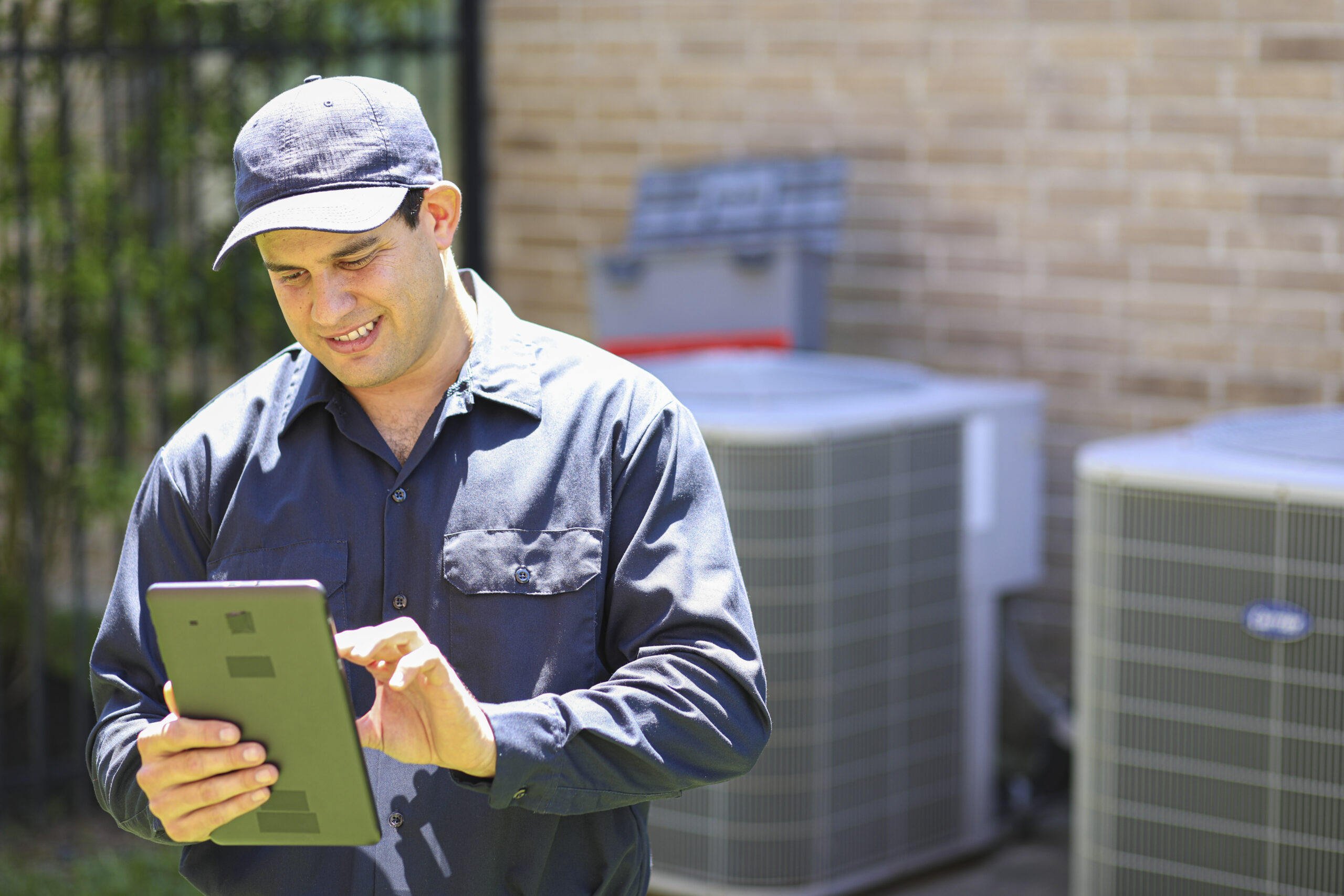
HVAC technician using a tablet outdoors near air conditioning units, emphasizing home maintenance and service efficiency.

Home heating systems use more energy than other systems in your home. These systems make up about 29% of monthly utility bills. You can reduce your home heating costs by picking an energy-efficient heating system combined with proper system maintenance and necessary efficiency home upgrades. Energy-efficient systems coupled with air sealing, necessary insulation, and the right thermostat settings will save money and reduce your carbon footprint. Consider any of these six options if you’re looking for an energy-efficient home heating option.

Active Solar Heating

An active solar heater heats liquid or air using solar energy. The heated fluid transfers the heat into your home, where it heats the space or is stored for later use. Liquid-based solar heaters use water or antifreeze to absorb solar heat. The liquid then moves through a collector with the aid of a circulating pump to heat the home. The liquid goes to a heat exchanger, where it instantly heats the home or to a storage tank for later use.

Air room heaters, on the other hand, use an airtight metal frame with a dark metal plate. The plate absorbs solar energy to heat the air inside the collector. The heat then circulates in the room via a blower or electric fan. You may need an auxiliary system if the active solar heater does not provide sufficient heating in your home.

Furnaces and Boilers

Most homeowners use furnaces and boilers to heat their spaces. Boilers heat water, which flows through pipes as steam or hot water to heat spaces. On the other hand, furniture heat air that flows through ducts to heat a home. Modern furnaces and boilers have a high-efficiency rating, making them cost-effective ways of heating a home.

Furnace and boiler manufacturers use annual fuel utilization efficiency (AFUE) ratings to show how efficient their systems are. The AFUE rating shows how effectively an appliance converts fuel to heat. If an appliance has an AFUE rating of 90%, it means that 90% of the energy from the fuel converts to heat while 10% escapes. Aim for systems with a high AFUE rating, such as all-electric furnaces that convert 100% of their energy to heat.

You can find gas and electric furnaces. Which type to choose may depend on your home and your region. Many modern electric furnaces have advanced technology that enhances their energy efficiency. Gas furnaces can be quite energy efficient, but they come with risks as they rely on burning fossil fuels. Natural gas or carbon monoxide buildup can happen with systems that are not properly installed or maintained. Plus, not all areas have municipal gas lines readily available, so gas furnaces are not always an option.

For boilers, opt for radiant heating. Radiant heating is more efficient than baseboard and forced-air heating as it eliminates duct losses. The radiant heating system is ideal for people with allergies as it does not distribute allergens like systems that use air fans. A homeowner can use radiant air floors, electric radiant floors, hot water radiant floors, or radiant panels placed on walls. Air radiant heating is less energy efficient as air holds less heat. Hydronic radiant heating, where hot water from the boiler passes through pipes to heat a floor, is more effective.

Modern Wood and Pellet Heating

Modern wood and pellet-burning appliances offer cleaner, more efficient, and powerful home heating systems. These are ideal for heating average-sized homes. Pellet heating systems burn pellets that are about an inch long or smaller.

To ensure the efficiency of wood and pellet heating systems, you need to pick the right size. An oversized system will lead to heat loss as homeowners tend to let the fire slowly smolder to reduce overheating. If the system is undersized, it will not adequately heat your space. Pick a stove rate of 42,000 British Thermal Units (BTU) to heat a 1,300-square-foot home and a 60,000 BTU stove for a 2,000-square-foot home.

Pick a wood-burning appliance certified by the United States Environmental Protection Agency (EPA). The downside with wood and pellet heating systems is that they produce smoke. As such, some municipalities might restrict their use.

Heat Pumps

Instead of burning fossil fuels, heat pumps draw heat from outdoor air, the ground, or water to heat a home. The key to their efficiency is heat transfer vs heat generation. Heat pumps often use the same air ducts as central AC and heaters. During the summer, the heat pump reverses the refrigerant and acts as an air conditioner to make the home comfortable. The air-to-air heat pumps are not ideal for hot water generation.

Air-to-water heat pumps contain several units connected by pipes with refrigerant. The outdoor unit absorbs heat from the outside air. It transfers the heat to the indoor unit, which transmits the heat to a radiator or floor radiant heating system. You can also use the air-to-water heat pumps as a hot water heater.

Further, you can pick ground-source or solar-assisted heat pumps. Ground-source heat pumps draw heat from the ground using sensors. The sensors sit deep in the ground, where the temperatures are relatively higher. However, ground heat pumps require extensive installation work. With a solar-assisted heat pump, you can combine solar panels with heat pumps to heat a home adequately and produce hot water.

Mini-Split Systems

Sometimes, a central, ducted heating system is not practical. This may be true in older homes that don’t have an existing central climate control system. It can also be true for home additions and converted basements, garages, or attics.

A mini-split typically consists of one outdoor unit and one or more indoor air handlers. These are connected through small tubes or pipes that carry wires or refrigerant. The small air handlers are often mounted on a wall and have their own thermostat and sensors. With these systems, you can precisely control the temperature of each room or area of the house. You can enjoy significant energy savings because you can choose to keep areas you don’t use cooler.

Electric Resistance Baseboard or Wall Heating

Electric resistance heaters convert 100% of the incoming energy to heat. If you live in an area with few heating days or need a system to supplement the central heating system, these heaters will be cost-effective. You can also use electric resistance for a home addition where extending the existing central heating system is not practical.

Talk to Heating Experts

Sometimes, a combination of heating sources will ensure adequate heating in your home while ensuring energy efficiency and cost-effectiveness. Hunt’s Services in Tacoma, WA, offers installation, repair, and maintenance of heat pumps, furnaces, and air conditioning systems. We can also help with duct cleaning and indoor air quality solutions. You can turn to us for your plumbing and sewer needs, too.

Installing a new energy-efficient heating system can be an overwhelming experience. Our experts at Hunt’s Services will guide you through Tacoma, WA’s heat pump and furnace types and installation processes. If you need a system that circulates healthy air in your home while reducing utility bills and your carbon footprint, contact Hunt’s Services today.


Benefits of Installing Mini Splits vs. Central HVAC Systems in Homes

Family enjoying comfort of ductless mini split HVAC system in cozy living room, showcasing energy-efficient cooling solution.

Ductless mini split systems have several advantages over traditional central HVAC systems. Both ductless mini split and central, ducted HVAC systems can use a heat pump. Most mini splits use a heat pump, while many central systems use a separate air conditioner and furnace. Either way, mini split equipment typically costs more than replacing conventional HVAC appliances. Keep reading to learn why you might prefer to spend the extra money on a mini split system.

Compact Size

Mini split systems have an elegant, simple design. There is one small outdoor unit and an air handler in each room you want to cool.

The individual air handlers of a mini split system are much smaller than an HVAC air handler that manages the airflow for an entire house. So, there’s no need for a separate utility closet. In addition, the outdoor unit of a mini split is often smaller than for a traditional central system. This gives you greater flexibility in placement.

Easy Installation

The most straightforward installation process requires a technician to install an air handler in each room you want to cool. Typically, the handler is placed high on an interior wall of a room, away from direct sunlight or other heat sources.

After that, the installer drills a hole in an external wall and connects the outdoor compressor/condenser unit to an air handler via electrical and refrigerant lines. If you’re only conditioning the air in one room, that’s all you need to do. Occupants receive a remote-control device to turn the system on and off and set the desired temperature.

A ductless mini split does not require ductwork but can take advantage of previously installed ducts. Your installer can configure the system to use ducts where they exist and individual air handlers in areas without ducts.

Flexible Zoning Options

Homeowners can purchase a system with one air handler, two air handlers, or one that accommodates up to eight air handlers. You can buy additional equipment to heat or cool a home with more than eight rooms. Each room has an air handler with a thermostat and remote control. If you enjoy a cold room at night while other residents like things a bit warmer, that’s not a problem with a mini split. Every room can have a different temperature setting if that’s what you want.

This zoning is also a great benefit if you have a room with a fireplace. When the fire’s warming one room, it won’t affect the temperature settings in the other rooms. Many central HVAC systems have only one thermostat; if that’s close to a heat source, the rest of the home remains cold.

Easy Maintenance

Because of its simplistic design, only a few moving parts need lubricating. Keep the leaves and twigs away from the outside unit, erect a shelter over the top, or place it in a protected area to keep the rare Birmingham snowfall off the top. If that’s not possible, come outside and brush it off during the snowstorm before there is too much accumulation. Replace or clean the air handler filters in each room every one to three months, as needed.

Lower Repair and Maintenance Costs

Even though the mini split is a relatively uncomplicated system, you should have it serviced at least once a year. You want to ensure all the connections are tight and the refrigerant line is intact. The technician will change the outside filter and clean and lubricate the internal components. One expense you don’t have to worry about is duct cleaning and repair.

Energy Efficiency

A mini-split system most often uses a heat pump. Heat pumps do not have separate elements to heat and cool the air. But they don’t actually create heat like a furnace or boiler. Instead, they draw existing heat from the air and transfer it. These closed-loop systems recirculate existing air in the home after conditioning.

In the summer, the cold refrigerant absorbs the heat in the room air, and the cooled air re-enters the room. Meanwhile, the refrigerant flows to the outside unit, transforms into a hot vapor, and releases the stored heat. After that, the refrigerant travels back to the air handler, and the cycle begins again. In the winter, the process reverses at the flip of a switch, and the system extracts radiant heat from the outside air and transfers it to a room’s cooler air.

Further, many mini split configurations allow you to choose the temperature of individual rooms or areas. Rooms you don’t use often can be set to less comfortable temperatures to save energy. As mentioned before, you don’t waste energy heating a room with a fireplace. You may also have areas of the home with more shade than others. You don’t have to use as much energy to heat these areas as you do for areas exposed to full sun.

Flexible Options

If you currently have ducts installed in your home, it’s not likely that you’ll choose to convert to a ductless system. However, as previously mentioned, heat pumps can use the existing ductwork for wires and tubes. Ductless systems have an advantage because no heat escapes while transported through the ductwork, improving the system’s efficiency.

So, what type of environment is best suited for a heat pump? A mini split is a great choice to regulate the temperature in a room added to a home. All you’ll need to do is to purchase a single-zone mini split with one air handler. Maybe you converted a patio into an indoor sunroom or an unheated garage into a bedroom or den. In situations like these, a ductless mini split is a reasonable choice.

Older homes may not have ducts. Perhaps the previous owners had window air conditioners and used electric floor-board heating when the days were cold enough to warrant it. Now, as a new owner, you want to upgrade your HVAC system without spending the time and money to install ductwork. A mini split system might be the perfect choice for you.

Of course, if you are building a new home, you can choose a mini split or a central HVAC system. Do you want the simplicity and multiple zoning opportunities that a mini spit provides, or do you want to install ductwork and a central HVAC system that provides the same cooling and heating throughout the home? There is no right or wrong answer. Choose what’s best for you and the other occupants of the house.

Your Premier Heating and Cooling Choice in Tacoma

At Hunt’s Services, we provide HVAC, plumbing, and electrical services in Tacoma, WA and surrounding areas. We sell a variety of HVAC and indoor air quality products, and we provide duct cleaning and sealing services. We also sell and install generators, dehumidifiers, and water heaters. Contact Hunt’s Services today for all your heating and cooling installation, repair, and maintenance needs in Tacoma and the surrounding areas!

New Incentives Make Heat Pumps More Affordable For Washington Residents

Updated: August 10, 2023

When the Inflation Reduction Act (IRA) was signed into law on August 16, 2022, it included the most ambitious climate action policies in American history.

The IRA aims to cut domestic greenhouse gas emissions in half by 2030 compared to 2005 levels, but significant changes to the way we live will become necessary.

Americans can help the country reach its goals by switching to electric energy whenever possible. Fossil fuels are responsible for about 73% of greenhouse gas emissions in the country, so limiting their use will be critical.

Using a heat pump to heat and cool your home is one way to do your part. These HVAC units use electricity and refrigerant to remove heat from the air and pump it inside or outside, depending on the season, limiting your need for a natural gas furnace.

The time to invest in a heat pump is now better than ever to reduce your carbon footprint, while at the same time lowering your energy costs. As this article points out, there are some significant discounts and rebates that are available making these energy-saving units more affordable than ever.

Here’s a look at some of these subsidies and incentives available to Washington state residents.

The Inflation Reduction Act

Reading through the Inflation Reduction Act, you’ll see that $369 billion is reserved for climate and energy programs. These programs aim to incentivize consumers to purchase electric vehicles, solar panels, energy-efficient windows and doors, high-efficiency air conditioners, and other appliances that don’t use fossil fuels.

With Washington state becoming more prone to extreme heat, installing a heat pump to keep your home cool in the summer is becoming ever more important for the comfort and health of you and your family. You can also use your heat pump for heating in the fall, spring, and winter. So it makes sense to take a look at what the IRA offers home owners to purchase and install a heat pump for both heating and cooling of your home.

First, the IRA offers rebates of up to $8,000 for Washington state families making 80% or less of the state’s median income that purchase a heat pump. Households making 80-150% of the median state income are eligible for a $4,000 rebate. These rebates reduce the upfront cost of purchasing a heat pump and are issued at the state level using IRA funds.

The Inflation Reduction Act also offers a nonbusiness energy property credit, a tax credit for 30% of a new heat pump’s value up to a cap of $2,000. As a result, you can receive up to $2,000 in tax credits just for installing a heat pump in your home.

These incentives cover any heat pump installation you complete after January 1, 2023, and you’ll have until the end of 2033 to complete the job.

With these rebates and tax credits, installing a heat pump makes more sense than ever especially since you’ll save on your monthly energy bills.

Working with Hunt’s Services to purchase and install your heat pump is a no brainer because we specialize in HVAC so we can offer you years of experience and certified technicians to complete your job. In fact to serve you better, we offer a free consult with one of Comfort Specialists to discuss and analyze what options are best for you before you decide.

Energy Smart Eastside

The federal rebate and tax incentives aren’t the only ways you can save on a Washington heat pump installation, as a local program offers residents of select King County cities an additional discount.

The Energy Smart Eastside program allows homeowners in Bellevue, Issaquah, Kirkland, Mercer Island, and Redmond to purchase a new heat pump at a discounted price through their group buy program.

To be eligible for this discount, you’ll have to attend a free educational workshop explaining heat pump technology, the money it can save you long-term, and the incentives you can receive. This workshop is only an hour long and virtual, so you don’t have to leave your home.

From there, you’ll sign up for a free site assessment from a certified HVAC installer like Hunt’s Services, select the heat pump option that’s best for your home, and sign a contract. Hunt’s Services can then install your heat pump, and you’ll get $500 off its purchase price.

Puget Sound Energy Rebates

Finally, Puget Sound Energy has a program where customers using a less efficient electric heating source can receive an $800 rebate if they switch to a ductless heat pump system. So, if you use an electric furnace, wall, or baseboard heaters and live in a single-family home, an incentive is available to you.

This incentive is part of PSE’s Efficiency Boost program, which aims to reduce consumption in the Puget Sound area. Other incentives are available when switching to a tankless water heater, upgrading to an Energy Star furnace, or installing a smart thermostat in your home.

Heat Pump Rebates in Washington

The cost of installing an energy efficient heat pump as your heating and cooling system has never been so affordable than now. These rebates and discounts aim to reduce the financial burden on families, making upgrades possible for more households.

Hunt’s Services offers heat pump installations for all of Pierce, King and Thurston Counties. Booking an appointment with our licensed, certified team puts you on the track to energy savings. Call Hunt’s Services at 253-533-7500 to learn more about these rebates and discounts and your eligibility.

4 Reasons to Switch to a Heat Pump for Heating and Cooling

As you know, there are a few different options for heating and cooling your home in Seattle, Tacoma area.

Of course, a gas furnace is the most common heating method in the area, as these devices are widely available, and the majority of homes in the region already have natural gas lines running to them. There’s nothing wrong with using a gas furnace because they’re abundant and convenient, but they’re far from the only game in town.

Cooling your home is a bit different because you’ll likely need an air conditioning unit. You can often use your existing ductwork with these systems, ensuring your home is cooled evenly and thoroughly on even the hottest days of the year.

Heat pumps are another option worth considering because they provide both heating and cooling for your home. These units have other benefits, too, that it’s a good idea to learn about before making the leap.

Ductless heat pumps are a cost-effective option that allows you to cool and heat your entire home or just certain rooms or zones without the use of ducts.

Here’s a look at four of the main advantages associated with installing a heat pump in your home in Seattle, Tacoma, Bellevue, Gig Harbor or elsewhere in the Puget Sound area.

1) Environmental Benefits
About 75% of American homes currently use natural gas, propane, oil, or wood for heating and central or window air conditioners for cooling. However, those heating methods create a significant amount of carbon dioxide and methane, and air conditioning produces greenhouse gases, all of which are harmful to the environment.

Switching to heat pumps reduces the emissions your home is creating. In fact, heating your home with a heat pump lowers your carbon footprint by between 46 and 54 percent. If the entire country did this, it would cut our carbon emissions by 142 million metric tons every year. That’s staggering and shows just how clean heat pumps are compared to gas furnaces.

So, switching to a heat pump allows you to do your part for the environment because it’s a cleaner form of energy, and you’ll also use less energy because these devices are more efficient than their counterparts. This efficiency will save you money, which is another great benefit you’ll experience when going in this direction.

2) Lower Costs
It’s all fine and dandy to do your part to help the environment. After all, we’re all in this together, and by taking action to help reduce the effects of climate change, you can rest easy knowing you’re part of the solution rather than the problem.

However, you’re still a human being with bills to pay, so the next benefit heat pumps provide might make it easier to invest in one of these units. The gist is that you’ll save money, even when taking the cost of a heat pump into account. Tacoma Public Utilities reports that a heat pump can reduce your electricity use for heating by 25-50%.

On average, running a heat pump instead of other heating and cooling sources will save families $557 per year. That number equals thousands of dollars over the unit’s lifetime, paying for the difference in cost between a heat pump and a furnace and then some.

It’s also worth noting that the entire country switching over to heat pumps would create 6.6 million jobs, which is another win for people all over Western Washington because of how it would benefit the economy. While that probably isn’t realistic right now, it’s a figure that adds credibility to the idea.

In short, heat pumps are sure to save you money and put more money in the pockets of people in your area, both of which are beneficial now and in the future.

3) No Combustion
Gas furnaces rely on internal combustion to produce heat. The idea is that natural gas combines with a spark, which generates heat inside the furnace’s burner. The heat this reaction creates then passes through the heat exchanger, making it even hotter before the air passes over and is warmed.

While this reaction is generally pretty safe, there’s always risk anytime you’re dealing with combustion inside an appliance in your home. Therefore, heat pumps are safer than furnaces because they rely on electrical wiring instead of internal combustion.

The fact that there’s no combustion also means less maintenance, which is sure to save you money annually. A heat pump generally requires a quick once-over every year, and you should probably take the filter out and clean it every few months. Other than that, you don’t have to worry much about maintenance.

If you have a gas furnace and air conditioner in Seattle, you’ll need to have each appliance serviced once per year. It’s probably wise to have the furnace looked at in the fall and the air conditioner in the spring to ensure they’re both ready to go when needed.

The lack of maintenance heat pumps require is yet another reason they’re a solid investment for Western Washington households.

4) All-in-One Solution
Finally, a heat pump is an all-in-one solution for your home’s heating and cooling needs. Once you have one installed, it acts as a heater in the winter and an air conditioner in the summer, so you only have to worry about one appliance.

Rather than replacing your furnace and air conditioning unit every 15 to 20 years, you can invest in a heat pump that should last you at least 15 years if you maintain it. The life expectancy alone is enough to save you some cash, and when you factor in the energy savings, installing a heat pump in Seattle becomes an extremely attractive proposition.

Get the Expert Assistance You Need
Purchasing a heat pump for your Tacoma home is a significant decision, and you won’t want to make it without first speaking with an expert. Fortunately, Hunt’s Services is available to answer your heat pump questions, and we can also handle your heat pump installation when the time comes.

Give Hunt’s Services a call at 253-533-7500 to discuss your heat pump needs today.

HVAC Heating and Cooling Spring Cleaning Tips and Tricks

Spring is here and that means spring cleaning for many people. You open the windows, air out the stale winter air, and do some vacuuming and dusting. But don’t forget about the maintenance of your HVAC system, either! When you’re spring cleaning the rest of your house, make sure you clean out your heating and cooling system, which has been working hard all winter long to keep you warm.

Your home’s HVAC system is essential to the comfort AND SAFETY of your family, and it can only do that if it is clean. Check out these tips to help you enjoy a safe and comfortable home this spring (and the rest of the year).

Maintenance of Your HVAC System

Before you do any cleaning, make sure the power to your HVAC system is turned off. That is most important for your safety. The last thing you want is to injure yourself. Even if you think you’ll be careful, it’s better to be safe; turn off your power as the first step any time you plan to work in or near your HVAC system. The reason is you don’t want your furnace or HVAC unit to come on while you are working on it.

There are a couple of ways you can turn off your furnace before you do any spring cleaning. Sometimes there is an on-off switch either on the furnace or close to it. Otherwise, you can go to your electrical panel and find the circuit that goes to the furnace and flip it to the off position. Also if you have a gas furnace or HVAC unit, such as a heat pump, you should turn the gas off to the unit. Find the gas line running into your HVAC unit and turn the gas valve coming into the furnace to the off position.

Clean Heating and Cooling Filters

Remove the filter in your HVAC system and replace it. Air is forced through the filter but that gets harder and harder for your HVAC system to do if the filter is clogged with dirt, dust, and debris. Replace your filter at least once every 3 months, depending on use and whether you have pets, allergies, and level of dust in your home. Only use filters that have been approved by the manufacturer so you don’t risk losing your warranty.

The filter to the furnace is typically where the cold air from the outside comes into the furnace. This can be on the furnace itself or in your house in the intake vent that leads to your furnace. For replaceable filters, there is usually a size of the filter marked somewhere on the filter. Find the filter at your local hardware store and replace it with the same size filter.

Some heating units have washable filters in which case take the filter to your sink or hose outside and run water over the filter until all dirt and debris have been washed off. A good tip is to write the date on the filter when you replace it, so you know when to replace it next. It is important to make sure the arrow on the filter is pointing in the direction of the airflow into your furnace. Central heat pumps and air conditioners will also use filters in the same way where they intake air into the unit.

Air Conditioning

If you have an external air conditioning unit, go outside and look at it. Make sure that the unit is free from debris that often accumulates around it during the fall and winter. Often, leaves and clippings will start to build inside the unit and at the vents.

While you’re looking at you’re air conditioning unit, clean the fan blades and the coils which can also pick up debris.

Clean Your Vents

Walk around the inside of your home and inspect your vents—the ones that blow warm/cool air FROM your HVAC system and the ones that pull air into your HVAC system. Make sure both types of vents are not blocked so that air can freely get in. This will not only ensure that you get clean fresh air throughout your house, it also helps you save money by keeping your HVAC system from doing too much work to draw in air.

Duct Cleaning

Think about the last time you had your ducts cleaned. If it isn’t in the last year then contact a company to come out and clean your ducts. All that dust and debris that accumulated over the winter can be removed so it’s not recirculating.

Proper duct cleaning is really a two part process to be effective. First remove debris and particulate matter that clings to your ducts and then suction to remove that debris. This is usually a job you cannot do without the proper equipment. Hunt’s Services HVAC technicians use Nikro negative air duct cleaning machines with compressed air whips that we run through each duct. The whips loosen all the dust and debris that collects in the duct system and then the negative air machine suck all the debris out of the system.

Reverse Your Ceiling Fans

Ceiling fans are a great way to reduce your energy bills by circulating the air in your home or business to either keep you warm or cool depending on the season. Make note of the direction of ceiling fan and make sure it is going in the correct direction. The general rule of thumb is the blades of the fan should turn clockwise in the winter, and the reverse in the summer. Run your ceiling fan at low speed in the winter to circulate your warm air and pull the warm air up and then push it downwards without creating a cooling effect from the fan.

Summary

Springtime is here and that means spring cleaning and enjoying the freshness of a new season. When you clean your home this spring, don’t forget about the HVAC system that has been working so hard all winter long, and reward it with a good cleaning… your HVAC system will run more efficiently and your family will be safer and more comfortable this spring!

5 Ways to Make Your Heating and Cooling Systems More Environmentally Friendly

We all have a responsibility to do whatever we can to protect the environment, as even implementing a few small changes can make a big difference over time. One method of making your home heating and cooling more environmentally conscious is reducing your energy consumption.

The good news is that limiting your energy use doesn’t have to make your life more difficult or your home less welcoming because you can easily invest in more efficient heating and cooling units, or make improvements to the systems that you already have.

The following HVAC tips can help you reduce your carbon footprint and assist you in doing your part to protect our environment for future generations.

1) Go with an Energy Efficient Furnace and Air Conditioner

If you have an older furnace or air conditioner in your home, it probably isn’t a high-efficiency model. In these situations, you’re likely using more energy that you need to, which is not only bad for the environment but is also costing you money every month.

In fact, some older furnaces only run at about 60% efficiency, while newer models are mostly above 95%, so you can see that there is a significant discrepancy.

Have a look at the age of your existing heating and air conditioning systems to see if it’s time for an upgrade. Remember that most furnaces last 15-25 years, and once you approach those years, you’ll probably start running into some costly repairs, making it cost-effective to replace the unit.

When the time does come to replace your system, commit to one of the more energy efficient models for the best results.

2) Invest in a Smart Thermostat

Your thermostat influences how much energy you use. The majority of homeowners turn their thermostat higher than it needs to be in the winter and leave the unit turned on while they’re not at home. Of course, no one wants to return to a cold home at the end of the day, so what’s the solution?

Why, a smart thermostat, of course. Smart thermostats have a variety of options, as you can control the temperature remotely through your phone or set it to turn on and off at certain hours. Perhaps the best benefit of a smart thermostat, however, is that it learns your schedule and will adjust the temperature in your house accordingly.

For example, if everyone is usually away between 8:00 AM and 5:30 PM during the week, the thermostat will pick up on this after a couple of weeks and start turning the furnace or air conditioning down when no one is there. It will then switch your system back on before you return home, so your house will always be a comfortable temperature when someone is there.

3) Install Some Heat Pumps

Heat pumps are highly efficient and can reduce the amount of energy you use heating and cooling your home. This point is particularly accurate if you’re currently using electric baseboard heaters or window-mount air conditioners, as heat pumps use up to 50% less electricity than these other devices.

There are a few different types of heat pumps on the market, so you can make a choice based on how much you want to spend and whether or not you want the unit to operate within your ductwork. No matter which version to go with, however, you can expect lower energy bills and a more environmentally friendly home.

4) Have Your Ducts Cleaned

It sounds simple, but having a professional company clean your ductwork could reduce the amount of energy that you use. When ducts fill up with dust and debris, your heating and cooling systems have to work harder to push air throughout the home, which means you’ll use more energy.

Go with a brush through and negative air duct cleaning service because this is the best way to get absolutely everything out of your ducts. A bonus is that cleaning your ductwork limits the dust and other pollutants that enter the air you breath in your home.

5) Maintain Your Heating and Cooling Units

A properly maintained furnace or air conditioner will always run more efficiently than one that is ignored. It makes sense when you think about it, as units that don’t receive regular maintenance end up with dirty filters and much like with clogged ducts, air can’t flow through the unit properly.

Luckily, your HVAC service provider can put you on a regular maintenance schedule, so you don’t have to worry about your furnace or air conditioner performing at anything less than an optimal level.

Doing Your Part for the Environment

As you can see, it doesn’t take much to reduce your energy consumption by making your HVAC system more efficient. And these steps won’t make your home any less comfortable; they will merely make it easier to keep your living spaces at the ideal temperature.

Hunt’s Services can help you with all of these jobs and will ensure that your home is not only as energy efficient as possible, but that you will never have to compromise your comfort as you become a more environmentally friendly family.