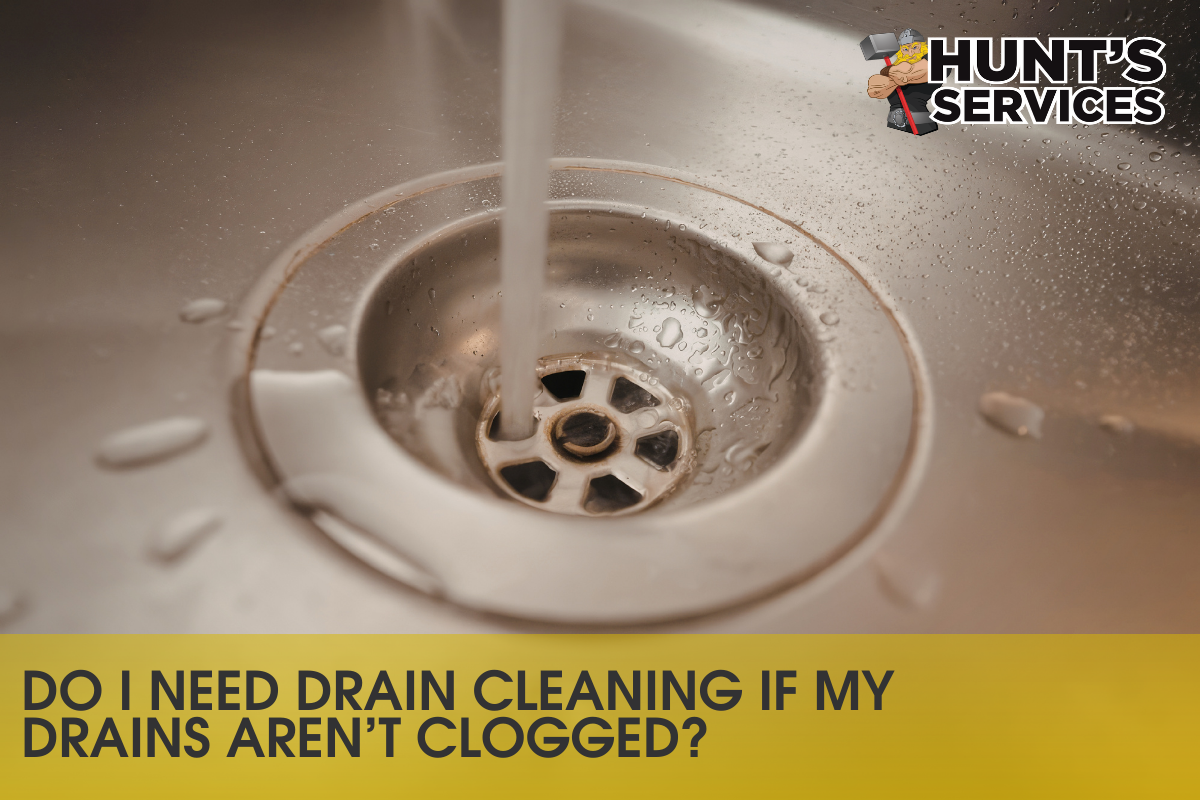
Do I Need Drain Cleaning If My Drains Aren’t Clogged?

Do I Need Drain Cleaning If My Drains Aren’t Clogged?

Most homeowners think:
“If water is draining, everything must be fine.”

It’s a logical assumption. No standing water. No overflowing sinks. No emergency.

But here’s what decades of field experience have taught our team at Hunt’s Services:

Drain problems rarely start with dramatic backups.
They build quietly — layer by layer — long before you notice anything is wrong.

Grease accumulates. Soap scum thickens. Hair binds with residue. Mineral scale narrows pipe walls. Tree roots slowly push into sewer lines.

By the time water stops draining, the problem has already been developing for months — sometimes years.

Preventive drain cleaning isn’t about reacting to a disaster.
It’s about avoiding:

  • Surprise plumbing bills
  • Water damage to flooring and drywall
  • Sewer backups
  • Disruptive emergency calls

If you’re unsure about your drains, schedule a professional inspection with Hunt’s Services and get clarity before a minor issue becomes major.

Drain Cleaning

What Most Homeowners Think Drain Cleaning Is (And Why That’s Not the Full Story)

When people hear “drain cleaning,” they often picture a plumber clearing a fully blocked pipe.

That’s emergency drain clearing.

It’s not the same as preventive professional drain cleaning.

Here’s the difference:

Emergency Drain Clearing Preventive Drain Cleaning
Reacts to a clog Maintains pipe health
Restores flow Removes buildup before failure
Urgent & stressful Planned & proactive

Think of it like:

  • Changing oil in your car
  • Scheduling HVAC tune-ups
  • Cleaning gutters before winter

You don’t wait for your engine to seize or your furnace to fail.
Drain cleaning works the same way.

At Hunt’s Services, we don’t just fix clogged drains — we help homeowners maintain plumbing systems before they fail.

Want to understand the difference between clearing a clog and protecting your plumbing?

Hidden Drain Problems That Don’t Cause Immediate Backups

One of the biggest misconceptions about drain cleaning is assuming visible performance equals internal health.

In reality, pipes can look fine on the surface while slowly narrowing inside.

Common Hidden Issues We See:

Grease buildup
Especially in kitchen lines, grease hardens along pipe walls, reducing diameter over time.

Soap scum and hair accumulation
Bathroom drains gradually constrict, even if water still drains.

Mineral scale buildup
Older homes often experience internal scaling that roughens pipe walls and traps debris.

Tree root intrusion
In the Pacific Northwest, mature trees are a frequent cause of sewer line infiltration.

Over time, these issues can lead to:

  • Pipe corrosion
  • Structural weakening
  • Reduced pipe diameter
  • Sudden catastrophic clogs

The EPA emphasizes proper wastewater system maintenance as critical to preventing system failure and environmental contamination. Preventive care isn’t optional — it’s responsible homeownership.


At Hunt’s Services, we use professional inspection tools to identify hidden drain issues before they become emergencies.

Warning Signs Your Drains Need Cleaning (Even Without a Backup)

Your plumbing usually gives early signals.

Don’t ignore these red flags:

  • Slow draining (even if it still drains)
  • Gurgling sounds after flushing or draining
  • Frequent use of store-bought drain cleaners
  • Foul or musty odors
  • Water pooling near floor drains

These are rarely one-time blockages.
They typically indicate gradual internal buildup.

Addressing them early costs significantly less than emergency service.

If you notice any of these signs, schedule a drain evaluation with Hunt’s Services today:

Why Preventive Drain Cleaning Saves Money Long-Term

Here’s the financial reality:

Preventive drain cleaning costs a fraction of:

  • Emergency drain clearing
  • Sewer backup cleanup
  • Pipe replacement
  • Water damage restoration

Water damage is consistently one of the most common homeowner insurance claims. Minor plumbing neglect often turns into major structural repairs.

Professional drain cleaning:

  • Extends pipe lifespan
  • Reduces emergency service calls
  • Protects flooring, drywall, and personal belongings
  • Maintains proper wastewater flow

The National Association of Home Builders highlights how proactive maintenance protects home systems and long-term property value.


A planned service appointment is far less expensive — and far less stressful — than dealing with sewage in your basement.

Protect your home and your budget with proactive drain care from Hunt’s Services.

Why Chemical Drain Cleaners Aren’t a Long-Term Solution

When drains slow down, many homeowners reach for chemical cleaners.

Here’s the problem:

  • They rarely remove full buildup
  • They often only punch a small hole through debris
  • They can damage certain pipe materials
  • They introduce harsh chemicals into wastewater systems

Federal environmental agencies warn about wastewater contamination and improper chemical disposal risks.


Repeated chemical use can weaken pipes over time — especially older plumbing systems.

Skip the chemicals.
Trust Hunt’s Services for safe, professional drain cleaning that removes buildup properly.

How Often Should You Schedule Professional Drain Cleaning?

While every home is different, general guidelines suggest:

Annual drain cleaning for most homes.

More frequent service may be recommended for:

  • Homes over 30 years old
  • Large households
  • Homes with mature trees
  • Rental or multi-family properties
  • Homes with recurring slow drains

At Hunt’s Services, we don’t apply a one-size-fits-all schedule.
We evaluate your plumbing system and create a maintenance plan tailored to your home.

Why Homeowners Trust Hunt’s Services for Drain Cleaning

Drain cleaning isn’t just about equipment — it’s about judgment.

Homeowners trust Hunt’s Services because we provide:

  • Experienced, licensed professionals
  • Local knowledge of plumbing systems
  • Transparent pricing
  • Honest recommendations
  • Modern inspection tools
  • Professional-grade cleaning equipment

We don’t recommend services you don’t need.
We inspect, explain, and educate before any work begins.

Get expert drain cleaning from your trusted local professionals at Hunt’s Services:

Final Takeaway: Clean Drains Aren’t Just About Backups

Drains don’t need to be overflowing to be a problem.

Preventive drain cleaning protects:

  • Your home
  • Your health
  • Your plumbing system
  • Your budget

Smart homeowners act before emergencies happen.

If you’re wondering whether your drains need attention, call Hunt’s Services today for expert guidance and peace of mind:
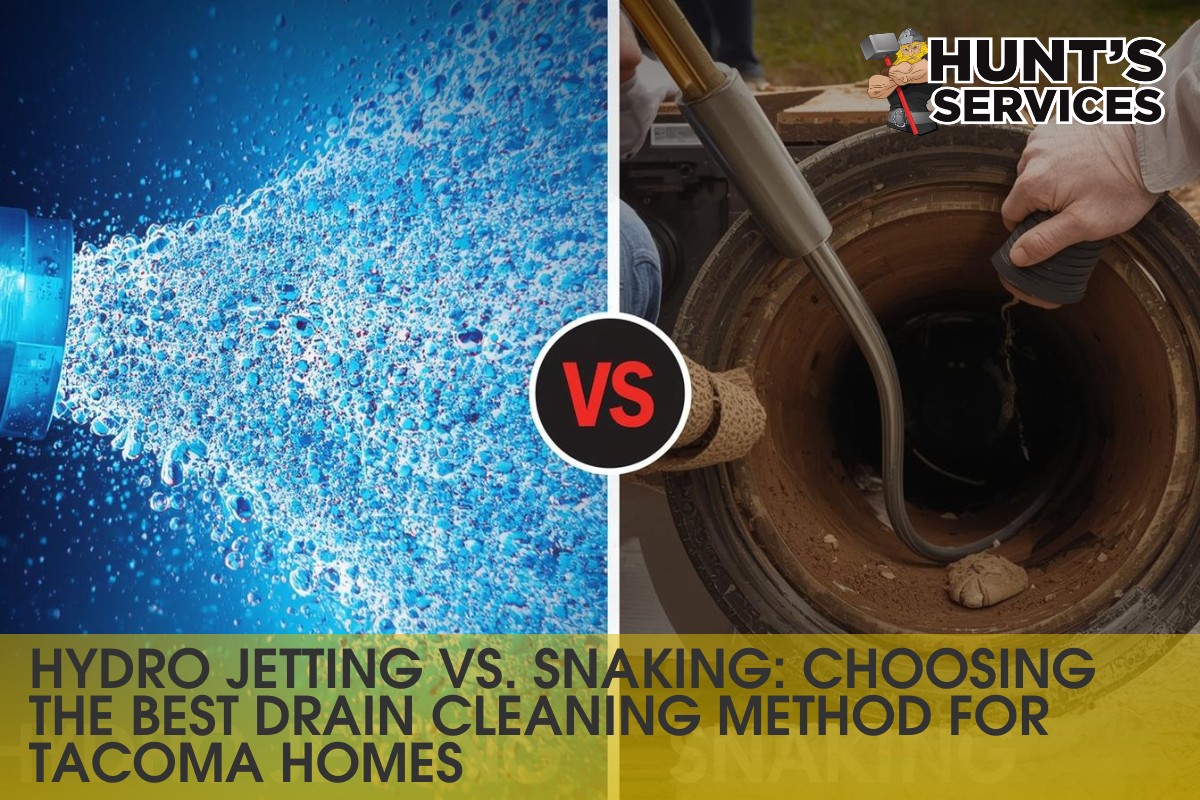
Hydro Jetting vs. Snaking: Choosing the Best Drain Cleaning Method for Tacoma Homes

Hydro Jetting vs. Snaking: Choosing the Best Drain Cleaning Method for Tacoma Homes

For Tacoma homes, drain snaking is best for small, isolated clogs, while hydro jetting provides a deep, long-lasting clean for recurring clogs, grease buildup, tree roots, and whole-home drain issues. The safest and most effective method depends on pipe condition, clog type, and system age—determined through professional inspection.

Slow drains, recurring clogs, and sewer backups are among the most common plumbing problems Tacoma homeowners face. While these issues often start small, choosing the wrong drain cleaning method can lead to repeat failures, pipe damage, and higher long-term costs.

Hunt’s Services is a trusted local authority in sewer and drain diagnostics, helping Tacoma homeowners choose the right solution the first time—not just a temporary fix.

Why Drain Cleaning Method Choice Matters More Than Homeowners Realize

Not all clogs are the same—and neither are drain cleaning methods.

What happens when the wrong method is used?

  • Older pipes can be damaged or weakened
  • Buildup may be partially removed but not eliminated
  • Clogs return faster and more frequently
  • Long-term repair and cleanup costs increase

Industry best practices emphasize diagnosis before cleaning. Without knowing what’s inside the pipe, even well-intentioned cleaning can make problems worse.

That’s why Hunt’s Services uses an inspection-first approach, relying on modern camera diagnostics to identify the root cause before selecting a method.

What Is Drain Snaking—and When Does It Work Best?

Drain snaking uses a flexible metal cable (auger) to break through or pull out clogs blocking a pipe.

Best uses for drain snaking

  • Hair buildup in bathroom drains
  • Paper or light grease clogs
  • Isolated kitchen or bathroom fixtures
  • Early-stage blockages

Snaking creates an opening through the clog so water can flow again, which is why it often provides quick relief.

Limitations homeowners should understand

  • Does not fully clean pipe walls
  • Leaves grease, sludge, and residue behind
  • Often results in temporary fixes
  • Clogs tend to return in the same location

Hunt’s Services uses professional-grade augers, not DIY tools, which are safer and more effective—but even professional snaking has limits.

What Is Hydro Jetting—and Why It’s Considered a Deep Clean?

Hydro jetting uses high-pressure water to clean the entire interior surface of a pipe, removing grease, roots, sludge, and scale.

Best uses for hydro jetting

  • Heavy grease buildup
  • Tree root intrusion
  • Sludge, scale, and mineral deposits
  • Recurring or whole-home clogs
  • Preventative maintenance for main sewer lines

Unlike snaking, hydro jetting restores pipe capacity, not just flow.

Safety matters

Hydro jetting is safe when performed by trained professionals who:

  • Inspect pipes beforehand
  • Adjust water pressure (PSI) based on pipe material and condition
  • Follow professional plumbing standards

Municipal and commercial plumbing standards frequently recommend hydro jetting for long-term drain maintenance.

Hydro Jetting vs. Snaking: Key Differences Homeowners Should Know

Quick Comparison Table 

Factor Drain Snaking Hydro Jetting
Cleaning depth Breaks through clog Fully cleans pipe walls
Effectiveness Short-term Long-term
Best for Minor, isolated clogs Grease, roots, recurring issues
Pipe safety Safe when used correctly Safe with inspection & PSI control
Longevity Clogs often return Results last significantly longer

Tacoma-specific insight

Older sewer systems, clay or cast-iron pipes, tree-lined streets, and heavy rain make hydro jetting especially valuable for Tacoma homes with recurring issues.

Which Drain Cleaning Method Is Safer for Older Tacoma Homes?

Common question: “Will hydro jetting damage my pipes?”

The professional answer

Hydro jetting is safe when preceded by a camera inspection and performed by licensed professionals who adjust pressure based on pipe condition.

Why inspections matter

  • Identifies cracked or collapsed pipes
  • Determines pipe material (clay, cast iron, PVC)
  • Prevents unnecessary stress on weak sections

Why DIY chemicals are riskier

  • Corrode older pipes
  • Weaken joints
  • Harm the environment
  • Mask symptoms without fixing causes

Hunt’s Services has years of experience working with aging Tacoma infrastructure, using professional protocols to protect pipes while delivering effective results.

Signs Your Home Needs Hydro Jetting Instead of Snaking

Hydro jetting is often recommended when homeowners experience:

  • Frequent backups despite snaking
  • Gurgling drains throughout the house
  • Slow drainage in multiple fixtures
  • Persistent sewer odors
  • Grease or root issues confirmed by inspection

Rather than treating symptoms, Hunt’s Services diagnoses the root cause, then selects the most effective method.

Why Professional Drain Cleaning Beats DIY Every Time

DIY drain cleaning often creates more problems than it solves.

Common DIY risks

  • Chemical cleaners corroding pipes
  • Improper snaking pushing clogs deeper
  • Pipe damage leading to leaks or collapse

From safety, environmental, and cost perspectives, professional drain cleaning consistently delivers better outcomes.

Hunt’s Services follows a no-guesswork, inspection-first process, ensuring the right solution is applied safely and effectively.

How Hunt’s Services Helps Tacoma Homeowners Choose the Right Solution

The Hunt’s Services process

  1. Inspection using sewer camera technology
  2. Clear explanation of findings with visual proof
  3. Recommendation based on pipe condition and clog type
  4. Proper method selection (snaking or hydro jetting)
  5. Long-term prevention advice to reduce future issues

This customer-first approach builds trust and prevents unnecessary repeat calls.

FAQ’s

Is hydro jetting better than snaking?
Hydro jetting provides a deeper, longer-lasting clean, while snaking is best for minor, isolated clogs.

Can hydro jetting damage old pipes?
Not when performed after inspection and with pressure adjusted to pipe condition.

How do I know which method my home needs?
A professional camera inspection determines the safest and most effective option.

Is hydro jetting worth the cost?
For recurring clogs and main line issues, hydro jetting often reduces long-term repair costs.

Schedule Expert Drain Cleaning with Hunt’s Services

Drain problems don’t have to become emergencies. Choosing the right cleaning method early can protect your pipes, prevent backups, and save money over time.

Hunt’s Services provides fast, professional sewer and drain evaluations throughout the Tacoma area, with the experience and tools to handle both minor clogs and complex system issues.

Contact Hunt’s Services today to schedule a sewer and drain evaluation.

Why Seattle Homes Are Especially Vulnerable to Drain Clogs

Why Seattle Homes Are Especially Vulnerable to Drain Clogs

Seattle homeowners deal with drain clogs and sewer backups at a higher rate than many other parts of the country—and it’s not by accident. The combination of Seattle’s damp climate, aging housing stock, tree-dense neighborhoods, and older sewer infrastructure creates ideal conditions for recurring drain problems that often catch homeowners off guard.

Many clogs don’t start as emergencies. They develop quietly over years, gradually restricting flow until one heavy rain, one grease-heavy meal, or one extra load of laundry pushes the system past its limit. When that happens, homeowners are left dealing with unexpected backups, water damage, and emergency repair costs.

Understanding why Seattle homes are more vulnerable is the first step toward preventing those emergencies—and choosing the right professional support when problems arise.


Contact Hunt’s Services for a professional drain inspection.

The Perfect Storm: Why Seattle Is Hard on Drain Systems

Seattle’s drain challenges are rarely caused by a single issue. Instead, they stem from multiple environmental and structural factors working together.

1. Older Homes, Older Pipes

Seattle experienced major residential growth in the early-to-mid 20th century. As a result, many homes still rely on plumbing systems installed 50–100 years ago. These systems were never designed to handle modern water usage, appliances, or household habits.

2. Persistent Moisture

With frequent rainfall and high soil moisture, underground pipes in Seattle are under constant environmental stress. Moist conditions accelerate corrosion, encourage root growth, and increase the likelihood of pipe shifting or cracking.

3. Dense Tree Coverage

Seattle’s mature trees are one of its greatest assets—but underground, their root systems are one of the most common causes of sewer line intrusion and blockage.

When these factors combine, drains clog faster, backups happen with less warning, and minor issues escalate into major problems more quickly than homeowners expect.

Common Causes of Drain Clogs in Seattle Area Homes

Common Causes of Drain Clogs in Seattle Area Homes

Aging Plumbing Infrastructure in Older Homes

Many Seattle homes still use galvanized steel, cast iron, or clay pipes, particularly in homes built before the 1970s.

Over time, these materials:

  • Corrode internally, creating rough surfaces
  • Accumulate rust, scale, and mineral buildup
  • Gradually narrow the internal pipe diameter

This narrowing doesn’t happen overnight. Flow slowly decreases until pipes can no longer handle normal daily use. At that point, even small amounts of grease or debris can trigger a clog.

In neighborhoods like Ballard, Beacon Hill, Greenwood, and West Seattle, Hunt’s Services frequently finds pipe interiors that are severely restricted—despite no visible problems above ground.


Schedule a consultation with Hunt’s Services to evaluate older pipes.

Tree Roots and Shifting Soil

Tree roots are one of the leading causes of sewer blockages in Seattle, especially in established neighborhoods with mature landscaping.

Roots are naturally drawn to moisture. Even tiny cracks or joints in sewer lines allow roots to enter. Once inside, they:

  • Expand rapidly
  • Catch debris and waste
  • Restrict flow until backups occur

Seattle’s soil conditions also play a role. Seasonal moisture changes can cause soil movement, which stresses older pipes and creates new entry points for roots.

Without camera inspection, root intrusion often goes undetected until backups become frequent.

Heavy Rainfall and Stormwater Overload

Seattle receives above-average annual rainfall, with the heaviest precipitation occurring during fall and winter—exactly when drain systems are already under stress.

During heavy rain:

  • Groundwater pressure increases
  • Sewer systems fill rapidly
  • Older or combined sewer systems can become overwhelmed

When sewer capacity is exceeded, wastewater looks for the lowest exit point—often basement drains, floor drains, or ground-level fixtures.

This is why many homeowners experience backups only during storms, even if drains seem fine the rest of the year.

Everyday Household Habits That Cause Clogs

Everyday Household Habits That Cause Clogs

Even well-maintained systems can fail when everyday habits add up.

Common contributors include:

  • Cooking grease that hardens inside pipes
  • “Flushable” wipes that don’t break down
  • Food scraps entering kitchen drains
  • Hair and soap residue from bathrooms

These materials accumulate gradually, often sticking to already narrowed pipe walls. The result is a clog that feels sudden—but has been forming for years.

Improper disposal also contributes to broader environmental and municipal sewer issues, making prevention important at both the household and community level.

Warning Signs Your Drains Are Heading Toward a Backup

Most sewer backups provide warning signs—homeowners just don’t always recognize them.

Key indicators include:

  • Slow drainage in multiple fixtures
  • Gurgling sounds from toilets or sinks
  • Recurring clogs in the same areas
  • Sewage or musty odors

Ignoring these signs increases the likelihood of:

  • Water damage to floors and walls
  • Mold growth within 24–48 hours
  • Expensive emergency repairs and cleanup

Water damage remains one of the most common and costly homeowner insurance claims, and many policies limit coverage for sewer backups.

Why DIY Drain Cleaning Often Makes the Problem Worse

DIY solutions can feel convenient—but they often mask symptoms rather than fix causes.

Common DIY risks include:

  • Chemical cleaners corroding older pipes
  • Plungers clearing only surface obstructions
  • Rental snakes pushing debris deeper into the system

Environmental and plumbing authorities caution against repeated chemical use due to pipe damage and environmental impact—especially in aging systems.

What starts as a minor clog can become a pipe failure after repeated DIY attempts.

Professional Drain Cleaning Solutions from Hunt’s Services

Video Camera Inspections

Camera inspections are the foundation of effective drain service. They allow technicians to identify:

  • Root intrusion
  • Collapsed or cracked pipes
  • Severe buildup or misalignment

Hunt’s Services uses camera diagnostics to eliminate guesswork and provide homeowners with visual confirmation of the issue.

Hydro Jetting and Mechanical Cleaning

Different problems require different solutions.

  • Mechanical snaking removes localized blockages
  • Hydro jetting uses high-pressure water to clean pipe walls completely

Hydro jetting is often recommended for recurring clogs, grease buildup, and root-related issues because it restores full pipe capacity rather than creating a temporary opening.

Preventative Maintenance Tips for Seattle Homeowners

Preventative maintenance is the most effective way to avoid drain emergencies.

Best practices include:

  • Annual drain inspections
  • Root control treatments where applicable
  • Proper grease disposal habits
  • Seasonal maintenance before heavy rain

Proactive care costs significantly less than emergency repairs and helps extend the life of existing plumbing systems.

Why Local Expertise Matters When Choosing a Drain Cleaning Company

Seattle’s drain systems require region-specific knowledge:

  • Local soil and rainfall behavior
  • Older construction methods
  • Municipal plumbing codes and compliance

Hunt’s Services brings this local expertise to every inspection and repair—ensuring solutions are designed for Seattle homes, not generic systems.

Protect Your Home from Costly Drain Backups

Seattle homes face unique challenges that make drain clogs more likely—but not inevitable. Understanding the risks, recognizing early warning signs, and investing in professional maintenance can prevent most emergencies before they happen.

Hunt’s Services is trusted throughout the Seattle area for honest diagnostics, professional solutions, and long-term protection—not quick fixes.

Schedule drain cleaning with Hunt’s Services today.

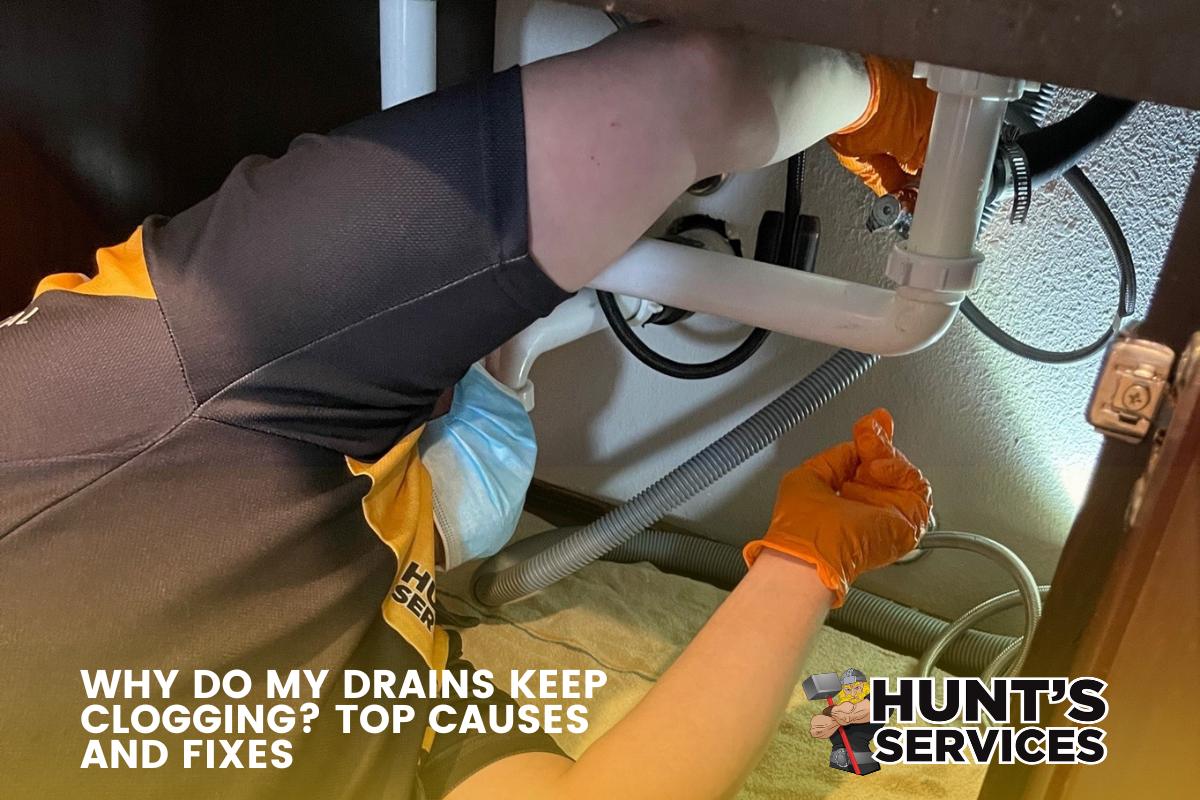
Why Do My Drains Keep Clogging? Top Causes and Fixes

Why Do My Drains Keep Clogging? Top Causes and Fixes

Understanding Why Drains Keep Clogging

If your sink or shower drain backs up repeatedly, it’s not just an annoyance; it may be a warning sign of more serious plumbing issues. Frequent clogs often indicate underlying issues such as aging pipes, inadequate drainage slope, or even sewer line obstructions.

These issues can lead to serious consequences such as water damage, mold growth, and even health risks if left unaddressed. The EPA warns that mold can develop within 24–48 hours after exposure to moisture, especially in areas with poor ventilation or inadequate drainage systems (EPA.gov).

Understanding what’s behind persistent clogs is the first step toward preventing damage—and saving money on costly emergency repairs.

Top Reasons Drains Keep Clogging

Top Reasons Drains Keep Clogging

Hair and Soap Scum in Bathroom Drains

Bathroom clogs are typically caused by hair binding with soap residue, forming sticky clumps that narrow your pipes over time.

Prevent it: Install a drain catcher in your tub or shower and pour a monthly vinegar and baking soda mix to help dissolve buildup.

Grease, Food, and Debris in Kitchen Sinks

Even if you have a garbage disposal, kitchen drains are prone to clogs from food particles and especially fats, oils, and grease (FOG). When poured down the drain, grease cools and hardens inside pipes, restricting flow and collecting other debris.

Prevent it: Dispose of grease in the trash and avoid rinsing fibrous or starchy foods. The EPA notes that FOG is a common cause of blockages in sewer systems (EPA.gov).

Need help? Schedule a kitchen drain cleaning with Hunt’s Services to avoid backups.

Flushing Non-Flushables

Your toilet isn’t a trash can. Items like wipes (even “flushable” ones), paper towels, cotton balls, and feminine hygiene products don’t break down like toilet paper and can easily clog your plumbing or sewer main.

Tip: The EPA recommends flushing only human waste and toilet paper (EPA.gov).

Tree Root Intrusion in Outdoor Lines

Roots naturally seek moisture and can infiltrate sewer lines through small cracks or joints—especially in older homes with clay or cast-iron pipes. Once inside, they expand and cause severe blockages.

Pro Tip: Hunt’s Services offers camera inspections to detect root intrusion early—before it results in a sewer backup.

The National Association of Home Builders (NAHB) notes that aging infrastructure is a growing concern, especially in regions with mature housing stock (NAHB.org).

Poor Pipe Slope or Aging Plumbing

Homes constructed before the 1980s, like many in Tacoma, often have deteriorating pipes or improper drain slopes, which can trap debris and increase the risk of clogs.

If your home experiences frequent clogs despite your best efforts, a slope or pipe material issue may be the cause.

Warning Signs You Shouldn’t Ignore

Don’t wait until water is backing up into your bathtub. Common warning signs of drain problems include:

  • Gurgling Sounds: May indicate a venting issue or air trapped behind a clog.
  • Multiple Slow Drains: Often a red flag for a main sewer line problem.
  • Persistent Odors: Foul smells can signal decaying organic matter or stagnant water in pipes.

Take action early: Contact Hunt’s Services to inspect your drains before a small issue becomes a major repair.

DIY Fixes vs. When to Call a Professional

Safe DIY Methods

  • Use a plunger or a hand-crank snake to dislodge minor blockages.
  • Try a mix of baking soda and vinegar followed by hot water to help clear buildup.

Caution: Be careful with chemical drain cleaners. According to plumbing safety guidance, these harsh chemicals can corrode older pipes over time and may create toxic fumes.

When It’s Time for Pros

If you notice:

  • Recurring clogs that return soon after clearing
  • Multiple drains affected at once
  • Foul sewer odors or bubbling in toilets

…it’s time to bring in a licensed professional. Hunt’s Services utilizes tools such as hydro jetting and high-definition camera inspections to eliminate clogs at their source and assess the overall health of your entire drainage system.

Long-Term Solutions to Prevent Clogs

Schedule Preventive Drain Maintenance

Biannual professional cleanings can help prevent most major clogs. This also gives your plumber a chance to identify developing issues like corrosion or root infiltration early.

Pro Tip: Ask about Hunt’s Services maintenance plans for seasonal checkups and member discounts.

Build Better Habits at Home

Simple changes make a big difference:

  • Use drain screens in tubs and sinks.
  • Never pour grease down the drain—store it in a jar and throw it out.
  • Post a reminder near toilets: flush only the “3 P’s”—pee, poo, and (toilet) paper.

Install Grease Traps or Drain Covers

These low-cost devices physically block solids and oils from entering your pipes. A Hunt’s Services technician can recommend the right ones for your sinks, tubs, or laundry room drains.

Why Hunt’s Services Is Your Local Drain Expert

For over 20 years, Hunt’s Services has helped homeowners across Tacoma and South King County prevent plumbing problems before they start. Our technicians are licensed, experienced, and follow a no-pressure, flat-rate pricing model to ensure your peace of mind.

We do not upsell or surprise our clients; we emphasize lasting, professional repairs built on trust and transparency.

Ready to get proactive? Schedule your inspection today or contact us online to learn more about how we can help protect your home’s plumbing.

End-of-Summer Drain Cleaning Tips for University Place Homes

Hunt's Services Logo with Background

Why Late Summer Is the Right Time

As summer fades and cooler weather approaches in University Place, many homeowners turn their attention to fall routines. But before the rains return and leaves begin to fall, there’s a crucial home maintenance task that should be addressed: drain cleaning.

At Hunt’s Services, we understand how the transition from summer to fall can bring hidden plumbing challenges. Increased summer activity, dry weather, and aging infrastructure all contribute to potential blockages that reveal themselves only when the first autumn storm hits. This guide provides University Place residents with everything they need to know to prepare their home drainage systems for the rainy season.

Why Drain Cleaning Matters Before Fall

Homeowners in University Place face unique seasonal plumbing challenges. The end of summer is one of the most important times to address drainage health. Here’s why:

  • Summer buildup: Heavy usage of sinks, showers, outdoor hoses, and garbage disposals during the summer can lead to grease, food, soap, and debris accumulation in drains.
  • Root intrusion: Tree roots are more likely to invade aging sewer lines at the end of a dry summer as they seek moisture, weakening pipe integrity.
  • Storm surge: Early fall rains place stress on already-compromised drains, quickly exposing any weaknesses through backups or slow drainage.

Drain issues that might have gone unnoticed during dry weather often escalate dramatically once rain begins. Our technicians commonly see a spike in emergency calls immediately after Labor Day, most of which could have been prevented with end-of-summer drain cleaning.

How to Spot Drain Issues Early 

Before hiring a professional, University Place homeowners can take a few minutes to inspect their drains. Performing a basic visual and auditory inspection can help identify the early warning signs of trouble.

Check for:

  • Slow-draining sinks or tubs: Water that pools or drains slowly may indicate partial clogs.
  • Unpleasant odors: Foul smells from drains often signal trapped food, grease, or bacteria buildup.
  • Gurgling sounds: Bubbling or gurgling sounds when water drains are signs of airflow problems, often due to blockages.
  • Outdoor pooling: Standing water near outdoor drains or sewer cleanouts could point to underground blockages or root intrusion.

Spotting these signs early can help you avoid more serious issues once the fall rains begin.

Five Essential End-of-Summer Drain Cleaning Tips

University Place homeowners can take a proactive approach to drain maintenance by following these five seasonal best practices:

  1. Remove Surface Debris and Hair
    Use a plastic barbed tool or drain snake to pull hair and debris from bathroom sink and tub drains. This inexpensive step helps prevent minor clogs from becoming bigger problems.
  2. Flush Drains with Boiling Water and Natural Cleaners
    Avoid chemical drain cleaners that can corrode pipes. Instead, pour boiling water down the drain followed by a mixture of baking soda and vinegar. This natural combo helps break down grease, soap scum, and minor blockages.
  3. Clean Garbage Disposal Blades and Interior
    Disposals accumulate food residue, which can clog the drain or cause odor. Clean them by running ice cubes and citrus rinds to scrub blades and deodorize.
  4. Inspect and Clear Outdoor Drains and Gutters
    Yard drains, gutters, and downspouts need to be clear before the fall rains arrive. Clogged outdoor drainage can cause water to back up into the foundation or lead to sewer line pressure.
  5. Schedule a Professional Hydro-Jet Cleaning
    For persistent slow drains, recurring blockages, or gurgling, consider a full pipe inspection and hydro-jet cleaning. This high-pressure water cleaning technique removes deep blockages, roots, and residue without chemicals.

Risks of Delaying Drain Maintenance

Waiting until fall or winter to clean your drains could lead to significant consequences:

  • Emergency plumbing calls: Blocked toilets, flooded basements, and sewage backups are costly and disruptive.
  • Water damage and mold growth: Overflowing drains can lead to hidden leaks behind walls or under floors.
  • Sewer line damage: Unchecked root growth or internal pipe pressure can cause structural failures requiring excavation.

Preventive drain maintenance is more affordable and less invasive than reactive emergency service.

Why University Place Homes Are More Vulnerable

Many homes in University Place were constructed in the 1970s or earlier, making them more prone to plumbing problems such as:

  • Deteriorating cast iron or clay pipes
  • Lack of backwater valves or modern traps
  • Heavy root intrusion from mature landscaping
  • Leaf accumulation that blocks gutters and storm drains

Older infrastructure combined with seasonal weather changes creates a higher risk of drainage failure if not proactively maintained.

Hunt’s Services: Your Local Drain Experts

Our plumbing team specializes in understanding the specific needs of University Place homes. Hunt’s Services offers seasonal specials including drain cleaning and camera inspections. Our trained technicians use safe, effective techniques like hydro-jetting and trenchless camera evaluations to diagnose and resolve hidden issues before they become emergencies.

We don’t just clear clogs, we help homeowners build a year-round plan for healthy plumbing systems.

Get Your Drains Fall-Ready Today

University Place homeowners: don’t let the end of summer pass without giving your drains the attention they need. A little prevention now can save thousands later in emergency repairs and water damage.

Book your professional drain cleaning and inspection with Hunt’s Services today. Call our team or schedule service online in under a minute.

FAQs

Q: How often should I clean my home drains?
A: Most homes benefit from professional drain cleaning once a year. If you have large trees nearby or have experienced past clogs, twice a year may be necessary.

Q: Are store-bought chemical cleaners safe?
A: We recommend avoiding chemical cleaners. They can corrode pipes and often provide only temporary relief. Natural cleaners or professional hydro-jetting are safer and more effective.

Q: What is hydro-jetting and when is it used?
A: Hydro-jetting uses high-pressure water to remove built-up grease, sludge, and even tree roots from inside pipes. It’s ideal for severe or recurring clogs.

What Causes Drain Clogs in the Tacoma–Seattle Area?

What Causes Drain Clogs in the Tacoma–Seattle Area?

Local Plumbing Experts Share Tips Every Homeowner Should Know

TACOMA, WA – June 6, 2025 – If you own a home in the Puget Sound area, chances are you’ll eventually deal with one of the most common and frustrating plumbing issues: slow or clogged drains. To help homeowners in Tacoma and Seattle avoid expensive plumbing repairs, Jason Hunt, licensed plumber of over 30 years and founder of Hunt’s Services, is shedding light on the most frequent causes of clogged drains and how to prevent them before they start.

Top 4 Reasons Drains Clog in Tacoma–Seattle Homes

1. Tree Root Intrusions
“In older neighborhoods like North Tacoma or Capitol Hill, roots from large trees often grow into sewer lines looking for moisture,” says Jason. “It’s a slow but serious issue that can eventually block your entire pipe.”

Root penetration is most common in homes built before the 1970s when the original clay or concrete sewer pipes remain in place. Both of these materials will crack or get loosened joints where the pipes come together, allowing roots nearby to enter and grow inside. If the roots enter your drain lines, they will create an interlacing structure that traps solids, grease, and other blockages which can ultimately result in completely clogged pipes or even worse pipe failure. Warning indications are regular backups, sluggish drains, and areas of abnormally bright grass over the line.

2. Grease and Food Waste
“Even small amounts of grease poured down the sink can harden inside your pipes, especially in our cooler climate,” Jason explains. “Over time, it traps other debris and causes major clogs.”

People often assume hot water will wash grease away however as it cools in your drain line, it solidifies and sticks to the pipe walls. Add bits of food, soap scum, and hair, and you’ve got the perfect recipe for a stubborn clog. Foods like pasta, rice, eggshells, and coffee grounds are also notorious for sticking and swelling in pipes. The best practice is to scrape every bit of food into the trash or compost before washing dishes.

3. Flushable Wipes and Hygiene Products
“Despite the label, most flushable wipes don’t break down like toilet paper,” Jason warns. “They often get caught in sewer lines and lead to backups, especially when combined with tree roots or grease.”

What might seem like a harmless inconvenience can be a plumbing disaster. Wipes, sanitary products, cotton balls, and even paper towels don’t break down easily in water, and when several are flushed at once, they produce dense clogs. These clogs are a leading cause of sewer overflows in single-family residences and apartment or condo buildings.

4. Old Pipes in Older Homes
It is conservatively estimated that the majority of homes built before 1980 in Seattle, Tacoma, and the surrounding areas still utilize outdated drain and sewer pipe materials. Galvanized steel corrodes inwardly, narrowing water flow. Orangeburg, a tar-based soft pipe commonly utilized during mid-century construction, is highly prone to collapse. Clay and concrete pipes are more likely to crack due to ground movement, root pressure, or corrosive sewer gases.

“These aging systems clog easily and can fail without warning,” Jason says. “Many homeowners don’t even know what type of piping they have until something goes wrong.” Tacoma’s damp winters and shifting soils only make things worse, putting older plumbing systems under constant stress.

How to Prevent Drain Clogs: 4 Essential Tips for Homeowners

1. Use Drain Strainers

Catch food scraps, hair, and debris before they enter your plumbing system. Strainers are inexpensive, easy to clean, and highly effective at preventing foreign objects from reaching your main drain lines.

2. Flush Pipes Naturally

Once a month, use a mix of baking soda and vinegar to clear minor buildup. Pour half a cup of baking soda down the drain, followed by a cup of vinegar. Let it fizz for 15 minutes, then rinse with boiling water. Avoid harsh chemical cleaners because they may work temporarily but can corrode older pipes, damage septic systems, and pollute local water supplies.

3. Schedule Annual Inspections

If you’ve noticed recurring drainage issues, or if your home is more than 20 years old, it is recommended that you have an annual inspection by a licensed Seattle plumber who can detect root intrusions, buildup, or early signs of pipe failure. Licensed Tacoma plumbers, such as Hunt’s Services, use sewer cameras to inspect the full length of your drain lines, allowing them to pinpoint small problems before they turn into costly emergencies.

4. Replace Old Drain Lines

Replacing outdated or damaged sewer lines is often the most cost-effective long-term solution. Modern materials like PVC, ABS, and HDPE are stronger, more resistant to corrosion, and have smoother interiors that resist buildup.

Hunt’s Services offers both traditional and trenchless pipe replacement options. Trenchless technology allows technicians to replace underground pipes without digging up your yard, patio, or driveway — making it a great option for homeowners who want a permanent fix with minimal disruption.

“Many emergency service calls come from homeowners with no idea they had old or deteriorating pipes under their home,” Jason notes. “That’s why we recommend regular inspections, especially if your home was built before the 1980s.”

Limited-Time Offer: Free Drain Assessment for Local Homeowners

To help local homeowners prevent drainage issues before the rainy season intensifies, Hunt’s Services is offering free visual drain assessment for the next two weeks. Tacoma and Seattle residents can schedule an inspection online at www.huntsservices.com or call 253-220-4688

This limited-time offer is especially helpful for homeowners who haven’t had their pipes checked in years. Whether you’re concerned about tree roots, grease buildup, or the age of your system, a free inspection can offer peace of mind and catch problems before they escalate into expensive sewer and drain repairs.

About Hunt’s Services
Hunt’s Services is a family-owned and locally operated plumbing, HVAC, and electrical company serving the greater Tacoma–Seattle area. With over 3,000 five-star reviews, Hunt’s is trusted for its quality craftsmanship, honest pricing, and reliable service. The company provides emergency response, same-day repairs, and full system installations.

Media Contact:
Faruk Oyebanjo
Director of Marketing, Hunt’s Services
Phone: 253-220-4688
Website: https://www.huntsservices.com