
The Ultimate Guide: How Often Should You Replace Your Furnace Filters?

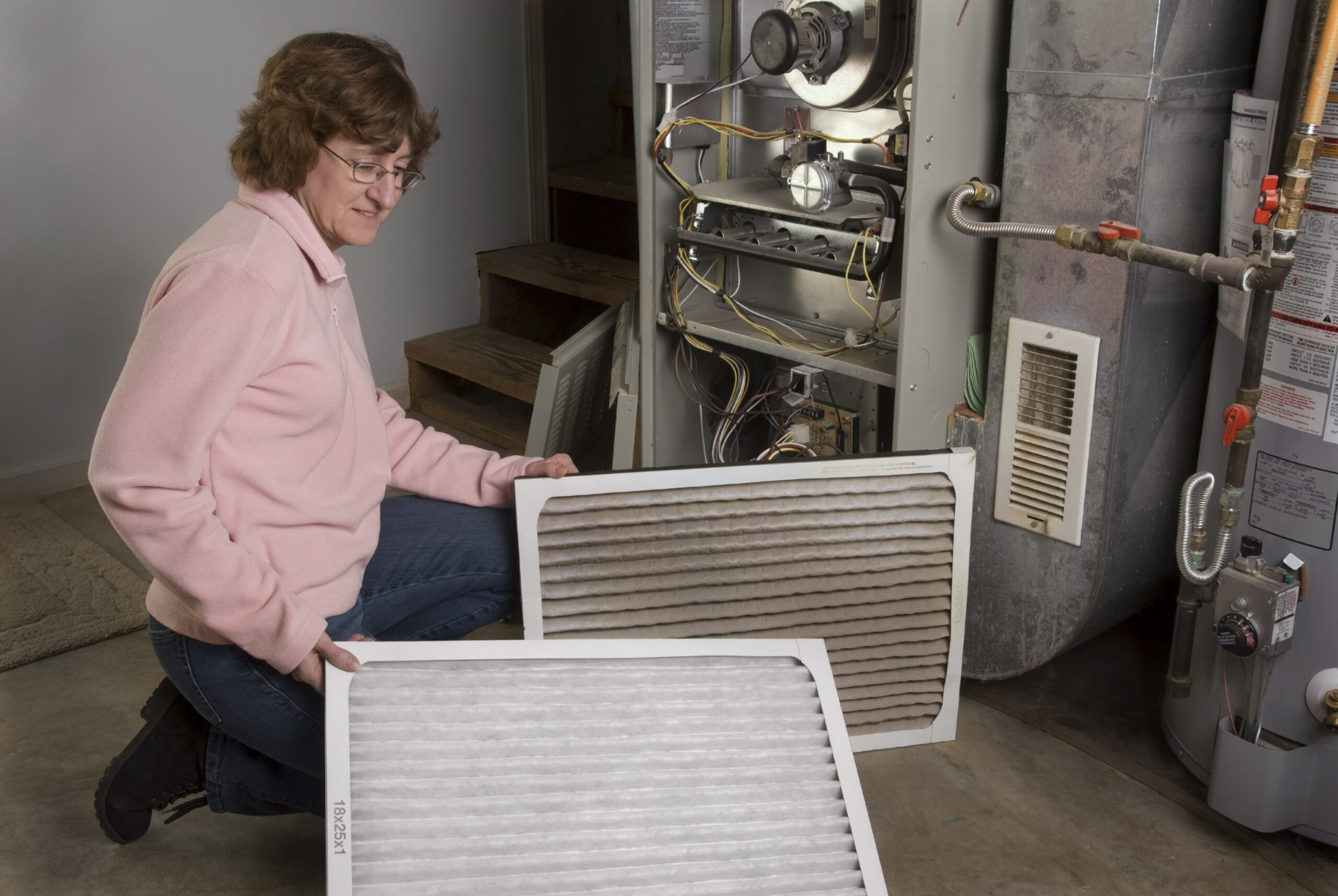
Woman replacing furnace filters while inspecting an HVAC system, emphasizing the importance of regular maintenance for indoor air quality.

Maintaining a comfortable and healthy home environment involves a variety of factors, and one crucial aspect often overlooked is the regular replacement of furnace filters. Your furnace works tirelessly to keep you warm during chilly seasons, and its filters play a vital role in maintaining indoor air quality and the efficiency of the system.

Why Furnace Filters Matter

Indoor Air Quality and Health

Furnace filters serve as the first line of defense against airborne pollutants such as dust, pollen, pet dander, and even bacteria. Regular replacement ensures cleaner indoor air and reduces respiratory issues. This is particularly important for households with children, the elderly, or individuals with preexisting respiratory conditions like asthma.

Extended Equipment Lifespan

A clean filter reduces the strain on your furnace’s blower motor and other components. Proper airflow is critical to preventing overheating and unnecessary wear and tear, ultimately extending the lifespan of your furnace.

Energy Efficiency

A clogged filter forces your furnace to work harder, leading to increased energy consumption and higher utility bills. When the filter is clean, air can flow freely, enabling your furnace to operate efficiently without excessive energy usage.

Preventing System Breakdowns

Neglecting to replace your furnace filter can lead to serious consequences. A clogged filter can cause the furnace to overheat, tripping safety switches and potentially leading to a complete system shutdown. Regular filter replacement helps avoid inconvenient breakdowns during the coldest days of winter.

Improved Comfort

A clean filter ensures consistent airflow throughout your home. When your furnace is operating at peak efficiency, you can enjoy a more comfortable living space with evenly distributed warmth.

Factors Influencing Replacement Frequency

Filter Type

Different filters have varying lifespans. Fiberglass filters typically last around 30 days, while pleated filters can last up to 90 days. High-efficiency filters can last even longer. Choosing the right filter type based on your household’s needs can help you achieve the desired level of air quality and system efficiency.

Household Size

The number of occupants in your home affects the rate at which pollutants are generated. A larger household with more people and potential allergen sources might require more frequent filter replacements to keep up with increased air contamination.

Pet Ownership

If you’re a pet owner, especially with shedding animals, your filters can quickly become clogged with fur and dander. More frequent filter replacements, especially if using lower MERV-rated filters, can help maintain a cleaner indoor environment.

Smoking Indoors

Smoking indoors introduces a host of harmful particles into the air, significantly reducing air quality. If smoking is allowed inside your home, you should consider changing filters more often to mitigate the effects on air quality.

Nearby Construction or Pollution Sources

If your home is situated near a construction site, industrial area, or an area with high levels of pollution, your filters might become dirty faster. In these situations, more frequent replacements are advisable to ensure adequate filtration.

Home Renovations

Renovations can stir up dust and debris, overloading your filters. During and after renovations, it’s a good idea to replace filters more frequently to prevent excessive buildup in the HVAC system.

Respiratory Conditions

If anyone in your household has respiratory conditions like asthma or allergies, consider more frequent filter replacements. Clean filters help reduce airborne allergens and irritants that can trigger symptoms.

Location

Climate and environmental conditions can influence how often you should change your filter. Areas with high pollen counts or frequent dust storms may require more frequent filter replacements to maintain indoor air quality.

By assessing these factors, you can determine a replacement frequency that aligns with your specific household conditions and needs. Remember, maintaining a consistent replacement schedule not only ensures better indoor air quality but also prolongs the life of your HVAC system.

Recommended Replacement Intervals

  • Every 30 Days: Standard Fiberglass Filters are the most affordable but need to be replaced monthly to prevent clogging.
  • Every 60 Days: Pleated filters offer better filtration and can last up to two months, but check them regularly for any signs of dirt buildup.
  • Every 90 Days: High-Efficiency Filters can effectively capture even tiny particles, making them ideal for allergy sufferers. They can last up to three months but should still be inspected periodically.
  • Seasonal Changes: Consider replacing your filter when transitioning between seasons to ensure optimal performance as weather conditions change.

Signs Your Filter Needs Replacement

Reduced Airflow

If you notice weaker airflow from your vents, you might have a clogged filter. Addressing this issue promptly can prevent strain on your furnace’s components and ensure consistent heating throughout your home.

Uneven Heating

Do certain areas of your home feel colder than others? A clogged filter can disrupt proper airflow, leading to uneven heating distribution. Regular filter replacements help maintain consistent comfort levels in every room.

Increased Energy Bills

A clogged filter forces your furnace to work harder, consuming more energy to achieve the desired temperature. If you’ve noticed a sudden spike in your energy bills, a dirty filter might be the culprit.

Noisy Operation

If your furnace has become louder than usual, it might be struggling due to restricted airflow caused by a clogged filter. Replacing the filter can restore smooth and quiet operation.

Persistent Odors

A dirty filter can’t effectively trap odors, allowing them to circulate throughout your home. If you’re noticing unpleasant odors despite regular cleaning, it’s time to replace the filter.

Dust Accumulation in Air Vents and Ducts

If you’re finding excessive dust collecting around your vents, it’s a sign that your filter isn’t doing its job effectively. Regular filter replacements can help reduce dust buildup and the need for frequent cleaning. Also don’t forget to check your HVAC ducts for dirt and debris. It is a good idea to have a duct cleaning at least once a year.

Allergy or Respiratory Symptoms

If you or your family members are experiencing an increase in allergy or respiratory symptoms like sneezing, coughing, or congestion, a clogged filter could be to blame. Fresh filters can help alleviate these symptoms by maintaining cleaner indoor air.

HVAC System Short Cycling

Short cycling refers to when your furnace turns on and off rapidly. A clogged filter can cause overheating and trigger safety switches, leading to this irregular operation. Regular filter replacements can prevent this issue.

Visible Mold Growth

Mold can thrive in damp environments, including clogged filters. If you notice mold growth on the filter or around the HVAC system, it’s crucial to replace the filter and address the moisture source promptly.

Age of the Filter

Even if you haven’t noticed any of the above signs, you need to follow the manufacturer’s guidelines for filter replacement. Over time, filters naturally lose efficiency, so replacing them at the recommended intervals is a proactive approach.

Staying vigilant to these signs and acting promptly to replace your furnace filter when needed ensures optimal indoor air quality, energy efficiency, and the longevity of your heating system.

Conclusion

Your furnace filter’s lifespan isn’t just a trivial detail; it’s a critical factor in maintaining a healthy and energy-efficient home. Regular replacements safeguard indoor air quality, optimize your furnace’s performance, and contribute to cost savings in the long run. Remember, different filters and household conditions require varying replacement frequencies. If you’re unsure about when to replace your filter or need professional assistance, turn to Hunt’s Services. Our HVAC experts in Tacoma are dedicated to ensuring your home remains a haven of comfort and well-being.

Don’t compromise on your indoor air quality and heating system efficiency. Contact Hunt’s Services today for expert HVAC services and make your home the epitome of comfort.

HVAC Heating and Cooling Spring Cleaning Tips and Tricks

Spring is here and that means spring cleaning for many people. You open the windows, air out the stale winter air, and do some vacuuming and dusting. But don’t forget about the maintenance of your HVAC system, either! When you’re spring cleaning the rest of your house, make sure you clean out your heating and cooling system, which has been working hard all winter long to keep you warm.

Your home’s HVAC system is essential to the comfort AND SAFETY of your family, and it can only do that if it is clean. Check out these tips to help you enjoy a safe and comfortable home this spring (and the rest of the year).

Maintenance of Your HVAC System

Before you do any cleaning, make sure the power to your HVAC system is turned off. That is most important for your safety. The last thing you want is to injure yourself. Even if you think you’ll be careful, it’s better to be safe; turn off your power as the first step any time you plan to work in or near your HVAC system. The reason is you don’t want your furnace or HVAC unit to come on while you are working on it.

There are a couple of ways you can turn off your furnace before you do any spring cleaning. Sometimes there is an on-off switch either on the furnace or close to it. Otherwise, you can go to your electrical panel and find the circuit that goes to the furnace and flip it to the off position. Also if you have a gas furnace or HVAC unit, such as a heat pump, you should turn the gas off to the unit. Find the gas line running into your HVAC unit and turn the gas valve coming into the furnace to the off position.

Clean Heating and Cooling Filters

Remove the filter in your HVAC system and replace it. Air is forced through the filter but that gets harder and harder for your HVAC system to do if the filter is clogged with dirt, dust, and debris. Replace your filter at least once every 3 months, depending on use and whether you have pets, allergies, and level of dust in your home. Only use filters that have been approved by the manufacturer so you don’t risk losing your warranty.

The filter to the furnace is typically where the cold air from the outside comes into the furnace. This can be on the furnace itself or in your house in the intake vent that leads to your furnace. For replaceable filters, there is usually a size of the filter marked somewhere on the filter. Find the filter at your local hardware store and replace it with the same size filter.

Some heating units have washable filters in which case take the filter to your sink or hose outside and run water over the filter until all dirt and debris have been washed off. A good tip is to write the date on the filter when you replace it, so you know when to replace it next. It is important to make sure the arrow on the filter is pointing in the direction of the airflow into your furnace. Central heat pumps and air conditioners will also use filters in the same way where they intake air into the unit.

Air Conditioning

If you have an external air conditioning unit, go outside and look at it. Make sure that the unit is free from debris that often accumulates around it during the fall and winter. Often, leaves and clippings will start to build inside the unit and at the vents.

While you’re looking at you’re air conditioning unit, clean the fan blades and the coils which can also pick up debris.

Clean Your Vents

Walk around the inside of your home and inspect your vents—the ones that blow warm/cool air FROM your HVAC system and the ones that pull air into your HVAC system. Make sure both types of vents are not blocked so that air can freely get in. This will not only ensure that you get clean fresh air throughout your house, it also helps you save money by keeping your HVAC system from doing too much work to draw in air.

Duct Cleaning

Think about the last time you had your ducts cleaned. If it isn’t in the last year then contact a company to come out and clean your ducts. All that dust and debris that accumulated over the winter can be removed so it’s not recirculating.

Proper duct cleaning is really a two part process to be effective. First remove debris and particulate matter that clings to your ducts and then suction to remove that debris. This is usually a job you cannot do without the proper equipment. Hunt’s Services HVAC technicians use Nikro negative air duct cleaning machines with compressed air whips that we run through each duct. The whips loosen all the dust and debris that collects in the duct system and then the negative air machine suck all the debris out of the system.

Reverse Your Ceiling Fans

Ceiling fans are a great way to reduce your energy bills by circulating the air in your home or business to either keep you warm or cool depending on the season. Make note of the direction of ceiling fan and make sure it is going in the correct direction. The general rule of thumb is the blades of the fan should turn clockwise in the winter, and the reverse in the summer. Run your ceiling fan at low speed in the winter to circulate your warm air and pull the warm air up and then push it downwards without creating a cooling effect from the fan.

Summary

Springtime is here and that means spring cleaning and enjoying the freshness of a new season. When you clean your home this spring, don’t forget about the HVAC system that has been working so hard all winter long, and reward it with a good cleaning… your HVAC system will run more efficiently and your family will be safer and more comfortable this spring!

5 Ways to Make Your Heating and Cooling Systems More Environmentally Friendly

We all have a responsibility to do whatever we can to protect the environment, as even implementing a few small changes can make a big difference over time. One method of making your home heating and cooling more environmentally conscious is reducing your energy consumption.

The good news is that limiting your energy use doesn’t have to make your life more difficult or your home less welcoming because you can easily invest in more efficient heating and cooling units, or make improvements to the systems that you already have.

The following HVAC tips can help you reduce your carbon footprint and assist you in doing your part to protect our environment for future generations.

1) Go with an Energy Efficient Furnace and Air Conditioner

If you have an older furnace or air conditioner in your home, it probably isn’t a high-efficiency model. In these situations, you’re likely using more energy that you need to, which is not only bad for the environment but is also costing you money every month.

In fact, some older furnaces only run at about 60% efficiency, while newer models are mostly above 95%, so you can see that there is a significant discrepancy.

Have a look at the age of your existing heating and air conditioning systems to see if it’s time for an upgrade. Remember that most furnaces last 15-25 years, and once you approach those years, you’ll probably start running into some costly repairs, making it cost-effective to replace the unit.

When the time does come to replace your system, commit to one of the more energy efficient models for the best results.

2) Invest in a Smart Thermostat

Your thermostat influences how much energy you use. The majority of homeowners turn their thermostat higher than it needs to be in the winter and leave the unit turned on while they’re not at home. Of course, no one wants to return to a cold home at the end of the day, so what’s the solution?

Why, a smart thermostat, of course. Smart thermostats have a variety of options, as you can control the temperature remotely through your phone or set it to turn on and off at certain hours. Perhaps the best benefit of a smart thermostat, however, is that it learns your schedule and will adjust the temperature in your house accordingly.

For example, if everyone is usually away between 8:00 AM and 5:30 PM during the week, the thermostat will pick up on this after a couple of weeks and start turning the furnace or air conditioning down when no one is there. It will then switch your system back on before you return home, so your house will always be a comfortable temperature when someone is there.

3) Install Some Heat Pumps

Heat pumps are highly efficient and can reduce the amount of energy you use heating and cooling your home. This point is particularly accurate if you’re currently using electric baseboard heaters or window-mount air conditioners, as heat pumps use up to 50% less electricity than these other devices.

There are a few different types of heat pumps on the market, so you can make a choice based on how much you want to spend and whether or not you want the unit to operate within your ductwork. No matter which version to go with, however, you can expect lower energy bills and a more environmentally friendly home.

4) Have Your Ducts Cleaned

It sounds simple, but having a professional company clean your ductwork could reduce the amount of energy that you use. When ducts fill up with dust and debris, your heating and cooling systems have to work harder to push air throughout the home, which means you’ll use more energy.

Go with a brush through and negative air duct cleaning service because this is the best way to get absolutely everything out of your ducts. A bonus is that cleaning your ductwork limits the dust and other pollutants that enter the air you breath in your home.

5) Maintain Your Heating and Cooling Units

A properly maintained furnace or air conditioner will always run more efficiently than one that is ignored. It makes sense when you think about it, as units that don’t receive regular maintenance end up with dirty filters and much like with clogged ducts, air can’t flow through the unit properly.

Luckily, your HVAC service provider can put you on a regular maintenance schedule, so you don’t have to worry about your furnace or air conditioner performing at anything less than an optimal level.

Doing Your Part for the Environment

As you can see, it doesn’t take much to reduce your energy consumption by making your HVAC system more efficient. And these steps won’t make your home any less comfortable; they will merely make it easier to keep your living spaces at the ideal temperature.

Hunt’s Services can help you with all of these jobs and will ensure that your home is not only as energy efficient as possible, but that you will never have to compromise your comfort as you become a more environmentally friendly family.

Top 5 Reasons To Have Your Ducts Cleaned

Top 5 Reasons To Have Your Ducts Cleaned Regularly

As we move into the coldest months of the year, your furnace will be running more often and, therefore, you’ll want to make note of the air in your home. Have you considered having a professional duct cleaning?

Does your home have a strange smell? Are you noticing dust and other allergens in every room in your house? Do you feel like you’re spending too much money on your energy bills?

All of these problems are symptoms of ducts that are overdue for a thorough cleaning.

Your ducts are responsible for delivering air to every room in your home after it has gone through your furnace or air conditioner. As a result, all of the air that you breathe in your home interacts with these ducts throughout most of the year, so if they are full of dust, mold, and other debris, you’ll end up with these particles in your lungs.

The good news is that our Tacoma duct cleaning this winter can ensure that the air you breathe is completely clean, reducing health problems and saving you money in the process. While you are getting your ducts cleans, let us also take a look at your dryer vents and ducts to make sure they are clean because clogged dryer vents are the number one cause of home fires.

1) Save Money on Bills

The cleaner your ducts, the lower your monthly heating and cooling bills will be. The reason is simple, as the buildup in your ducts means your system has to work hard to push air through your vents. When your ducts are clean, however, the air moves more efficiently and uses less energy in the process. Getting your ducts cleaned even once per year makes a difference in this regard and will ensure that you don’t end up with too much dust or other debris blocking your airflow. You can save even more money if you have an energy efficient heat pump or furnace installed

2) Reduce Issues with Allergies and Asthma

If you’ve noticed a fair amount of dust in the air at your home, you should have your ducts cleaned right away. This statement is particularly true if anyone in your household has asthma or allergies because having dust pushed out through your vents can trigger attacks and make life pretty miserable. The last thing you want is for something entirely preventable to cause problems with your family’s breathing this winter but luckily, a duct cleaning can greatly improve your indoor air quality.

3) Give Your Home a Fresh Start

When you move into a new home, having the ducts cleaned is essential because you never know how the previous tenants treated the property. Did they smoke inside the house? Did they have pets? Was there water damage? All of these things lead to debris in the vents, and if you don’t have them cleaned, you’ll be stuck breathing the particles in. It’s also a good idea to brush your ducts in Bellevue or Puyallup whenever you conduct renovations because drywall dust, paint, or, in some cases, asbestos, can fall into the vents when they aren’t properly sealed. From there, these harmful pollutants are blown all over the house. It’s better to be safe than sorry, especially if you don’t know how previous homeowners treated the place or if the ducts have ever received a cleaning before.

4) Breathe Cleaner Air

Even if you don’t have allergies or asthma, breathing cleaner air is always a good thing. You could keep your house spotless, but dust will still make its way into the vents and, therefore, into the air every time the furnace or air conditioner runs. The good news is that through a duct cleaning, you can have much of this dust removed from your home before it has the chance to be blown into the air, helping ensure that the air you breathe is as clean as possible. You’ll notice a distinct difference once the job is done because the air in your home will smell cleaner and fresher. And since you can’t open this windows as much in the winter here in Seattle, having clean air coming through your vents is essential.

5) Improve the Lifespan of Your HVAC System

Maintaining an HVAC system gets expensive as the unit ages because there are so many problems that you can run into. By cleaning your vents, however, you help the unit to work at a more manageable pace and prevent debris from getting into your system. Keeping your ducts clean also means you won’t have to replace your furnace filter as often, and even though these filters are a minor expense, every little bit matters. Keeping debris out of your ducts can improve the overall lifespan of your system by preventing it from overworking when moving air throughout your home.

Keeping up with your furnace maintenance will also save you money in the long run and improve the lifespan of your heating and cooling unit. When you schedule a furnace inspection or maintenance call to your home or business, ask one of HVAC technicians to take a look at your filters and ducts. Furnace maintenance is a good tie to also have your ducts cleaned.

Who to Trust?

When searching for a duct cleaning company, you’ll have a few different options. Flyers often come in the mail advertising duct cleaning for a rate of well under $100, but the truth is that these companies might not use the best equipment and, often, won’t provide adequate bang for your buck. Its a good idea to avoid duct cleaning scams that sound too good to be true.

Reputable companies, such as Hunt’s Services, use a hybrid system where we not only have a negative pressure vacuum to suck out dirt and debris but also a brush to physically scrub the inside of your vents. This method ensures that no debris is left behind.

Remember, when it comes to your ducts, the quality of the job done is of the utmost importance.

5 Common Air Conditioner Repairs

After the wettest winter on record and a long, cold spring, Western Washington is experiencing some of the driest weather in its history this summer and residents are looking for any way possible to keep comfortable. In fact, the dry streak is approaching the all-time high of 51 straight days without rain, which was set in 1951, leaving people in Greater Seattle and Tacoma with very little relief. While at the same time the National Weather Service is predicting continuing dry and hot weather in the foreseeable future.

Combine the dry weather with the scorching temperatures that area officials expect in the coming days, and it is easy to see why it is an absolute necessity to have your air conditioner functioning at its full capacity. Have an expert look at your air conditioning unit before these incredibly high temperatures hit to ensure that you can keep your indoor air quality optimal this summer.

If you notice that your heating and air conditioning isn’t working as it should, give Hunt’s Services a call at 253-533-7500 to have one of our technicians have a look and fix the problem.

Some symptoms of an HVAC or air conditioner repair include:

1) No Cold Air

Perhaps the most alarming symptom of an air conditioning problem is finding that you don’t have any cold air coming out of your vents. When you run into this issue, you will have turned the unit on, only to find warm air coming out of the vents, much like you had turned on your furnace.

This situation certainly isn’t ideal, but the good news is that it is usually a simple problem for a professional to fix. The likely cause is a refrigerant leak, as this refrigerant is what cools the air before the unit pushes it through the vents. When refrigerant levels dip below a certain level, the unit won’t have the ability to do its job any longer, causing your house to heat up.

Luckily, a heating and cooling technician can fix this leak and replace the refrigerant, so you won’t have to worry about it being a long term issue this summer in the Greater Seattle area.

2) Squeaking Noises

Keep an ear out when you turn your air conditioner on this summer because it could provide potential clues regarding a problem. For example, if you notice that your air conditioner is squeaking or squealing, the fan belt could be the culprit. What the noise is doing is letting you know that you have a problem and that you could end up with a service disruption.

This issue is easy for a technician to fix, as it involves removing the old belt and replacing it with a new one. A broken belt is also an issue that you can catch ahead of time if you put yourself on a maintenance schedule. The gist of this plan is that you will have a professional inspect your air conditioner every year to ensure that the fan belt and other components are in good shape.

3) Poor Air Flow

Check your air flow and make sure that it is at an acceptable level. You could run into an issue where the air coming out of your vents is cold, but there isn’t enough of it to cool the house the way you had envisioned when you purchased the air conditioner.

Poor air flow is a common problem that develops in air conditioners over the years and is usually the result of a dirty filter. Much like a furnace, your air conditioners requires its filters to be changed every six to 12 months, depending on how often you use it. A duct cleaning might also be necessary. Signing up for scheduled maintenance on your unit is a good way to make sure that your filters are always new, your ducts are clean, and that you have the proper air flow.

4) Not Cooling Enough

An air conditioner that seems to be cooling the home, but is not quite up to your standards, could require various repairs. For starters, the lines that carry the refrigerant between the different parts of your unit might not have the proper insulation. This problem often arises due to the insulation wearing out over the years, which means that the technician will have to put a new sleeve over them.

Even an air conditioner that is running at full capacity could have problems. A potential issue is that your air conditioner might not be large or powerful enough to cool your home during a heatwave. While heatwaves are not common in Puget Sound compared to our neighbors to the South, you might consider upgrading or even replacing your air conditioning unit if it has outlived its usefulness and reliability.

5) Turning On and Off

You might notice that your air conditioner switches on and off throughout the day, regardless of the weather outside. This issue is common in homes where the thermostat is in a less than optimal position, as external components could be influencing the temperature in that part of the house, causing the malfunction.

All you will have to do if you find yourself in this position is have your technician move your thermostat, as this should lead to your air conditioner or heat pumps performing at a higher level.

Beating the Heat

We could end up with temperatures in the triple digits this summer, and if this occurs, you’ll be glad that you had your air conditioner serviced ahead of time. Do your part by having your HVAC system or heat pump looked at by a professional, so that you can keep yourself comfortable this summer.

What Extreme Weather Means for Puyallup Residents

When the Puyallup River overflowed in November and December, it caused a fair amount of chaos in the area. Governor Jay Inslee was forced to declare a state of emergency in the region, as heavy rains and winds led to flooding, mud slides, road closures, and power outages.

Residents might also remember that an even stronger storm struck Puyallup and neighboring Orting in 2006, leading to the largest urban evacuation in the history of Washington state, as 30,000 people were displaced. Extreme weather is nothing new to Piece County, so residents should be prepared to deal with such issues again in the future.

While in some cases there is simply nothing that you can do about natural disasters, as they will strike your home no matter what precautions you take, in other situations you can limit the damage by being prepared.

Stay in Touch With Local Authorities

Once flooding occurs in a city, it can often wreak havoc on the drain and sewer systems. These systems become over-saturated with water from the flood and it can hinder your ability to flush your toilet or wash the dishes. Whenever there is a flood in your area, keep an eye on any advisories that are on TV or the radio, as they will inform you if it is OK to continue using your plumbing like you usually would, or if you should ease up a little bit.

Even though with the plumbing in Puyallup, your sewer line isn’t directly connected to the storm drains, over-saturation throughout the system can still cause problems.

Consider the Quality of Your Drinking Water

Another thing to consider during a severe storm is the quality of the water. Often times, if too much water is running through the city’s filtration system, it can lead to sediment sneaking through. You will probably notice a different color to the water during extreme weather and, just to be safe, you might want to avoid drinking it.

Of course, you could always install a Puyallup water filtration system in your home and then you won’t have to worry about water quality. This system will remove any sediment that gets through the city’s system, ensuring that you have clean drinking water, no matter what is happening outside.

Think About Adding a Sump Pump

Many homes in Puyallup already have a sump pump installed because of the amount of rain that the region receives. While a sump pump probably won’t do much good if the river overflows onto your property, it can help remove rain water, even when it falls in large quantities.

A sump pump simply involves digging a drainage pool to collect water that is heading toward your house. Once a certain amount of water has been collected, the pump activates and moves it to a safer area.

Having a plumber in Puyallup complete a drain cleaning is another good idea, as it ensures that your system is in good shape. You might also consider keeping your home on a service schedule throughout the year.

Have a Plan in Place

Finally, if you do find yourself in a situation where the water is rising, have a plan that you and your family can follow. If you will be evacuated from your home, make sure that you plug the floor drains in your basement. This can prevent sewage from backing up and entering your home and ensures that external water pressure won’t damage your floor or walls. It is also recommended that you turn off the gas, electricity, and water before leaving. If your home, for whatever reasons, doesn’t have a water shutoff valve, contact a Puyallup plumber to have one installed.

If you will be staying in your home, but will be without power for an undetermined period, it is a good idea to stockpile some water and non-perishable food. This ensures that you can ride the flood out at home and won’t have to leave in an attempt to pick up supplies until the worst of the storm has passed. You should also have the contact information of a Puyallup emergency plumber to inspect your drains and pipes after the water has subsided.

How to Tell if It’s Time to Replace Your Furnace

There comes a time in every homeowner’s life when he or she must bite the bullet and go through with a furnace replacement. While your first step should be to see if the unit can be repaired, King and Pierce Counties furnace companies might not have access to the parts if the furnace is over a certain age. The following guidelines can help you to decide if your furnace is nearing the end of its life so that you can start preparing for its eventual replacement.

It’s Old

Furnaces have a certain life expectancy and once they reach that age, there is a good chance that a replacement will become necessary. If you have only recently moved into your home, you might not know how old your furnace actually is.

To get a general idea, have a look at the unit and see if it has an actual pilot light. If it does, there’s a good chance that it’s over 25 years old, as newer models have an electronic light. While having an old furnace doesn’t necessarily mean that you’ll have to replace it immediately, you should start preparing for it because most units only last between 15 and 20 years.

Your Bills are Increasing

Although heating bills can increase for other reasons, such as a rise in gas prices or a particularly cold winter, they shouldn’t move too dramatically from year to year. If you notice that you bills are significantly more than they were the year before, it could mean that your furnace is on its way out.

The good news in this situation is that your new furnace will be much more efficient and you will notice an immediate difference on your heating bills. The money that you’ll save on your monthly heating bills will pay for your new furnace over its lifetime.

You Hear New, Strange Noises

Weird noise coming from your furnace could be a sign that something is wrong. You might hear some banging or rattling noises coming from the unit and this usually means that it’s nearing the end of its life.

Of course, this isn’t an absolute rule, so have a King and Pierce Counties furnace repair company have a look at the unit before you make the decision to have it replaced. You never know, maybe it is something that can be repaired, giving you a few more years out of your existing furnace.

You Have a Dry or Dusty Home

One of the main problems with old furnaces is that they don’t humidify the air in your home the way that new ones do. New furnaces also have the ability to clean the air in your home, which is very advantageous. If members of your family suffer from allergies, having a new furnace installed could help alleviate this discomfort.

Simply put, your old furnace isn’t capable of providing the same level of service as the new ones on the market, making it a good idea to look into a replacement if someone in your family is suffering as a result of the dust, pollen, and dander that is present.

If you find yourself needing a new furnace in Tacoma or Federal Way, give Hunt’s Services a call at 253-533-7500. We will send one of your certified technicians by to determine if we can repair your existing furnace, or if it would be more cost efficient to replace the unit.