Understanding Hydro Jetting: How It Can Help Prevent and Overcome Sewer Problems

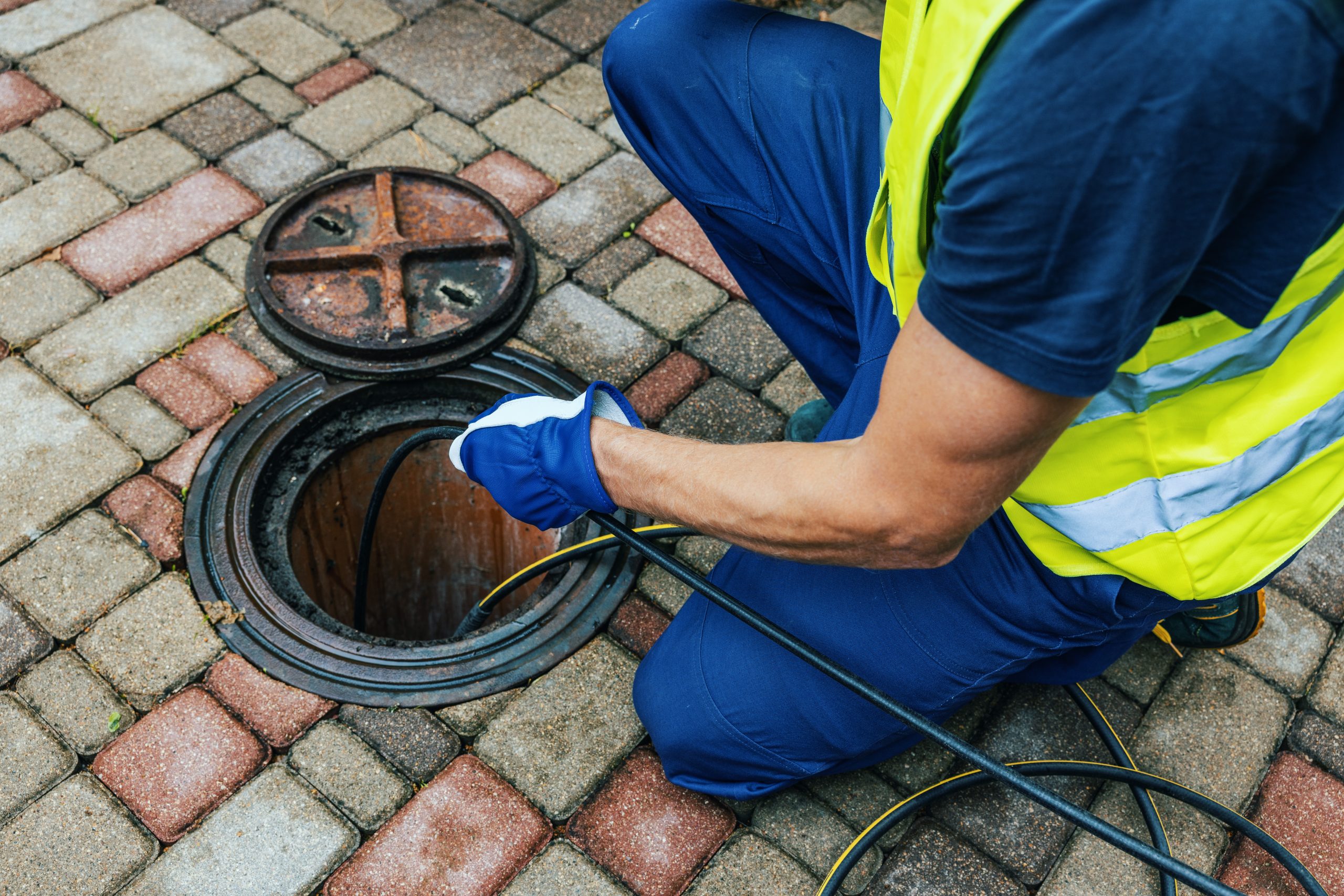
Plumber in safety gear using a snake tool to clear a clogged drain from a manhole cover on a brick pavement.

Clogged drain and sewer lines are an extremely common problem and can sometimes be a nightmare to deal with, especially if backups result. Sewer issues have the potential to do major damage, so it’s important to act quickly any time you experience any problems with your drain and sewer system. Hydro jetting is the safest and most effective option for overcoming drain and sewer issues.

How Hydro-Jetting Works

Hydrojetting uses a high-pressure hose that is connected to a large water tank and has a special nozzle at the end. The nozzle sprays water through the sewer line to safely and effectively clear any clogs and flush them out of the pipe, and this is what makes hydrojetting much more effective than snaking a sewer line.

A plumber’s snake uses a special auger that can cut through hardened solids and tree roots, but it can’t actually remove them from the pipe. When you again use your plumbing, the solid materials will travel down the pipe and can end up clogging it further down before the pipe meets the municipal sewer main. This is where hydro-jetting has a major advantage as the water will blast everything away and wash all of the solids out of the sewer line to ensure it doesn’t clog again.

When cleaning a sewer line, the plumber will access the sewer line by taking the cap off of the sewer cleanout outside the home. If the home doesn’t have sewer cleanouts or they aren’t easily accessible, the process will be a bit more complicated. In this case, it will be necessary to access the sewer line from inside the house or even by going in through the plumbing vent stack on the roof.

The spray nozzle and hose are fed into the sewer line, and the plumber will then turn on the hydrojetting machine to release a high-pressure jet of water. The nozzle actually produces multiple jets of water. One jet sprays straight forward out of the end to blast through the clog and cut away any tree roots. There are also jets of water that spray out of the back of the nozzle at an angle to scour away any fat and slime stuck to the inside of the pipe.

Common Causes of Clogged Sewer and Drain Lines

Sewer lines will typically only ever clog for a few reasons. Tree roots are often a major contributor to clogs. As a sewer line ages, the joints where the sections of pipe connect can loosen to the point where small roots can get inside. Larger roots can also exert enough pressure on the sewer line that they punch a hole in it.

Once the roots get inside, the water and waste flowing through the sewer line feed and fertilize them to where they can quickly start growing out of control. This leads to solid waste, toilet paper and any other solids that go down the drain or toilet catching on the roots and building up over time. The solids will then start to harden and create a blockage that will cause the sewer line to drain more slowly or prevent it from draining at all. At this point, you’ll want to have a professional plumber inspect your sewer lines with a sewer camera.

The other main reason sewer lines get clogged is from people flushing and washing lots of solids down the drain. Ideally, the only things that should go down your toilets and drains are water, toilet paper and human waste. Any other solids won’t go down the sewer line as easily and can get stuck. This then creates a partial blockage that starts to trap other solids and waste, leading to the clog getting bigger over time and eventually preventing the pipe from draining.

Many people wrongly believe that it is fine to flush things like paper towels and tissues. The problem is that other paper products don’t break down or disintegrate when flushed like toilet paper does. Instead, these paper products stay almost completely intact and can easily get stuck inside a drain pipe or the sewer line. Even worse is flushing things like wet wipes, feminine hygiene products, cotton pads, condoms, diapers, etc. Coffee grounds and cat litter should also never go down the sink or toilet as they will make the clog even worse.

FOG (fat, oil and grease) clogs are also extremely common. Fat, oil and grease will always solidify and harden as they move through the drain and sewer system. This is true even if you wash them down with lots of hot water, which is why all fat, oil and grease should always go in the trash and never down the drain. As the materials solidify or coagulate, they can easily get stuck to the insides of the pipe and slowly build up over time. This reduces the inside diameter of the pipe so that less wastewater can flow through it and the system starts draining more slowly. When you flush other solids like paper products and food waste, they can also get trapped in the sticky fat coating so that a massive clog known as a “fatberg” forms. The fact that hydrojetting scours the insides of the pipe also makes it a great preventative measure for preventing clogs as it will blast away all of the fat and grease.

Signs That You Need to Have Your Sewer Line Cleaned

If your sewer line is fully or even partially clogged, there is a high chance you’ll eventually start to experience issues with wastewater and sewage backing up inside your homes. When sewage backs up inside a home, it means that the sewer line is clogged and all of the wastewater can’t drain properly. If the waste can’t drain, it will have nowhere else to go and will build up inside the sewer line and drain pipes and eventually start flowing back out of floor and shower drains.

Even a partial clog can cause a sewage backup by preventing the pipe from draining quickly. This usually won’t happen if you just flush the toilet, but it can easily happen when you do laundry, run the dishwasher or otherwise use lots of water in a short period of time.

The good news is that there are some signs that can tell you that your sewer line is starting to clog before it starts backing up. One obvious indication is when your sinks and showers start draining more slowly than normal. You’ll also usually notice that they make a gurgling sound as they drain, and your toilets will also typically not flush properly and make a gurgling or chugging sound at the end of the flush. These noises indicate that air is trapped in the sewer system due to a clog, and this creates a vacuum that prevents the system from draining properly. If you notice these issues, you should have your sewer system inspected and hydrojetted as soon as possible to ensure sewage doesn’t start backing up in your home.

Hunt’s Services is the top choice if you need any drain or sewer services in Tacoma and the Puget Sound area. We specialize in drain cleaning, hydro-jetting and camera inspections as well as a full range of plumbing, electrical and HVAC services.

Don’t let drain and sewer issues get you down. Instead, if you are in the Tacoma area, give Hunt’s Services Tacoma Plumbers a call or else where in Puget Sound today to get the expert help you need.
Using Trenchless Technology to Replace Your Orangeburg Pipes in Western Washington

What are Orangeburg Pipes?

Depending on your home’s age, there’s a chance your sewer line is made from a material called Orangeburg which was prevalent between 1945 and 1972.

This material doesn’t corrode because of its tar paper composition. However, it’s also extremely light and brittle, leading to premature deterioration. Homeowners should know that Orangeburg pipe absorbs moisture at a higher rate than clay or cast iron sewer pipes, too, which can lead to distortion or layers of the pipe bubbling and causing blockages.

Although manufacturers claimed Orangeburg had a 50-year lifespan, it starts breaking down at about 30 years. And since homebuilders stopped using the material about 50 years ago, you’re well overdue a new sewer line if you have this under your home.

If you believe you have Orangeburg sewer pipes, here’s what you should do.

How to Tell If Your Orangeburg Pipes Need Attention

Orangeburg was a popular building material until 1972 because it was easy to make. In short, it’s a bituminized fiber pipe made from wood pulp, a water-resistant adhesive, and hot pitch that gets its name because it was mass-produced in Orangeburg, New York.

So, how do you tell if your Orangeburg pipe is due for replacement?

The most obvious sign of a pipe problem is an indent in your front yard along your main sewer line’s path. You’ll clearly see an issue in your yard when this occurs, and you’ll want a plumbing technician to address the problem immediately.

You should also pay attention to what your neighbors are doing. If other houses in your neighborhood are running into issues with their Orangeburg pipes and replacing them, it’s probably only a matter of time until you experience similar problems.

Hunt’s Services can assist with a camera sewer inspection that allows us to see the condition of your Orangeburg pipes and make recommendations based on what we discover.

Why You Should Consider Replacing Your Orangeburg Pipes Soon

Naturally, minimizing your costs as a homeowner is a priority, but it’s essential to look at the big picture. Orangeburg pipes typically last for about 30 years, and since these products have been in circulation for 50 years, yours probably are getting close to the end of the line.

As your pipes approach the end of their lifespan, you might notice symptoms like:

  • Slow drains
  • Toilet back-ups
  • Mold
  • Indentations in your yard
  • Sinkholes in your foundation
  • Sewer odors inside your house

Proactively replacing your sewer line when you notice these symptoms, or at least calling the pros at Hunt’s Services to inspect your system, could save you significant cash in the long run.

How Your Trenchless Sewer Repair Will Work

As you research sewer line replacement options in Western Washington, you should know that traditional dig-and-replace methods are somewhat outdated. While they might be necessary for some scenarios, reinforcing or replacing your sewer line using trenchless technology is often possible.

Trenchless pipe repair can restore cracks and root damage to your pipes without digging up your yard. Technicians can typically complete these repairs in a few hours, and they are less expensive.

Perhaps the most efficient form of trenchless sewer repair is cured-in-place pipe lining. The gist is that the technician will access your sewer line through an existing access point, inserting a liner coated with epoxy into the pipe. The inside of the pipe is coated with resin, which hardens and reinforces your Orangeburg pipes.

It’s possible to get an extra 50 years from your Orangeburg pipes if you complete this repair early enough, although you should know that sometimes the damage is too extensive, and you’ll have to go in a different direction.

Your other trenchless sewer repair option is pipe busting, which is reserved for situations where there’s more extensive damage to the plumbing system.

In this scenario, your technician collapses the existing Orangeburg pipe into the soil without needing to dig it out using steel bursting heads. The new line is also attached to these heads, allowing it to replace the old pipe simultaneously.

The entire job is completed through a small entry point in your yard, so no trench is necessary, and there’s minimal displacement to your landscaping.

While pipe lining is the most economical option, it’s nice to know there’s another trenchless option for situations where your Orangeburg pipes are beyond repair.

Getting the Assistance You Need

If you have Orangeburg pipes in your home, you should know it’s only a matter of time before you experience issues. This material is prone to problems as it ages, and you’ll want to bring in a technician to complete a camera sewer inspection as soon as possible to check on its condition.

From there, your technician will develop a repair plan that works for you.

Contact Hunt’s Services at 253-533-7500 to learn more about our trenchless sewer repair options for Orangeburg pipes in Thurston, Pierce and King Counties.

Why Sewer Lines Fail in Seattle Tacoma

Your sewer line is an essential part of your plumbing system because it’s responsible for removing water waste from your home. You’ll quickly notice if your sewer pipe isn’t functioning as it should because you’ll run into issues flushing your toilets, draining your sinks, or running your washing machine. Hunt’s Services is standing by in the Seattle and Tacoma areas to assist with all of your sewer system needs.

So what causes these sewer line problems in the first place? The reality is that numerous things can go wrong with your sewer system, and in some cases, there isn’t much you can do to prevent the issues from occurring in the first place.

What you can do is be proactive when you realize that your sewer line isn’t functioning at its full capacity by getting Hunt’s Services on the job.

Our team of licensed, certified technicians have seen every plumbing problem imaginable in King County and Pierce County so that we can get to the bottom of your issue quickly and efficiently.

Give us a call at 253-533-7500 to start the process right away. From there, you won’t have to worry about your sewer system anymore because Hunt’s will take care of it.

Here are some common sewer line problems in the Tacoma and Seattle areas.

1) Tree Roots

One sewer line problem that we see with regularity in Seattle and Tacoma involves tree roots damaging the pipes in search of water. These roots extend for substantial distances underground, looking for moisture to keep the tree alive. Eventually, the roots can wrap around your sewer line and break through at the joints, causing your drains to slow.

As the roots continue to grow, they weaken the pipe’s joints even further, and wastewater can begin escaping into your yard. Eventually, the entire pipe will collapse, leaving you with a significant cleanup in your yard, and a pipe that needs a complete replacement.

Tree roots are a problematic issue to prevent because the plant doesn’t necessarily have to be on your property to cause problems in your yard. What you can do, however, is make sure the trees on your property have enough water, especially in a period with little rain.

When planting new trees in your yard, make sure you avoid water-loving species like silver maples and weeping willows. Trees that require more water tend to cause more problems with sewer lines. You should also be aware of the location of your sewer pipe and avoid planting new trees close to it.

2) Shifting Ground

Another common sewer line issue in Western Washington is pipe failure because of shifting ground. Your pipes are supported by the soil under your landscaping, and when tectonic activity occurs, the ground can shift.

Even a slight shift puts added pressure on your pipes and can lead to a complete failure over time, complete with wastewater leaking into your yard.

While you can’t prevent the ground from shifting, you can have your pipe repaired as soon as you notice an issue to, hopefully, prevent significant damage from being done to your property.

3) Orangeburg Pipe

Depending on the age of your home, you could run into plumbing problems based on the materials used in your sewer line. Before 1972, homes in this area would use Orangeburg pipe, which is made from wood pulp and asphalt. While these pipes are incredibly lightweight, the material is brittle and prone to breaking because it absorbs moisture.

If you believe that you have Orangeburg pipes in your home, the best thing you can do is have them replaced with PVC. That way, you won’t have to worry as much about breaks and will experience fewer plumbing issues in the future, as well.

Warning Signs of Sewer Problems

There are some warning signs to watch for that can help you call for the plumbing help you need before your property is extensively damaged.

  • Slow drains – When you notice that your drains are taking longer to empty than usual, it means that something is blocking your pipes. If only one drain is slow, there could be an isolated problem with that particular fixture. Multiple slow drains, on the other hand, could mean that you have a clog or break in your Seattle sewer line.
  • Clogged drains – If nothing is draining from your fixtures at all, you likely have a significant clog. There are a variety of underlying reasons for clogged drains, as anything from putting grease into your sink to having a broken sewer line could make it difficult for your pipes to drain. Hunt’s offers drain cleaning services, getting your system back on track quickly.
  • Sewer waste backing up into your home – Have you noticed waste coming back into your fixtures after you flush your toilet or drain your sinks? If so, you likely have a problem with your sewer line that you’ll want to address sooner rather than later. Hunt’s Services offers trenchless sewer repair options, including pipe bursting, which is a non-invasive pipe repair method.
  • Frequent service calls – When you find yourself making constant service calls, you likely have a severe plumbing problem that should be addressed. Hunt’s
    Services will conduct a camera inspection, which allows us to see inside your pipes and identify why you’re experiencing issues.

Call Hunt’s Services Today

If you believe you’re in need of plumbing assistance, give Hunt’s Services a call at 253-533-7500. Our team of certified plumbers is standing by to handle all of your sewer and pipe lining needs, so don’t hesitate to contact us.

We offer discounts to seniors and veterans, and can even deal with your septic to sewer conversion, if necessary.

For more information on our plumbing services, check out our Sewer Repair YouTube video.