
Demystifying the Inner Workings of Ductless Mini-Split Systems

HVAC technician inspecting and servicing an air conditioning unit on an exterior wall, emphasizing maintenance for home comfort in Tacoma, WA.

Ductless mini-splits are marvels of modern technology that have revolutionized the way we cool and heat our living spaces. With their sleek design and incredible efficiency, these innovative systems offer homeowners a breath of fresh air. But how exactly do they work their magic? Keep reading as we delve into the fascinating inner workings of ductless mini-splits and discover the secret behind their exceptional performance.

How They Work

Ductless mini-split systems, also known as ductless air conditioners or heat pumps, are efficient cooling and heating systems that provide individualized temperature control for specific zones or rooms in a building. Unlike traditional central air conditioning systems, which use ductwork to distribute cooled or heated air throughout the entire building, ductless mini-split systems do not require ducts. The main components of a ductless mini-split system include an outdoor unit and one or more indoor units. The outdoor unit houses the compressor, condenser, and expansion valve, while the indoor unit contains the evaporator and blower fan. These components work together to cool or heat the targeted zone or room.

The indoor unit extracts warm air from the room through its grille or air intake to start the cooling process. The warm air passes over the evaporator coil, which contains a cold refrigerant. As the warm air comes into contact with the cold coil, heat energy is transferred from the air to the refrigerant, cooling the air in the process. The cooled air is then blown back into the room through the indoor unit’s outlet.

Meanwhile, the heated refrigerant, now in a gaseous state, is sent to the outdoor unit through copper tubing. The outdoor unit contains a compressor that pressurizes the refrigerant gas, raising its temperature. As the high-pressure, high-temperature gas flows through the condenser coil, it releases heat to the outside air. The refrigerant condenses back into a liquid state, and its temperature decreases.

The liquid refrigerant then travels back to the indoor unit through the copper tubing. At this point, an expansion valve in the indoor unit regulates the flow of refrigerant into the evaporator coil, creating a pressure drop. This pressure drop allows the refrigerant to evaporate and absorb heat from the indoor air, repeating the cooling cycle.

During the heating mode, the process is essentially reversed. The outdoor unit extracts heat from the outside air and transfers it indoors. The heated refrigerant flows through the indoor unit’s evaporator coil, where it releases heat energy to warm the air passing over it. The warmed air is then distributed into the room.

The Installation Process

The installation process of a ductless mini-split system involves several steps that ensure proper placement and functioning of the unit.

Site Survey

Before installing a ductless mini-split, a site survey is conducted to determine the most suitable location for the indoor and outdoor units. Factors such as room size, insulation, electrical requirements, and mounting options are considered during this process.

Indoor Unit Mounting

The indoor unit, also known as the evaporator or air handler, is mounted on an interior wall. A mounting bracket is typically used to secure the unit. The location should be selected carefully, ensuring it is near the center of the room and free from obstructions that could hinder airflow.

Hole Drilling

A small hole is drilled through the wall to connect the indoor and outdoor units. This hole allows the passage of refrigerant lines, electrical wiring, and the condensate drain line. The size of the hole depends on the diameter of these components.

Outdoor Unit Placement

The outdoor unit is positioned outside the building on a stable surface. It is usually placed on a concrete pad or mounted on brackets attached to an exterior wall. The location should have proper clearance for airflow and be protected from direct sunlight and excessive debris.

Refrigerant Line Connection

Refrigerant lines, including the liquid line and suction line, are routed through the drilled hole. The lines connect the indoor and outdoor units, enabling the flow of refrigerant. Proper insulation of these lines is crucial to prevent energy loss.

Electrical Wiring

Electrical wiring is installed to provide power to the indoor and outdoor units. This includes running cables from the electrical panel to the outdoor unit and from the outdoor unit to the indoor unit. Following local electrical codes and guidelines is essential to ensure safe and proper installation.

Condensate Drain Connection

A condensate drain line is connected to the indoor unit to remove the moisture generated during the cooling process. This line typically drains outside or into a designated drainpipe or drain pan. Proper slope and insulation of the drain line are essential to prevent leakage or condensate buildup.

Testing and Vacuuming

Once all the connections are made, the system is tested for proper functionality. To achieve optimal performance and efficiency, a vacuum pump is employed to eliminate air and moisture present in the refrigerant lines. This step is crucial to prevent damage to the system and maintain its longevity.

System Start-up and Configuration

After completing the installation and ensuring everything is functioning correctly, the system is powered on. The unit is configured according to the user’s preferences, including temperature settings, fan speeds, and other adjustable features.

Maintenance and Care

Professional maintenance of ductless mini-split systems is crucial to ensure their optimal performance and longevity. Engaging a qualified HVAC technician for these tasks is highly recommended because they possess the necessary expertise and tools. One important aspect of professional maintenance is regular filter cleaning or replacement. The filters in ductless mini-split units accumulate dust and debris over time, which can hinder airflow and reduce the system’s efficiency. A technician will inspect the filters and clean or replace them as needed, ensuring proper airflow and preventing strain on the system.

Additionally, a professional technician will thoroughly clean the indoor and outdoor units of the ductless mini-split system. Dust, dirt, and other particles can accumulate on the indoor unit’s evaporator coils and the outdoor unit’s condenser coils, impeding heat exchange and reducing efficiency. The technician will carefully clean these coils to maintain optimal performance. They will also check the condensate drain line for any blockages, as a clogged drain can lead to water leakage and potential damage.

Moreover, a professional maintenance service will include a comprehensive inspection of the electrical connections, refrigerant levels, and overall system performance. The technician will examine the electrical components, ensuring they are tight and secure, and inspect the refrigerant lines for any leaks or damage. If necessary, they will recharge the system with the appropriate refrigerant to ensure optimal cooling or heating capacity.

The technician will also assess the system’s overall performance by checking the thermostat settings, testing the heating and cooling modes, and verifying the functionality of any additional features or accessories. By addressing these aspects, a professional maintenance service helps to identify and resolve potential issues early on, preventing costly breakdowns and ensuring the system operates efficiently and reliably.

Get in Touch With Professionals Today!

Are you tired of dealing with heating issues, clogged drains, and faulty piping? Look no further than our professionals at Hunt’s Services! We are your go-to experts for all your heating, piping, and drain cleaning needs in Tacoma and the Puget Sound Area. With our skilled technicians and top-notch equipment, we guarantee efficient and reliable solutions to keep your home running smoothly. But that’s not all! We also offer a wide range of electrical services to meet your every need. Call us at Hunt’s Services today to schedule an appointment.

Mini-Split Systems: Discover Their Many Benefits

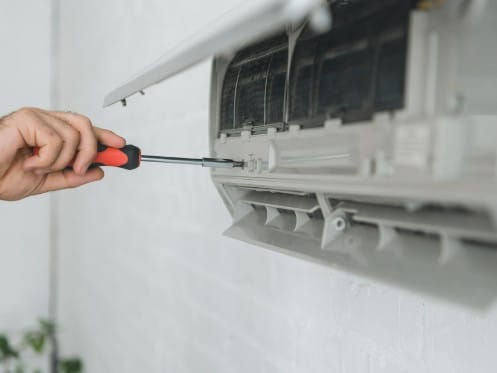
Male worker using a screwdriver to repair a ductless mini-split air conditioning system.

There are lots of good reasons to install a ductless mini-split system in your Tacoma, WA, home. Whether you have a central HVAC system or lack the ducting for supporting one, this is an upgrade that’s guaranteed to enhance the safety, comfort, and health of your living environment. Read on to learn all about the tremendous benefits that ductless mini-split systems have to offer and to discover what it’s like to have one installed.

Ductless Mini-Split Systems Are at the Cutting-Edge of Efficiency

Ductless mini-split systems offer some of the highest levels of efficiency available. When properly sized and right for the local climate, some ductless mini-split heat pumps boast efficiency levels as high as 300%. Whether using a ductless mini-split for heating or cooling, it will regulate your indoor temperature using heat transfer.

In summer, ductless mini-split heat pumps and ductless mini-split air conditioners are functionally identical. They move indoor heat outside. In winter, mini-split heat pumps source warmth from outdoors and bring it in. Apart from the electricity that drives their basic operations, no other fuel is needed. Not only does this provide significant energy savings for consumers, but it also means that the risk of carbon monoxide poisoning and exposure to other harmful exhaust gases is eliminated. If you’re looking for a way to get rid of your gas-fired furnace, this could be it.

Many homes in Western Washington aren’t built for temperature extremes. A lot of older properties lack HVAC air ducts and have inefficient baseboard heaters or wall heaters in place of central furnaces. Many of these same buildings lack fixed cooling solutions altogether. Among the most cost-effective and environmentally friendly ways to add permanent and efficient heating and cooling to these homes is by installing ductless mini-splits.

Another efficiency-related benefit of ductless mini-splits is their complete lack of ducting. Conditioned air is distributed right from its point of production. With heating, no heat is lost due to HVAC air duct leaks or poor ductwork insulation. With cooling, cold air delivery is faster and conditioned air is a lot less likely to wind up behind drywall or in other remote areas.

Zoning Enhances Resident Comfort

Ductless mini-split systems have outdoor condenser units. These units contain their compressors. Condenser units are where heat from the inside of the home is released outside. At the interior of the building, each room or zone is given its own air handling unit. This contains the evaporator coil where the heat is absorbed from warm air by refrigerant. Air handlers also distribute conditioned air after it’s been filtered.

In ductless mini-split AC and heat pump systems, every room or zone that has an air handler also has its own thermostat. This allows building residents to selectively heat or cool their immediate areas. Zoned configurations are much more accommodating than central HVAC which heats and cools homes uniformly. Zoning is also a lot more efficient. With zoning, you can sidestep the extra and unnecessary costs of regulating indoor temperatures in areas of the building that are empty.

Minimize Your Ongoing Heating and Cooling System Maintenance

One large part of ongoing HVAC maintenance is ductwork maintenance. HVAC air ducts require replacement every 10 to 15 years. This means that to get the most from a new air conditioner or heater, you’ll likely have to pay for new ductwork as well. HVAC air ducts also require annual inspections and professional cleaning every three to five years. For homeowners, the costs of these services come in addition to annual furnace and air conditioner tune-up services, monthly filter changes, and ongoing repairs.

Ductless mini-split air conditioners require annual tune-up service. Ductless mini-split heat pumps should be tuned up twice annually if used for both heating and cooling. However, neither system is connected to ducting. As such, there’s nothing else to maintain. Best of all, rather than paying for new filters every month, you can simply clean the removable filters in each indoor air handler according to manufacturer instructions. These components should be checked and washed every two to four weeks and replaced annually.

You Have Multiple Options to Choose From

In addition to choosing between ductless mini-split air conditioners and ductless mini-split heat pumps, you also have multiple options in both brands and models. Depending upon the amount of area you want to service, you can additionally choose between one and eight separate indoor air handlers. Indoor air handlers come in several different sizes and colors, and they can be installed on the ceiling or in another out-of-the-way location.

Some Tacoma residents use ductless mini-split systems for whole-house heating and cooling. Others use them to address remote areas that don’t get enough service from their central furnaces or air conditioners. For instance, you might install a ductless mini-split for a connected in-law unit, your garage, a finished basement, or an attic bedroom. Ductless mini-split systems are highly flexible and adaptable.

Stay on Par With Increasingly Stringent Efficiency Regulations

Changes are coming to Western Washington and the rest of the West Coast. New efficiency-related regulations are making it increasingly harder for property owners to find a diverse selection of gas-powered appliances. By upgrading to a ductless mini-split heat pump, you can stay ahead of the pack. With one of these systems installed, you’ll have the benefit of heating and cooling that comes with zero carbon output. There’s no easier way to drastically reduce the collective carbon footprint of your entire household without sacrificing comfort in the process.

Get Rid of Your Inefficient Window AC

If you’re using a window air conditioner for cooling, now is the time to get rid of it. Having a window AC creates a visible and highly accessible point of ingress for would-be intruders. Before leaving on vacation, these units have to be taken down before properties are completely secured. They also block window views and use excessive amounts of energy to do a modest amount of work.

A window air conditioner can only cool just one to two small-sized spaces at a time. A mini-split can provide enough heating and cooling comfort for everyone in the home. Window air conditioners are noisy and they leave openings for small pests to slip in. Compare these things to the whisper-quiet and highly efficient operation of a ductless mini-split and there’s absolutely no contest.

Enhance the Marketability and Value of Your Tacoma Rental

If you have a rental property in Tacoma that lacks a fixed cooling solution, having a ductless mini-split put in could be key to attracting higher quality and motivated prospects. With the LINK Light Rail expansion, more Seattle professionals are seeking affordable rentals in Pierce County and beyond. You can maximize the profit potential of your investment by catering to the higher expectations of these incoming tenants.

What It’s Like to Have a Ductless Mini-Split System Installed

Ductless mini-split installation is quick, easy, and hassle-free. This is especially true when you compare it to the process of having your home retrofitted with ductwork for central HVAC.

The outside condenser/compressor units for these systems are small in size and typically positioned on small concrete pads in back or side yards. This unit is then connected to each of the home’s indoor air handlers via refrigerant tubing and electrical wires. In each room that has its own air handling unit, only a single hole must be drilled to accommodate the necessary connection. With most systems, each of these holes is just three inches in diameter or less.

We’re proud to serve residents of Tacoma, WA, and the greater Pierce County area. We work hard to offer the latest and most innovative options in home heating, cooling, and indoor air quality control. We provide HVAC, electrical, plumbing, and sewer and drain services. We alsoinstall ductless mini-splits! To schedule an appointment, get in touch with Hunt’s Services today.

New Incentives Make Heat Pumps More Affordable For Washington Residents

Updated: August 10, 2023

When the Inflation Reduction Act (IRA) was signed into law on August 16, 2022, it included the most ambitious climate action policies in American history.

The IRA aims to cut domestic greenhouse gas emissions in half by 2030 compared to 2005 levels, but significant changes to the way we live will become necessary.

Americans can help the country reach its goals by switching to electric energy whenever possible. Fossil fuels are responsible for about 73% of greenhouse gas emissions in the country, so limiting their use will be critical.

Using a heat pump to heat and cool your home is one way to do your part. These HVAC units use electricity and refrigerant to remove heat from the air and pump it inside or outside, depending on the season, limiting your need for a natural gas furnace.

The time to invest in a heat pump is now better than ever to reduce your carbon footprint, while at the same time lowering your energy costs. As this article points out, there are some significant discounts and rebates that are available making these energy-saving units more affordable than ever.

Here’s a look at some of these subsidies and incentives available to Washington state residents.

The Inflation Reduction Act

Reading through the Inflation Reduction Act, you’ll see that $369 billion is reserved for climate and energy programs. These programs aim to incentivize consumers to purchase electric vehicles, solar panels, energy-efficient windows and doors, high-efficiency air conditioners, and other appliances that don’t use fossil fuels.

With Washington state becoming more prone to extreme heat, installing a heat pump to keep your home cool in the summer is becoming ever more important for the comfort and health of you and your family. You can also use your heat pump for heating in the fall, spring, and winter. So it makes sense to take a look at what the IRA offers home owners to purchase and install a heat pump for both heating and cooling of your home.

First, the IRA offers rebates of up to $8,000 for Washington state families making 80% or less of the state’s median income that purchase a heat pump. Households making 80-150% of the median state income are eligible for a $4,000 rebate. These rebates reduce the upfront cost of purchasing a heat pump and are issued at the state level using IRA funds.

The Inflation Reduction Act also offers a nonbusiness energy property credit, a tax credit for 30% of a new heat pump’s value up to a cap of $2,000. As a result, you can receive up to $2,000 in tax credits just for installing a heat pump in your home.

These incentives cover any heat pump installation you complete after January 1, 2023, and you’ll have until the end of 2033 to complete the job.

With these rebates and tax credits, installing a heat pump makes more sense than ever especially since you’ll save on your monthly energy bills.

Working with Hunt’s Services to purchase and install your heat pump is a no brainer because we specialize in HVAC so we can offer you years of experience and certified technicians to complete your job. In fact to serve you better, we offer a free consult with one of Comfort Specialists to discuss and analyze what options are best for you before you decide.

Energy Smart Eastside

The federal rebate and tax incentives aren’t the only ways you can save on a Washington heat pump installation, as a local program offers residents of select King County cities an additional discount.

The Energy Smart Eastside program allows homeowners in Bellevue, Issaquah, Kirkland, Mercer Island, and Redmond to purchase a new heat pump at a discounted price through their group buy program.

To be eligible for this discount, you’ll have to attend a free educational workshop explaining heat pump technology, the money it can save you long-term, and the incentives you can receive. This workshop is only an hour long and virtual, so you don’t have to leave your home.

From there, you’ll sign up for a free site assessment from a certified HVAC installer like Hunt’s Services, select the heat pump option that’s best for your home, and sign a contract. Hunt’s Services can then install your heat pump, and you’ll get $500 off its purchase price.

Puget Sound Energy Rebates

Finally, Puget Sound Energy has a program where customers using a less efficient electric heating source can receive an $800 rebate if they switch to a ductless heat pump system. So, if you use an electric furnace, wall, or baseboard heaters and live in a single-family home, an incentive is available to you.

This incentive is part of PSE’s Efficiency Boost program, which aims to reduce consumption in the Puget Sound area. Other incentives are available when switching to a tankless water heater, upgrading to an Energy Star furnace, or installing a smart thermostat in your home.

Heat Pump Rebates in Washington

The cost of installing an energy efficient heat pump as your heating and cooling system has never been so affordable than now. These rebates and discounts aim to reduce the financial burden on families, making upgrades possible for more households.

Hunt’s Services offers heat pump installations for all of Pierce, King and Thurston Counties. Booking an appointment with our licensed, certified team puts you on the track to energy savings. Call Hunt’s Services at 253-533-7500 to learn more about these rebates and discounts and your eligibility.

HVAC Heating and Cooling Spring Cleaning Tips and Tricks

Spring is here and that means spring cleaning for many people. You open the windows, air out the stale winter air, and do some vacuuming and dusting. But don’t forget about the maintenance of your HVAC system, either! When you’re spring cleaning the rest of your house, make sure you clean out your heating and cooling system, which has been working hard all winter long to keep you warm.

Your home’s HVAC system is essential to the comfort AND SAFETY of your family, and it can only do that if it is clean. Check out these tips to help you enjoy a safe and comfortable home this spring (and the rest of the year).

Maintenance of Your HVAC System

Before you do any cleaning, make sure the power to your HVAC system is turned off. That is most important for your safety. The last thing you want is to injure yourself. Even if you think you’ll be careful, it’s better to be safe; turn off your power as the first step any time you plan to work in or near your HVAC system. The reason is you don’t want your furnace or HVAC unit to come on while you are working on it.

There are a couple of ways you can turn off your furnace before you do any spring cleaning. Sometimes there is an on-off switch either on the furnace or close to it. Otherwise, you can go to your electrical panel and find the circuit that goes to the furnace and flip it to the off position. Also if you have a gas furnace or HVAC unit, such as a heat pump, you should turn the gas off to the unit. Find the gas line running into your HVAC unit and turn the gas valve coming into the furnace to the off position.

Clean Heating and Cooling Filters

Remove the filter in your HVAC system and replace it. Air is forced through the filter but that gets harder and harder for your HVAC system to do if the filter is clogged with dirt, dust, and debris. Replace your filter at least once every 3 months, depending on use and whether you have pets, allergies, and level of dust in your home. Only use filters that have been approved by the manufacturer so you don’t risk losing your warranty.

The filter to the furnace is typically where the cold air from the outside comes into the furnace. This can be on the furnace itself or in your house in the intake vent that leads to your furnace. For replaceable filters, there is usually a size of the filter marked somewhere on the filter. Find the filter at your local hardware store and replace it with the same size filter.

Some heating units have washable filters in which case take the filter to your sink or hose outside and run water over the filter until all dirt and debris have been washed off. A good tip is to write the date on the filter when you replace it, so you know when to replace it next. It is important to make sure the arrow on the filter is pointing in the direction of the airflow into your furnace. Central heat pumps and air conditioners will also use filters in the same way where they intake air into the unit.

Air Conditioning

If you have an external air conditioning unit, go outside and look at it. Make sure that the unit is free from debris that often accumulates around it during the fall and winter. Often, leaves and clippings will start to build inside the unit and at the vents.

While you’re looking at you’re air conditioning unit, clean the fan blades and the coils which can also pick up debris.

Clean Your Vents

Walk around the inside of your home and inspect your vents—the ones that blow warm/cool air FROM your HVAC system and the ones that pull air into your HVAC system. Make sure both types of vents are not blocked so that air can freely get in. This will not only ensure that you get clean fresh air throughout your house, it also helps you save money by keeping your HVAC system from doing too much work to draw in air.

Duct Cleaning

Think about the last time you had your ducts cleaned. If it isn’t in the last year then contact a company to come out and clean your ducts. All that dust and debris that accumulated over the winter can be removed so it’s not recirculating.

Proper duct cleaning is really a two part process to be effective. First remove debris and particulate matter that clings to your ducts and then suction to remove that debris. This is usually a job you cannot do without the proper equipment. Hunt’s Services HVAC technicians use Nikro negative air duct cleaning machines with compressed air whips that we run through each duct. The whips loosen all the dust and debris that collects in the duct system and then the negative air machine suck all the debris out of the system.

Reverse Your Ceiling Fans

Ceiling fans are a great way to reduce your energy bills by circulating the air in your home or business to either keep you warm or cool depending on the season. Make note of the direction of ceiling fan and make sure it is going in the correct direction. The general rule of thumb is the blades of the fan should turn clockwise in the winter, and the reverse in the summer. Run your ceiling fan at low speed in the winter to circulate your warm air and pull the warm air up and then push it downwards without creating a cooling effect from the fan.

Summary

Springtime is here and that means spring cleaning and enjoying the freshness of a new season. When you clean your home this spring, don’t forget about the HVAC system that has been working so hard all winter long, and reward it with a good cleaning… your HVAC system will run more efficiently and your family will be safer and more comfortable this spring!

5 Ways to Make Your Heating and Cooling Systems More Environmentally Friendly

We all have a responsibility to do whatever we can to protect the environment, as even implementing a few small changes can make a big difference over time. One method of making your home heating and cooling more environmentally conscious is reducing your energy consumption.

The good news is that limiting your energy use doesn’t have to make your life more difficult or your home less welcoming because you can easily invest in more efficient heating and cooling units, or make improvements to the systems that you already have.

The following HVAC tips can help you reduce your carbon footprint and assist you in doing your part to protect our environment for future generations.

1) Go with an Energy Efficient Furnace and Air Conditioner

If you have an older furnace or air conditioner in your home, it probably isn’t a high-efficiency model. In these situations, you’re likely using more energy that you need to, which is not only bad for the environment but is also costing you money every month.

In fact, some older furnaces only run at about 60% efficiency, while newer models are mostly above 95%, so you can see that there is a significant discrepancy.

Have a look at the age of your existing heating and air conditioning systems to see if it’s time for an upgrade. Remember that most furnaces last 15-25 years, and once you approach those years, you’ll probably start running into some costly repairs, making it cost-effective to replace the unit.

When the time does come to replace your system, commit to one of the more energy efficient models for the best results.

2) Invest in a Smart Thermostat

Your thermostat influences how much energy you use. The majority of homeowners turn their thermostat higher than it needs to be in the winter and leave the unit turned on while they’re not at home. Of course, no one wants to return to a cold home at the end of the day, so what’s the solution?

Why, a smart thermostat, of course. Smart thermostats have a variety of options, as you can control the temperature remotely through your phone or set it to turn on and off at certain hours. Perhaps the best benefit of a smart thermostat, however, is that it learns your schedule and will adjust the temperature in your house accordingly.

For example, if everyone is usually away between 8:00 AM and 5:30 PM during the week, the thermostat will pick up on this after a couple of weeks and start turning the furnace or air conditioning down when no one is there. It will then switch your system back on before you return home, so your house will always be a comfortable temperature when someone is there.

3) Install Some Heat Pumps

Heat pumps are highly efficient and can reduce the amount of energy you use heating and cooling your home. This point is particularly accurate if you’re currently using electric baseboard heaters or window-mount air conditioners, as heat pumps use up to 50% less electricity than these other devices.

There are a few different types of heat pumps on the market, so you can make a choice based on how much you want to spend and whether or not you want the unit to operate within your ductwork. No matter which version to go with, however, you can expect lower energy bills and a more environmentally friendly home.

4) Have Your Ducts Cleaned

It sounds simple, but having a professional company clean your ductwork could reduce the amount of energy that you use. When ducts fill up with dust and debris, your heating and cooling systems have to work harder to push air throughout the home, which means you’ll use more energy.

Go with a brush through and negative air duct cleaning service because this is the best way to get absolutely everything out of your ducts. A bonus is that cleaning your ductwork limits the dust and other pollutants that enter the air you breath in your home.

5) Maintain Your Heating and Cooling Units

A properly maintained furnace or air conditioner will always run more efficiently than one that is ignored. It makes sense when you think about it, as units that don’t receive regular maintenance end up with dirty filters and much like with clogged ducts, air can’t flow through the unit properly.

Luckily, your HVAC service provider can put you on a regular maintenance schedule, so you don’t have to worry about your furnace or air conditioner performing at anything less than an optimal level.

Doing Your Part for the Environment

As you can see, it doesn’t take much to reduce your energy consumption by making your HVAC system more efficient. And these steps won’t make your home any less comfortable; they will merely make it easier to keep your living spaces at the ideal temperature.

Hunt’s Services can help you with all of these jobs and will ensure that your home is not only as energy efficient as possible, but that you will never have to compromise your comfort as you become a more environmentally friendly family.

5 Common Air Conditioner Repairs

After the wettest winter on record and a long, cold spring, Western Washington is experiencing some of the driest weather in its history this summer and residents are looking for any way possible to keep comfortable. In fact, the dry streak is approaching the all-time high of 51 straight days without rain, which was set in 1951, leaving people in Greater Seattle and Tacoma with very little relief. While at the same time the National Weather Service is predicting continuing dry and hot weather in the foreseeable future.

Combine the dry weather with the scorching temperatures that area officials expect in the coming days, and it is easy to see why it is an absolute necessity to have your air conditioner functioning at its full capacity. Have an expert look at your air conditioning unit before these incredibly high temperatures hit to ensure that you can keep your indoor air quality optimal this summer.

If you notice that your heating and air conditioning isn’t working as it should, give Hunt’s Services a call at 253-533-7500 to have one of our technicians have a look and fix the problem.

Some symptoms of an HVAC or air conditioner repair include:

1) No Cold Air

Perhaps the most alarming symptom of an air conditioning problem is finding that you don’t have any cold air coming out of your vents. When you run into this issue, you will have turned the unit on, only to find warm air coming out of the vents, much like you had turned on your furnace.

This situation certainly isn’t ideal, but the good news is that it is usually a simple problem for a professional to fix. The likely cause is a refrigerant leak, as this refrigerant is what cools the air before the unit pushes it through the vents. When refrigerant levels dip below a certain level, the unit won’t have the ability to do its job any longer, causing your house to heat up.

Luckily, a heating and cooling technician can fix this leak and replace the refrigerant, so you won’t have to worry about it being a long term issue this summer in the Greater Seattle area.

2) Squeaking Noises

Keep an ear out when you turn your air conditioner on this summer because it could provide potential clues regarding a problem. For example, if you notice that your air conditioner is squeaking or squealing, the fan belt could be the culprit. What the noise is doing is letting you know that you have a problem and that you could end up with a service disruption.

This issue is easy for a technician to fix, as it involves removing the old belt and replacing it with a new one. A broken belt is also an issue that you can catch ahead of time if you put yourself on a maintenance schedule. The gist of this plan is that you will have a professional inspect your air conditioner every year to ensure that the fan belt and other components are in good shape.

3) Poor Air Flow

Check your air flow and make sure that it is at an acceptable level. You could run into an issue where the air coming out of your vents is cold, but there isn’t enough of it to cool the house the way you had envisioned when you purchased the air conditioner.

Poor air flow is a common problem that develops in air conditioners over the years and is usually the result of a dirty filter. Much like a furnace, your air conditioners requires its filters to be changed every six to 12 months, depending on how often you use it. A duct cleaning might also be necessary. Signing up for scheduled maintenance on your unit is a good way to make sure that your filters are always new, your ducts are clean, and that you have the proper air flow.

4) Not Cooling Enough

An air conditioner that seems to be cooling the home, but is not quite up to your standards, could require various repairs. For starters, the lines that carry the refrigerant between the different parts of your unit might not have the proper insulation. This problem often arises due to the insulation wearing out over the years, which means that the technician will have to put a new sleeve over them.

Even an air conditioner that is running at full capacity could have problems. A potential issue is that your air conditioner might not be large or powerful enough to cool your home during a heatwave. While heatwaves are not common in Puget Sound compared to our neighbors to the South, you might consider upgrading or even replacing your air conditioning unit if it has outlived its usefulness and reliability.

5) Turning On and Off

You might notice that your air conditioner switches on and off throughout the day, regardless of the weather outside. This issue is common in homes where the thermostat is in a less than optimal position, as external components could be influencing the temperature in that part of the house, causing the malfunction.

All you will have to do if you find yourself in this position is have your technician move your thermostat, as this should lead to your air conditioner or heat pumps performing at a higher level.

Beating the Heat

We could end up with temperatures in the triple digits this summer, and if this occurs, you’ll be glad that you had your air conditioner serviced ahead of time. Do your part by having your HVAC system or heat pump looked at by a professional, so that you can keep yourself comfortable this summer.

What Extreme Weather Means for Puyallup Residents

When the Puyallup River overflowed in November and December, it caused a fair amount of chaos in the area. Governor Jay Inslee was forced to declare a state of emergency in the region, as heavy rains and winds led to flooding, mud slides, road closures, and power outages.

Residents might also remember that an even stronger storm struck Puyallup and neighboring Orting in 2006, leading to the largest urban evacuation in the history of Washington state, as 30,000 people were displaced. Extreme weather is nothing new to Piece County, so residents should be prepared to deal with such issues again in the future.

While in some cases there is simply nothing that you can do about natural disasters, as they will strike your home no matter what precautions you take, in other situations you can limit the damage by being prepared.

Stay in Touch With Local Authorities

Once flooding occurs in a city, it can often wreak havoc on the drain and sewer systems. These systems become over-saturated with water from the flood and it can hinder your ability to flush your toilet or wash the dishes. Whenever there is a flood in your area, keep an eye on any advisories that are on TV or the radio, as they will inform you if it is OK to continue using your plumbing like you usually would, or if you should ease up a little bit.

Even though with the plumbing in Puyallup, your sewer line isn’t directly connected to the storm drains, over-saturation throughout the system can still cause problems.

Consider the Quality of Your Drinking Water

Another thing to consider during a severe storm is the quality of the water. Often times, if too much water is running through the city’s filtration system, it can lead to sediment sneaking through. You will probably notice a different color to the water during extreme weather and, just to be safe, you might want to avoid drinking it.

Of course, you could always install a Puyallup water filtration system in your home and then you won’t have to worry about water quality. This system will remove any sediment that gets through the city’s system, ensuring that you have clean drinking water, no matter what is happening outside.

Think About Adding a Sump Pump

Many homes in Puyallup already have a sump pump installed because of the amount of rain that the region receives. While a sump pump probably won’t do much good if the river overflows onto your property, it can help remove rain water, even when it falls in large quantities.

A sump pump simply involves digging a drainage pool to collect water that is heading toward your house. Once a certain amount of water has been collected, the pump activates and moves it to a safer area.

Having a plumber in Puyallup complete a drain cleaning is another good idea, as it ensures that your system is in good shape. You might also consider keeping your home on a service schedule throughout the year.

Have a Plan in Place

Finally, if you do find yourself in a situation where the water is rising, have a plan that you and your family can follow. If you will be evacuated from your home, make sure that you plug the floor drains in your basement. This can prevent sewage from backing up and entering your home and ensures that external water pressure won’t damage your floor or walls. It is also recommended that you turn off the gas, electricity, and water before leaving. If your home, for whatever reasons, doesn’t have a water shutoff valve, contact a Puyallup plumber to have one installed.

If you will be staying in your home, but will be without power for an undetermined period, it is a good idea to stockpile some water and non-perishable food. This ensures that you can ride the flood out at home and won’t have to leave in an attempt to pick up supplies until the worst of the storm has passed. You should also have the contact information of a Puyallup emergency plumber to inspect your drains and pipes after the water has subsided.

How to Tell if It’s Time to Replace Your Furnace

There comes a time in every homeowner’s life when he or she must bite the bullet and go through with a furnace replacement. While your first step should be to see if the unit can be repaired, King and Pierce Counties furnace companies might not have access to the parts if the furnace is over a certain age. The following guidelines can help you to decide if your furnace is nearing the end of its life so that you can start preparing for its eventual replacement.

It’s Old

Furnaces have a certain life expectancy and once they reach that age, there is a good chance that a replacement will become necessary. If you have only recently moved into your home, you might not know how old your furnace actually is.

To get a general idea, have a look at the unit and see if it has an actual pilot light. If it does, there’s a good chance that it’s over 25 years old, as newer models have an electronic light. While having an old furnace doesn’t necessarily mean that you’ll have to replace it immediately, you should start preparing for it because most units only last between 15 and 20 years.

Your Bills are Increasing

Although heating bills can increase for other reasons, such as a rise in gas prices or a particularly cold winter, they shouldn’t move too dramatically from year to year. If you notice that you bills are significantly more than they were the year before, it could mean that your furnace is on its way out.

The good news in this situation is that your new furnace will be much more efficient and you will notice an immediate difference on your heating bills. The money that you’ll save on your monthly heating bills will pay for your new furnace over its lifetime.

You Hear New, Strange Noises

Weird noise coming from your furnace could be a sign that something is wrong. You might hear some banging or rattling noises coming from the unit and this usually means that it’s nearing the end of its life.

Of course, this isn’t an absolute rule, so have a King and Pierce Counties furnace repair company have a look at the unit before you make the decision to have it replaced. You never know, maybe it is something that can be repaired, giving you a few more years out of your existing furnace.

You Have a Dry or Dusty Home

One of the main problems with old furnaces is that they don’t humidify the air in your home the way that new ones do. New furnaces also have the ability to clean the air in your home, which is very advantageous. If members of your family suffer from allergies, having a new furnace installed could help alleviate this discomfort.

Simply put, your old furnace isn’t capable of providing the same level of service as the new ones on the market, making it a good idea to look into a replacement if someone in your family is suffering as a result of the dust, pollen, and dander that is present.

If you find yourself needing a new furnace in Tacoma or Federal Way, give Hunt’s Services a call at 253-533-7500. We will send one of your certified technicians by to determine if we can repair your existing furnace, or if it would be more cost efficient to replace the unit.