
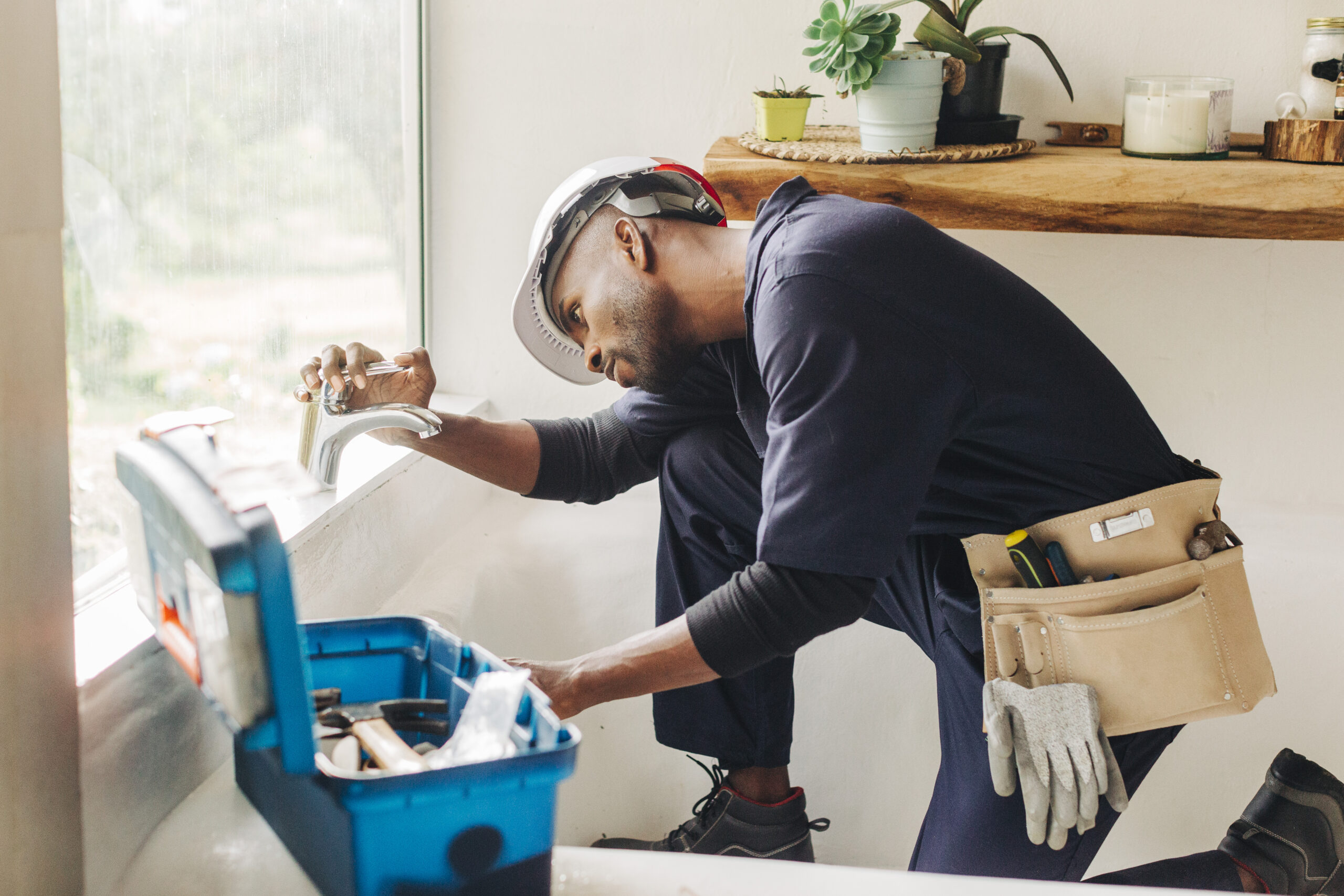
4 Things to Consider Before Renovating Your Bathroom

4 Things to Consider Before Renovating Your Bathroom

Performing a complete bathroom remodel is a major undertaking. With a national average cost of $12,000 to $27,500 for a 10×10 bathroom, according to Forbes, remodeling your bathroom also requires a substantial investment.

While the investment can definitely pay off by increasing the value of your home and its aesthetic appeal, it’s important to think carefully and plan everything out before diving into the project. By doing so, you can usually help to keep the costs lower and also make certain that you’re fully satisfied with the results and that everything closely matches your original vision. With that in mind, here are some of the most important factors you’ll want to consider when planning your bathroom remodel.

1. Available Space and Accessibility

The first thing to think about is the space you have available and how you can make the best use of it. You want to make sure that everything flows well and that all your fixtures are easily accessible. The last thing you want is for your bathroom to feel too cramped or crowded or to get finished and find that things don’t work quite as well as you planned. Even seemingly small details such as the way the bathroom door and the door to the shower opens can make a major difference in how large or small the space seems and how easy everything is to access.

If your space is limited, you may want to choose a corner shower with a sliding or rolling door. Other options are to just install glass panels for a walk-in shower without a door or to have the door swing into the shower instead of outward. Depending on the location of the bathroom and the layout of your house, you may also be able to expand your bathroom by knocking down a wall and taking some of the space in an adjacent closet or other room.

If you’re a senior and plan on making this your forever home, you’ll also want to give some consideration to making sure the bathroom continues to be accessible as you age. Opting for a slightly taller toilet can be a major help in this regard. You’ll also want to make sure that the entrance to the shower is easy to access and doesn’t have a large lip you need to step over to get in, which usually means installing a walk-in shower. You should also consider the type of flooring you put in the shower and the rest of the bathroom and choose something that is non-slip or at least doesn’t get too slick when wet.

2. Plumbing Locations

When performing a complete bathroom remodel, you often have the option to change the location of all the plumbing fixtures. Switching the location of your shower, bathtub, sink, or toilet can help make your bathroom feel more modern and/or make everything more accessible. Our plumbers can add, move or replace any bathroom plumbing fixture that you may want done during your bathroom remodel.

Replacing the existing water lines and rerouting them to a different location is typically quite easy since they are usually located inside a wall or coming up through the floor. If you want to change the location of your toilet, shower or bathtub, it will make the job a bit more complicated and cost more since you’ll need to also replace the existing drainpipes. The added cost is why most people choose to keep the major fixtures in the same location, but it’s really up to you and what you want.

One thing we’d always recommend is to reroute any pipes that are located within an exterior wall, bringing them up through the floor or running them in an interior wall. The reason for this is that any water lines inside an exterior wall will always be at a greater risk of freezing during periods of extreme cold.

3. Electrical Needs and Lighting

If your home is more than a few decades old, it’s likely that the electrical circuit in your bathroom is only 15 amps. In this case, we’d always recommend completely rewiring the bathroom and upgrading to a 20-amp circuit. If the circuit is only 15 amps, you’ll often have issues overloading the circuit and tripping the breaker when you use devices like a hair dryer. A 20-amp circuit will ensure that you have sufficient power for your hair dryer, electric razor, electric toothbrush, and anything else you may need.

Another reason why we’d recommend rewiring is that you will have to replace all existing outlets with GFCI outlets if you don’t already have them. This is required by the National Electric Code and something you legally have to do when performing a bathroom remodel. You’ll also want to consider the location of any outlets so that everything you need is within reach or tucked out of the way. One great option is to have Hunt’s Services electricians install an outlet inside your bathroom vanity cabinet, so you can charge electric toothbrushes inside the cabinet and not have to leave them sitting out on the counter where they’re exposed to contaminants or taking up needed space.

Choosing the right type of lighting for each part of the bathroom is also important. You generally want to have at least one light directly above your shower as well as additional lighting in the middle of the room, above the toilet and above or next to the vanity and mirror. Making sure that you have adequate lighting near the mirror is especially important for helping you to shave, style your hair, or put on makeup.

You also want to make sure that you choose the right type and size of exhaust fan to both eliminate odors and disperse all the steam that results when you bathe. For a master bathroom, it’s usually best to choose a quieter exhaust fan so you don’t need to worry about the noise waking up your partner at night. If you’re remodeling a hall bathroom, you can get away with something cheaper since noise isn’t a big concern. If the bathroom is near your living room or another common area, opting for a louder fan will help make it more private. Another thing to consider is choosing a fan with either a timer or a humidity sensor so that you can make sure it runs long enough to fully draw out all of the steam and humidity.

4. Desired Features and Amenities

If you have sufficient space, opting for both a Jacuzzi tub and a shower is a great option. You can also consider extra options for your shower such as different types of lighting, both wall-mounted and overhead showerheads and even Bluetooth speakers. Having a heat lamp just outside your shower can also help keep your bathroom warm and comfortable when you wake up and shower in the morning.

If you’re planning your bathroom remodeling project, you can count on the team at Hunt’s Services to help. Our licensed Seattle and Tacoma plumbers can install or change your plumbing fixtures and help you decide which shower or sink will work best. We can also handle any necessary electrical work including rewiring and installing the lighting, outlets, or exhaust fan.

For more information or to schedule any plumbing, electrical, heating, or air conditioning service in the Tacoma area, contact us today. Performing a complete bathroom remodel is a major undertaking. With a national average cost of $12,000 to $27,500 for a 10×10 bathroom, according to Forbes, remodeling your bathroom also requires a substantial investment.

While the investment can definitely pay off by increasing the value of your home and its aesthetic appeal, it’s important to think carefully and plan everything out before diving into the project. By doing so, you can usually help to keep the costs lower and also make certain that you’re fully satisfied with the results and that everything closely matches your original vision. With that in mind, here are some of the most important factors you’ll want to consider when planning your bathroom remodel.

For more information or to schedule any plumbing, electrical, heating, or air conditioning service in the Tacoma area, contact us today.

What Sounds Tell You That It’s Time to Call a Plumber?

Toilet repair in Tacoma, WA

Toilets make distinctive sounds each time they flush and refill with water. These sounds are perfectly normal. However, your toilet should remain relatively quiet the rest of the time. Hearing a range of unusual sounds from the toilet can indicate a problem with your plumbing. While it may seem easier to dismiss bathroom noises as harmless quirks, ignoring toilet troubles can only make them worse over time. Here’s how to recognize the meaning of strange sounds and when to seek assistance to correct a problem.

Phantom Toilet Flushing

When it comes to toilet issues, few problems can seem as creepy as the occurrence of flushing even if you have never pulled down the handle. Also known as “ghost flushing,” this sound can range from the movement of water in the tank to the full-blown emptying of the toilet bowl.

The good news is that phantom flushing is often the result of a faulty flapper or defective flush valve that causes your hardware to flush spontaneously. Other causes of phantom flushing can include the following:

  • Toilet tank leaks
  • Improper refill tube positioning
  • A flapper chain that’s misaligned or too short
  • Unusually low water level in tank

If you hear flushing when no one is in the bathroom, contact a professional plumber for inspection and repair. Plumbers can properly address issues with your flapper, refill tube, or flush valve drain to prevent the toilet from randomly flushing on its own. Since unnecessary flushing can increase your water bill, it is important to contact an expert and get to the bottom of the issue quickly.

Constant Running

When you flush a toilet, it should only run for a short while afterward so that the tank can refill with water. If the toilet continues to run for several minutes after a flush or it never seems to stop running at all, this can indicate one of several problems.

In the back of each tank is an object known as the flapper chain. If this chain is too short or too tight, it does not allow the valve to close completely. The motion of water through a partially opened valve can cause persistent running noises.

In addition to flapper chain and tank valve issues, you can also hear constant running sounds that are caused by problems with the tank float. If the position of the tank float is too high, water will continuously spill into the overflow tube and cause a running sound.

Bubbling or Gurgling

Bubbling or gurgling often occurs when some type of blockage prevents the water from passing through the toilet drain. Negative air pressure builds up behind the blockage to create a gurgling sound that you hear in the toilet bowl. The source of the blockage can come from the toilet drain itself, the vent stack, or the sewer drain.

A professional plumber can help you determine whether the blockage is from buildup like calcium deposits or the result of something more complex. For example, if your toilet is not the only drain you hear gurgling in your home, there is a strong chance that you have a major blockage within the sewer line or mainline. Since sewer line blockage can include anything from toilet paper to tree root obstruction, call a professional to correct the issue and prevent a plumbing emergency.

Banging or Clanging

Banging noises, sometimes called “water hammering,” are among the most common pipe complaints of homeowners, and they’re usually the result of a sudden change in water pressure. Since water is not compressible, a sudden pressurization of water can cause it to slam forward and bang on the sides of the pipe or against the pipe fittings. A home services company can help adjust the pressure to rectify the situation.

Plumbers also associate water hammering with problems like damaged air chambers, loose mounting straps, or faulty valves. For example, if a toilet’s air chamber becomes waterlogged, it can no longer cushion or protect pipes from changes in water pressure. The sudden rush of water can then cause clanging sounds.

Similarly, mounting straps usually help support pipes against water pressure, so any loose or broken strap compromises protection from water surges and can result in clanging sounds. Finally, when a faulty valve closes but water continues to flow downstream, the water’s momentum can create a vacuum effect. This vacuum effect can cause pipes to burst or collapse. Contact a plumber to determine options for regulating water pressure.

Hissing

While it is normal to hear a short hiss when you flush the toilet, you should not ignore persistent hissing sounds. The most common cause of hissing is the deterioration of the toilet flapper. Over time, flappers wear out and stop functioning correctly, and your toilet will never fully refill if the flapper does not work. Contact a plumber to repair or replace the flapper.

Other causes of a hissing from your toilet include a maladjusted ballcock or an improperly adjusted fill valve. When either the ballcock or fill valve is not at the right level, water can begin filling into the overflow valve. In addition to the flapper, ballcock, or fill valve, hissing can result from the following:

  • High water level flowing from water lines to the toilet
  • Sediment covering the valve seal
  • Faulty toilet lift chain that has created a leak
  • Faulty overall flush-valve assembly

Since hissing noises can arise from any number of causes, it is best to hire a professional company for diagnosis to avoid a plumbing emergency.

Sudden Rushing Noises

A sudden rushing noise is another sign that you may have problems with your water pressure. Water pressure is measured in pounds per inch (psi). This measurement describes the force by which water travels from the mainline and into your pipes and toilet. While psi for households can vary, yours should never exceed a measurement of 80 psi. A professional plumber can measure your water pressure and make adjustments.

Vibration

The operation of a toilet should never cause the wall to shake or make vibrating sounds. Vibration from a toilet is often the result of a problem with the diaphragm gasket inside the fill valve. While diaphragm gaskets are durable, they tend to wear out and malfunction over time. A plumber can help diagnose any gasket issues and replace the equipment in a way that prevents damage to other toilet components.

Groaning

Groaning noises from the toilet can often indicate an issue with pipes. If there is a constriction somewhere within the mainline, for example, you can hear groaning sounds as the water squeezes through this narrower section of the pipe. Trained professionals can locate the mainline issue so that it does not create bigger problems. Groaning noises can also come from excess air in the pipes. You should never attempt to bleed air out of pipes yourself since this can easily damage your hardware. A plumber has the right equipment to remove air buildup without compromising your water system.

Whistling or Squealing

If you hear high-pitched whistling or squealing, it usually indicates a problem with the fill valve. When the fill valve does not close or seal properly during a flush, it can cause water to overflow and produce a whistling sound. To prevent weak flushes and potentially wasting gallons of water each day, contact a plumber for a replacement.

Foghorn Sounds

Foghorn noises can sound particularly alarming. If your toilet sounds like a ship arriving in the harbor, it could indicate a problem with your tank float. Foghorn noises occur when the tank float wears out or washers become loose inside the float. Instead of worrying, simply contact a plumber to replace this component and reassemble your hardware.

Contact an Expert Plumber Today

Toilet sounds are more than an auditory nuisance. These noises are often serious indicators of problems with your plumbing. Fortunately, our team at Hunt’s Services provides excellent plumbing services for households in Tacoma and the Puget Sound area. Besides a full range of HVAC and electrical services, we offer toilet installation and replacement, drain cleaning, and piping replacement and repair. Contact us at Hunt’s Services today to keep your toilet in top-notch condition.

Don’t Flush Your Wipes: Lessen The Impact of COVID-19

Due to the recent COVID-19 outbreak, toilet paper is in low supply and high demand, forcing Puget Sound residents to turn to personal cleansing wipes.

We’re also seeing citizens use disinfectant wipes and paper towels to clean surfaces in their homes, hoping to stop the spread of this virus.

While all of this is fine, and even encouraged, as we fight a global pandemic, we do have to think of our local sewer systems and the effect these items can have on them.

The issue is that we’re seeing an abnormally large percentage of the population using these products, with many choosing to flush them down their toilets to dispose of them. Wipes and paper towels can quickly clog sewer lines, both personal and municipal, causing severe problems for sewer systems in Western Washington and around the country.

Do your part by throwing your wipes and paper towels in the garbage after use to help prevent even more local problems from arising as a result of the COVID-19 virus.

What’s Causing the Problem?

The reason why we’re seeing blockages in sewer lines is because of how these systems operate.

For the most part, our sewers use gravity and water to remove waste from homes and divert it to the main city sewers. From there, the sewage moves to a treatment plant, where it is cleaned before being released.

When many people flush wipes and paper towels in a short period, it clogs the lines and prevents the system from working as it should.

The reason?

Wipes and paper towels don’t break down as toilet paper does. Toilet paper’s construction allows it to dissolve very quickly, a feature these other products don’t have.

If you’ve ever experienced a clogged toilet due to using too much toilet paper, you know that it leads to wastewater coming back into your fixture, sometimes overflowing. The toilet paper quickly disintegrates, however, allowing you to use a plunger to remove the clog.

The same thing happens in a city sewer line, as they can get a little backed up from time to time, but the toilet paper breaks down quickly, so the issue can be solved.

When dealing with wipes, it takes far longer for them to dissolve. And once thousands of wipes clump together in the sewers, removing the clog takes significant intervention.

Even flushable wipes aren’t safe because they still take longer to decompose than toilet paper.

This sewer issue is happening in Seattle, Tacoma, and throughout Pierce and King counties right now, putting a strain on our sewer systems and pressure on city and state officials, in addition to our plumbers.

Seattle has about 1,421 miles of sewer pipe, while Tacoma has over 700 miles. This is a lot of line to keep clear, and flushing wipes makes the job exponentially more difficult.

Yes, throwing these items in the garbage is an inconvenience, but it’s necessary as we try to keep people safe during this global pandemic.

It Isn’t Just Wipes

In some places, even wipes are in short supply, so we’re seeing people turn to other alternatives.

T-shirts, newspapers, and napkins are also being used instead of toilet paper, all of which put unnecessary pressure on the sewer systems.

In fact, in Redding, California, one neighborhood saw sewage overflow into the streets because of a resident using a shredded t-shirt as toilet paper.

If you don’t have any alternative but to use a t-shirt, do so, but make sure you throw your waste in the garbage. Avoid flushing it down the toilet.

Safety First

We’re clearly living in a challenging time when some supplies are running low, and stress is running high. At the same time, let’s face it, people still need to use the bathroom and will need to wipe.

If you run out of toilet paper and must use an alternative product, make sure you throw it in the garbage when you’re done with it each and every time.

Everyone will have to do their part in the coming months if we have any chance at containing the COVID-19 virus, and by choosing to throw this waste in the garbage, you can protect your family, neighbors, local plumbers, and city workers from possible exposure.

What to Do About Your Clogged Toilet

Now you know not to flush anything but toilet paper, but what’s the protocol if you’ve already flushed some wipes and it’s leading to problems?

Well, the answer is to bring in a plumber, but at this time, you’ll have to be extremely careful about who you trust.

For starters, your plumbing technician should do everything possible to limit your potential exposure to COVID-19, including washing their hands regularly, avoiding shaking hands, using shoe covers and protective gloves, and keeping a safe distance from all residents in the home.

At Hunt’s Services, we’re following all of the advice put forth by the World Health Organization during this pandemic. We’re practicing social distancing and have compiled a list of safety measures for each of our technicians to follow while working on your home.

If you have any questions or are dealing with a plumbing emergency at this time, call Hunt’s Services at 253-533-7500 for assistance.

We’re all in this together, so do your part by not flushing anything but toilet paper and keeping your social distance, so that local service providers and healthcare workers have the resources needed to keep you safe.